
BUSINESS
US Ties Ukraine’s Missile Shield to a Russian Diesel Deal
Washington warned it may freeze intelligence sharing and Patriot buys unless Ukraine stops hitting Russian refineries that now feed a U.S. diesel deal.

Washington has warned Ukraine it could suspend intelligence sharing and freeze European buys of U.S. weapons if Kyiv keeps striking Russian energy plants. The notes went out over the weekend from the State Department, the Pentagon, and U.S. military channels straight to Ukrainian commanders, two European officials said.
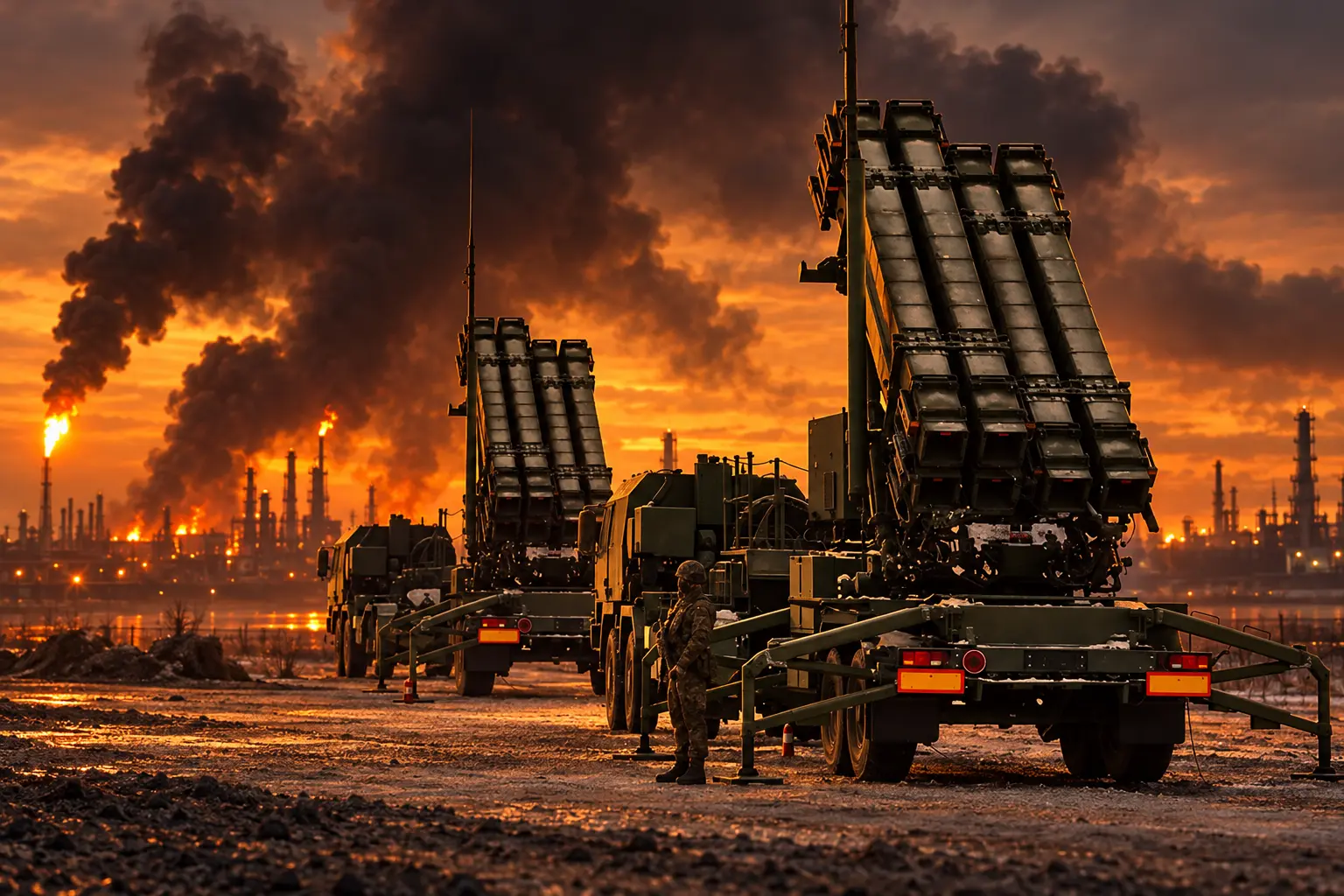
The warning lands on the feed that tracks incoming ballistic missiles and on Patriot interceptors Europe already pays to buy, because those refinery strikes now sit in the way of a U.S. deal to put Russian diesel on the market.
The Warning Aims at Ukraine’s Missile Shield
The messages described a possible halt to intelligence sharing and to European purchases of U.S. weapons for Ukraine if deep strikes on Russian energy sites continue. A third person familiar with the exchange said the intelligence cut was stated as a threat. NATO had not seen a change to the buying channel over the weekend, another European official said, so the lever had been shown, not pulled.
U.S. intelligence helps Ukraine defend against Russian ballistic missiles by locating launchers and by saying where a strike is heading, and when. A freeze on weapons buys would hit Patriot interceptor shipments hardest. Ukraine is already short of those missiles as Russia has widened missile and drone attacks on cities and power plants.
A European official called intelligence sharing and the weapons purchases “vital” to Ukraine and called the threat a “sad day” for Kyiv and its allies.
WHAT THE CUT WOULD TAKE AWAY
- Launcher locations: U.S. feeds help Ukraine find Russian ballistic launchers before and during an attack.
- Inbound tracks: The same sharing tells Ukrainian batteries where a missile is going and when it will arrive.
- Patriot rounds: European cash buys U.S. interceptors for Ukraine through a NATO list; a freeze would stall that pipe.
- Command channel: The Pentagon’s warning went directly to Ukrainian commanders, not only through embassies.
That mix is the second punch. A demand to stop hitting Russian refineries is being enforced with the tools that keep Ukrainian cities standing when Russian missiles fly the other way.
Why American Pumps Now Depend on Russian Refineries
President Donald Trump has blamed the Ukraine war for high global diesel prices and has told both sides to stop hitting energy plants. Those prices have also been pushed up by the U.S. war with Iran. On Friday, October 9, after a call with President Vladimir Putin, Trump said Russia would ship diesel into U.S. and world markets, and the Treasury’s Office of Foreign Assets Control authorized Russian diesel sales through April 7, 2027, at 12:01 a.m. Eastern.
The American Automobile Association put the U.S. average at $6.28 a gallon that Friday. The United States exports about 1.5 million barrels of diesel a day. Midterm elections fall on November 3. Trump said the first cargoes would move “based on the condition of their diesel refineries,” which Ukrainian drones have been hitting for months.
THE DIESEL TRANCHES TRUMP ANNOUNCED
| Tranche | Volume | When |
|---|---|---|
| Immediate | More than 300,000 metric tons (about 2.25 million barrels) | From the October 9 announcement |
| November | 500,000 metric tons | During November |
| Next block | 1 million metric tons | “Immediately thereafter” |
| Conditional | 3 million metric tons | Depends on the state of Russian refineries |
The four blocks add up to 4.8 million tonnes, or about 36 million barrels. Russian Deputy Prime Minister Alexander Novak said Moscow was lifting diesel export limits ahead of schedule and could start supplies to the United States this month. Putin said he was convinced the move would help the global economy. The license covers sale, delivery, offloading, and import of Russian-origin diesel, including into the United States. It does not open the Central Bank of Russia’s accounts.
Tim Armitage, an investment strategist at Quilter Cheviot, said the first 300,000-ton load is small against U.S. use of about 3.8 million barrels a day, so it will not move pump prices much on its own. The louder problem in Washington is still the pump. Ukrainian strikes are the piece of that problem the White House can threaten to punish. The Iran war and the squeeze on Middle East diesel stay in the market either way.
Zelensky called the diesel bargain a gift to Putin and said Ukrainian negotiators were being used as a front. A U.S. official said Ukraine’s continued refinery attacks were part of what led Trump to strike the deal.
THE FOUR DAYS THAT TIED FUEL TO THE SHIELD
- October 9, 2026: Trump announces the diesel supply deal with Putin; OFAC issues General License 135.
- October 10, 2026: Trump tells reporters Zelensky “better damn well stop” hitting refineries and says it is time for Ukraine to get a new president.
- October 11, 2026: Trump declares an energy ceasefire “effective immediately”; State and Pentagon warnings go to Kyiv and European capitals.
- October 12, 2026: A White House official says Trump is “really mad” and feels Zelensky is taking the United States for granted.
On Saturday Trump told reporters they had asked Zelensky not to hit diesel plants and refineries. “You can do whatever you want to Russia, don’t hit the refineries,” he said, because that is “a world problem.” On Monday, Brent crude slipped $1.54 to $103.18 a barrel on hopes the ceasefire talk would free more Russian supply.
Twenty-Eight of 32 Russian Refineries Have Been Hit
The International Energy Agency, in a September 17 commentary by David Martin and Talya Vatman, counted 32 major Russian refineries with about 6.5 million barrels a day of installed capacity. Ukraine has been hitting those plants since 2022. The campaign got longer-range and more precise through 2025 and 2026.
In June, Russian refinery runs fell to 3.8 million barrels a day in June, the lowest in more than 20 years and about 30% below a year earlier. Diesel production is estimated to have fallen by nearly 30%. Gasoline output is down 20% from 2025 levels. In the first eight months of 2026, a Russian refinery was hit on average once every three days.
THE IEA REFINERY TALLY
- June runs: 3.8 million barrels a day, lowest in more than 20 years.
- Plants hit: 28 of 32 major refineries, with only five still untouched in late August, all in eastern Siberia or the far east.
- Strike count: 204 confirmed drone and missile hits in the agency’s tracker as of September 15.
- Diesel output: Down nearly 30%, which led Moscow to ban diesel exports from July 8.
The July 7 strike on Gazprom Neft’s Omsk plant, Russia’s largest at 450,000 barrels a day, landed about 2,500 kilometres from the Ukrainian border. Some plants closer to Ukraine have been attacked as many as 15 times since 2022. The 250,000-barrel-a-day Moscow refinery is reported offline until early 2027. Combined Middle East and Russian seaborne diesel exports fell to 520,000 barrels a day in August, 75% below the same month a year earlier.
Russia answered with export bans on gasoline, then jet fuel, then diesel, and with lower fuel-quality rules through July 1, 2027. By the end of June, shortages were reported in 92% of Russian regions. That is the pressure Kyiv has been applying, and it is the pressure Trump now wants switched off so Russian barrels can move under the new license.
An Energy Ceasefire That Surprised Zelensky
On Sunday, October 11, Trump wrote that an energy ceasefire was in force at once. “Effective immediately, there is an ENERGY CEASEFIRE in the War between Russia and Ukraine. Both parties have agreed. Do not break it!” Moscow did not confirm the deal. A source close to Zelensky said the announcement was a surprise. Trump had made a similar claim on September 14, and both sides kept hitting energy sites.
Zelensky later said Ukraine would support the ceasefire if Russia did the same, and that Kyiv was waiting for details from Washington.
Ukraine supports the ceasefire, and it is important that Russia support it as well. We are awaiting details from the American side.
Volodymyr Zelensky, President of Ukraine, on X, October 11, 2026
I just spoke with @MarkJCarney, @alexstubb, and @SecGenNATO Mark Rutte. We discussed the energy ceasefire announced by President Trump. Ukraine supports the ceasefire, and it is important that Russia support it as well. We are awaiting details from the American side. For our…
— Volodymyr Zelenskyy / Володимир Зеленський (@ZelenskyyUa) October 11, 2026
He had told an interviewer the announcement “was news for me,” and that if Trump had negotiated it with Putin, Kyiv needed to know when it began. He also said Ukraine was ready to stop hitting Russian refineries if Russia stopped hitting Ukrainian energy plants, and that any pause had to be mutual and backed by real guarantees. After Trump’s post, Zelensky said Russia hit a power plant in Kyiv and energy sites in the Kharkiv region.
A White House official said the Sunday announcement pointed to a possible “refinery for refinery” deal and that Trump expected Zelensky to abide by it. The same official’s warning on Monday went further than etiquette.
Trump is really mad. He feels Zelensky is taking the U.S. for granted.
White House official, October 12, 2026
Zelensky offered a wider bargain on Sunday: a 60-day full ceasefire, after which Ukraine would organize elections. “Give us two months, 60 days of total ceasefire, and we will organize elections,” he said. That is a different deal from an energy-only freeze, and it still needs Moscow to stop the wider war. Holding a vote under martial law is a legal and practical mess Ukraine has not solved.
Washington Pulled This Lever Once Before
The Trump administration paused intelligence sharing with Ukraine in March 2025 after a public fight in the Oval Office on February 28 between Trump, Vice President JD Vance, and Zelensky. CIA Director John Ratcliffe said on March 5 that Trump had asked for a pause “on the military front and the intelligence front.” Weapons shipments stopped the same week. A U.S. official said targeting information was no longer being shared.
The freeze lasted 11 days. On March 11, after talks in Jeddah, Saudi Arabia, the United States restored intelligence sharing and security assistance. Ukraine accepted a U.S.-proposed 30-day ceasefire, pending Moscow’s agreement. Russia was not in that room. National Security Adviser Mike Waltz said the Ukrainian team had made clear they shared Trump’s vision for peace.
The 2025 pause was about getting Zelensky to a peace table. The 2026 warning is about getting Ukrainian drones off the refineries that Trump now needs intact for diesel. The tool is the same. The target this time is a campaign that, on the IEA’s numbers, has already taken a large share of Russian refining offline and helped clear a path for the October 9 fuel bargain.
Around 95 Percent of Patriots Move Through PURL
European governments do not donate these missiles from U.S. stocks as a gift. They buy them. The Prioritized Ukraine Requirements List, or PURL, is the U.S.-NATO channel launched in July 2025. Ukraine names the need. Washington and NATO agree packages of U.S. weapons worth about $500 million each. Allies pay. The United States ships.
Ukraine’s defence ministry, in a July 23, 2026 note, said 29 countries have joined, 26 of them NATO members and three partners, and that contributions have reached $6.7 billion across more than ten packages. It said around 95% of Patriot interceptors such as PAC-3 now reach Ukraine through PURL, and that those rounds are what shoot down Russian ballistic missiles over cities.
PURL’S LARGEST PAYERS
| Country | Contribution |
|---|---|
| Norway | $1.36 billion |
| The Netherlands | $1.163 billion |
| Germany | $900 million |
| Canada | $834 million |
| Sweden | $546 million |
| All 29 countries | $6.7 billion |
The top five account for about $4.8 billion of that total. The rest comes from the other 24 governments on the list. In September the European Commission approved €6.1 billion for air and missile defence, ammunition, drones, and electronic warfare, with derogations that let Ukraine buy PAC-3 missiles, including through PURL. Commission President Ursula von der Leyen said the approval meant Ukraine could purchase the Patriot equipment it needs to protect its skies. The money sits inside a €90 billion Ukraine Support Loan, with €60 billion marked for defence across 2026 and 2027. The €28.3 billion set aside for 2026 defence is now fully allocated. Brussels said it had already disbursed €8.35 billion in defence funding this year.
If Washington freezes those European purchases, Norway, the Netherlands, Germany, Canada, and Sweden still wrote the checks, and Ukrainian batteries still run out of PAC-3 rounds. The loser is not a U.S. budget line. It is the cities those interceptors cover.
Less Warning for the Next Ballistic Wave
Acted on, the weekend warning would dim two things at once: the picture of Russian launchers and the magazine of missiles that shoot the warheads down. Ukrainian long-range drones would likely fly fewer refinery sorties if the cost is the air-defence net at home. Russian plants that still run would get a quieter sky, which is what the diesel license assumes they need.
The trade is lopsided on the volumes Trump named. Four point eight million tonnes is about a day and a quarter of world diesel use, which the IEA puts near 29 million barrels a day, and the first cargo is a rounding error against U.S. daily demand. The license still needs those Russian plants in one piece. That is why the refinery campaign, which the IEA says knocked June runs to a two-decade low, has become a White House problem rather than only a Russian one.
As of Monday, NATO had not recorded a change to PURL, Moscow had not confirmed that it had agreed to stop hitting Ukrainian power plants, and the Treasury license for Russian diesel still runs to April 7, 2027.

Ohtani Game 4 Logoman Card Sells for $3.24 Million

Cole Kmet’s Season Ends, and Chicago’s Tight End Plan Starts

NBA Seeks Soccer Money After EuroLeague Clubs Refused

Amazon’s First Bond Tests Leave the Broccoli Chair Empty

Tyrese Maxey Owns the Night Built for LeBron James

Warsh Rejects Rate Guidance and Still Moves Markets

Dana-Farber Exits an MGB Medicare Advantage Network Early

NASA Launches the Roman Space Telescope’s Cosmic Bet

OpenAI’s Cyber Letter Puts the Defense Bill on Governments

Russia Recycles Its Old Warning Over Storm Shadow Plants
-
 BUSINESS2 months ago
Warsh Rejects Rate Guidance and Still Moves Markets
-
 BUSINESS1 month ago
Dana-Farber Exits an MGB Medicare Advantage Network Early
-
 NEWS2 months ago
NASA Launches the Roman Space Telescope’s Cosmic Bet
-
 NEWS2 months ago
OpenAI’s Cyber Letter Puts the Defense Bill on Governments
-
 NEWS2 months ago
Russia Recycles Its Old Warning Over Storm Shadow Plants
-

 ENTERTAINMENT4 weeks ago
Primetime’s $2.7 Million Preview Tops Pitt’s Costlier Film
-

 BUSINESS2 months ago
Jet Drones Lock Down Kyiv and Strip Kherson of Heat
-

 ENTERTAINMENT2 months ago
Midnight Spider-Man Turns Peter Parker Into Oscorp’s Hybrid