
NEWS
The DOT Delay Recode That Unhooks Hotel and Meal Pledges
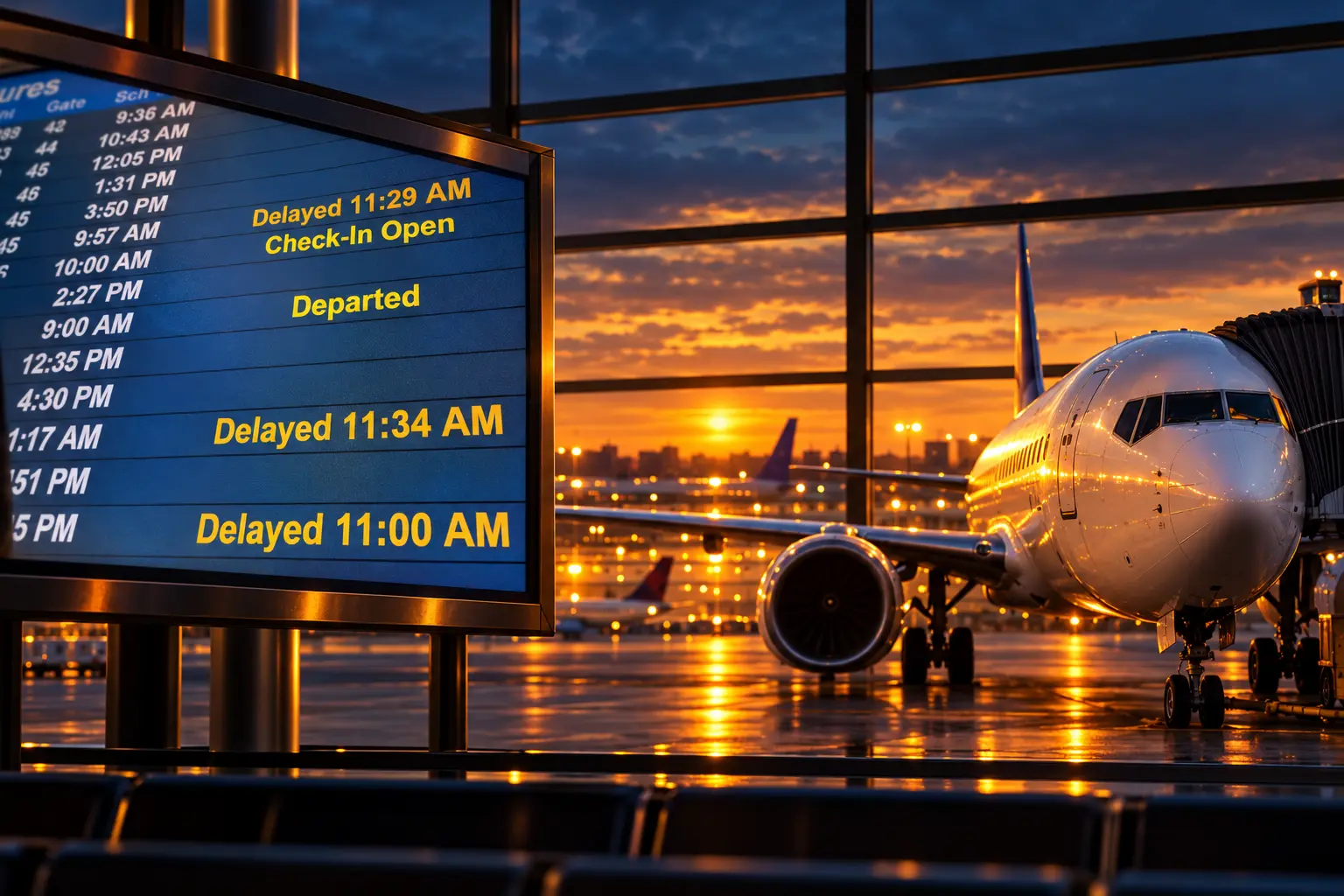
A new DOT delay code, effective October 19, pulls unscheduled maintenance out of airline control, which is the switch that turns meal and hotel pledges on.

On October 19, the U.S. Department of Transportation will move 10 events, including unscheduled aircraft maintenance, out of the Air Carrier delay code. That code is the switch most big U.S. airlines use for meal vouchers, hotel rooms, and ground transport when a disruption is their fault.
The rule amends how carriers file delay and cancellation causes under 14 CFR 234.4. It does not rewrite a single customer-service plan. Because those plans are written around “controllable” delays, pulling ten causes out of the Air Carrier bucket unhooks the pledges that used to travel with them.
The Rule Recodes Fault, Not the Meal Voucher
The Department published the final delay-cause rule taking effect October 19 on September 3, 2026. It carries out Section 511(b) of the FAA Reauthorization Act of 2024, which says ten listed events “shall not be included within the Air Carrier code.”
Carriers now report delays in five buckets: Air Carrier, Extreme Weather, National Aviation System, Security, and Late Arriving Aircraft. Cancellations use the same list minus late aircraft. Air Carrier has long meant problems inside the airline, including maintenance, crew scheduling, and cabin cleaning. The new rule adds a sixth delay category, and a fifth cancellation category coded E, used only for the ten statutory events.
The Department skipped a public comment period. It cited the Administrative Procedure Act’s good-cause exception on the ground that Congress left it no extra room to interpret the exclusions. A DOT spokesperson said Congress “explicitly directed” the change so that “government delay data accurately reflects what airlines can and cannot control.”
The number of delays and cancellations for which air carriers provide amenities and compensation to consumers is expected to be reduced. The magnitude of the total reduction in amenities and compensation cannot be reliably estimated by the Department.
U.S. Department of Transportation, final delay-cause rule
Sophie Hayashi, counsel in Crowell & Moring’s transportation group, wrote that carriers “are no longer obligated under those plans to provide amenities or compensation when disruptions arise from these specific causes.” Crowell also noted that the recode “may improve carriers’ publicly reported Air Carrier delay and cancellation statistics.” Airlines for America and other industry groups had already asked for a rewrite of the on-time reporting rules in a petition dated October 22, 2024, docket DOT-OST-2024-0123.
Bureau of Transportation Statistics figures put the air-carrier delay share in June 2026 at 7.36% of operations, against an on-time rate of 73.12%. Extreme weather was 1.03%, the National Aviation System 6.42%, security 0.04%, late aircraft 9.94%, cancellations 1.71%, and diversions 0.38%. BTS treats a flight as delayed at 15 minutes past schedule. Those Air Carrier minutes mix maintenance with crew, fueling, and other airline-side problems, so the new carve-out is a slice of that 7.36%, not the whole column, and the Department says it cannot size the slice.
What Airlines Still Promise on Controllable Delays
Major U.S. airlines post customer-service promises for controllable delays on the Department’s cancellation and delay dashboard, a group the agency says accounts for about 96% of domestic scheduled passenger traffic. A green check means the airline has committed to that amenity. The Department says it will hold carriers to those promises when the cause stays inside the airline’s control. The live dashboard, last updated September 11, 2025, still treats maintenance and crew problems as examples of that control.
THE DASHBOARD PLEDGES ON CONTROLLABLE DELAYS
| Airline | Meal, 3-hour wait | Overnight hotel | Cash, 3-hour wait |
|---|---|---|---|
| Alaska | Yes | Yes | No |
| Allegiant | Yes | Yes | No |
| American | Yes | Yes | No |
| Delta | Yes | Yes | No |
| Frontier | Yes | No | No |
| Hawaiian | Yes | Yes | No |
| JetBlue | Yes | Yes | No |
| Southwest | Yes | Yes | No |
| United | Yes | Yes | No |
Every listed carrier already says no to cash after a 3 hours wait. Credits, miles, and partner rebooking vary by brand and sit outside that table. The October recode does not edit those rows. It changes which delays still qualify as controllable, so a meal or hotel check mark can sit on the dashboard and still not apply to an unscheduled mechanical problem.
Passengers keep a right to a refund regardless of the cause if a flight is canceled or significantly changed and they decline the new itinerary. Credit-card refunds are due within 7 business days of the request; other payments within 20 days. That refund track is separate from meals and hotels, and it survives the recode.
Ten Events Leave the Air Carrier Column
Section 511(b) names the ten causes that must be reported in the new category rather than as Air Carrier events. Some are rare. One of them, unscheduled maintenance that cannot be deferred, is the overnight-stay problem most travelers actually meet.
THE 10 CAUSES LEAVING THE AIR CARRIER CODE
- Death on board: Aircraft cleaning required after a passenger dies.
- Airframe damage: Damage from extreme weather, foreign object debris, or sabotage.
- Bag-system outage: A loading delay from a baggage system the carrier or its contractor does not control.
- Cyberattack: An attack, if the carrier is in compliance with applicable cybersecurity rules.
- Government systems: An unexpected shutdown or failure of government systems that blocks safe flight.
- Overheated brakes: Brakes overheated in a safety incident that forced emergency procedures.
- Unscheduled maintenance: Work, including an airworthiness directive, outside a scheduled program that cannot be deferred or must be fixed before flight.
- Medical emergency: An emergency that required medical attention through no fault of the carrier.
- Unruly passenger: Time lost removing a disruptive flyer.
- Airport closure: A closure from volcanic ash, wind, or wind shear.
Several of those lines already sat close to weather or security in practice. Cyberattacks keep a compliance hook: a carrier that cannot show it met cybersecurity rules stays in the old bucket. Unscheduled maintenance has no such extra test beyond the three conditions in the statute.
Unscheduled Maintenance Is the Overnight-Cost Line
The carve-out is narrow on paper. It covers mechanical problems that appear outside a scheduled maintenance program and cannot be deferred, often because the aircraft is not safe to fly until the work is done. Routine, planned maintenance that slips a departure still sits in the Air Carrier column, and the pledges still attach.
The distinction will be argued at the gate. Airlines already assign the cause code that the Department later publishes. There is no separate audit of each mechanical delay before a hotel voucher is approved or denied. A fault that could have been caught in a scheduled visit, then coded as an unexpected no-go item, is the gap consumer groups flagged after the rule posted, and it is the gap the Department did not size.
U.S. carriers remain subject to local passenger-care rules on flights that start outside the United States. On a U.S.-origin itinerary, the October code is the one that decides whether a customer-service plan still treats the delay as the airline’s problem. Carriers can still house and feed people as a courtesy, including elite frequent flyers they already sometimes help in weather. Nothing in the rule forbids that. Nothing in it requires it either, once the cause sits in the Section 511(b) column.
No major airline has said it will pull meals or hotels on these delays. The Department’s own analysis is blunter than the industry’s silence: it expects the number of disruptions that still trigger amenities to fall, and it says the drop cannot be reliably estimated.
The 2024 Law Wrote Refunds and This Carve-Out
The same statute that ordered the recode was sold as a passenger-rights bill. The FAA Reauthorization Act signed in May 2024 as Public Law 118-63, after an 88-4 Senate vote and a 387-26 House vote, locked in automatic refunds for canceled or significantly delayed flights. It also told the Secretary to have airlines set reimbursement policies, including meals and lodging, for delays “directly attributed to the airline.” Section 511(b) then shrank what counts as attributed to the airline.
The four Senate no votes came from Maryland and Virginia over extra slots at Reagan National, not over delay codes. President Joe Biden signed the package on May 16, 2024. The Trump administration’s Transportation Department is the one that wrote the Part 234 amendment, without a comment file, and said amenities would decline as a result.
FROM THE 2024 LAW TO THE OCTOBER RECODE
- May 16, 2024: The FAA Reauthorization Act becomes law, including refunds and Section 511(b).
- October 22, 2024: Airlines for America and others petition to revise on-time reporting under Part 234.
- December 11, 2024: The Department seeks comment on requiring cash, meals, and lodging for carrier-caused disruptions.
- November 17, 2025: That cash-and-care plan is withdrawn as an unnecessary burden.
- December 10, 2025: Enforcement discretion already treats some airworthiness-directive maintenance as outside airline control.
- September 3, 2026: The delay-cause final rule is published; it takes effect October 19, 2026.
On September 22 and 23, 2026, the Aviation Consumer Protection Advisory Committee is set to meet on passenger-rights summaries, airport posters, and the customer-service dashboards required by other sections of the same 2024 law. The dashboards will still display meal and hotel checks. After October 19 they will describe a smaller set of delays.
Cash Compensation Already Left the Table
The recode lands on ground that was already cleared of mandatory cash. In December 2024 the Department floated a plan to require cash, free rebooking, meals, lodging, and ground transport when a significant delay or cancellation was the carrier’s fault. On November 17, 2025, it withdrew that notice, citing Executive Orders 14192 and 14219 and calling the package an unnecessary burden. The withdrawal said the Department would let airlines compete on care instead of setting a federal floor.
Every carrier on the dashboard already answers no to cash after a three-hour controllable wait. The dead proposal would have used the same controllable definition the October rule now shrinks. With the cash rule gone and the Air Carrier bucket narrower, the remaining federal lever on meals and hotels is the Department’s power to police the promises airlines still print.
Travelers got a preview in December 2025. After the FAA issued Emergency Airworthiness Directive 2025-24-51 on November 28, 2025, for elevator aileron computers on certain Airbus jets, the Office of Aviation Consumer Protection said it would not treat cancellations and long delays from that unscheduled, non-deferrable work as inside airline control. Hotels and meals promised for controllable disruptions would not be required. That discretion was written to last until the Part 234 rulemaking finished. October 19 is that finish.
Trip Insurance and Cards Fill the Gap Airlines Vacate
A traveler stuck overnight by a no-go mechanical after October 19 should still ask the airline for a room. Some stations will still issue one. The safer assumption is that the code, not the inconvenience, will decide, and that a denied voucher is now harder to appeal as a broken promise.
WHAT STILL COVERS AN OVERNIGHT MECHANICAL
- The refund path: A canceled or significantly changed flight still qualifies for a refund in the original form of payment if you decline the new routing.
- Scheduled work: Maintenance inside a planned program that delays a departure can still be coded Air Carrier, which is the column the dashboard pledges still follow.
- Card and policy rules: Trip-delay coverage on a credit card or a travel policy often pays for meals and hotels after a set number of hours, and it usually requires the entire trip to be charged to that card, plus receipts.
- Foreign-origin rules: Care laws at the departure country can still require meals or hotels even when the U.S. code does not.
Keep the delay reason the airline puts in writing, not only the gate announcement. File a Department complaint if a carrier withholds an amenity that its plan still promises for a cause that remains in the Air Carrier column. For a Section 511(b) mechanical, that complaint track will not reopen a hotel the plan no longer covers.
The October 19 change is a new reporting category with an old customer-service trigger wired to it. Airlines asked for cleaner delay data. They get a smaller fault column, and passengers get a longer night that the Department says it cannot count in advance.

Ohtani Game 4 Logoman Card Sells for $3.24 Million

Cole Kmet’s Season Ends, and Chicago’s Tight End Plan Starts

NBA Seeks Soccer Money After EuroLeague Clubs Refused

Amazon’s First Bond Tests Leave the Broccoli Chair Empty

Tyrese Maxey Owns the Night Built for LeBron James

Warsh Rejects Rate Guidance and Still Moves Markets

Dana-Farber Exits an MGB Medicare Advantage Network Early

NASA Launches the Roman Space Telescope’s Cosmic Bet

OpenAI’s Cyber Letter Puts the Defense Bill on Governments

Russia Recycles Its Old Warning Over Storm Shadow Plants
-
 BUSINESS2 months ago
Warsh Rejects Rate Guidance and Still Moves Markets
-
 BUSINESS1 month ago
Dana-Farber Exits an MGB Medicare Advantage Network Early
-
 NEWS2 months ago
NASA Launches the Roman Space Telescope’s Cosmic Bet
-
 NEWS2 months ago
OpenAI’s Cyber Letter Puts the Defense Bill on Governments
-
 NEWS2 months ago
Russia Recycles Its Old Warning Over Storm Shadow Plants
-

 ENTERTAINMENT4 weeks ago
Primetime’s $2.7 Million Preview Tops Pitt’s Costlier Film
-

 BUSINESS2 months ago
Jet Drones Lock Down Kyiv and Strip Kherson of Heat
-

 ENTERTAINMENT2 months ago
Midnight Spider-Man Turns Peter Parker Into Oscorp’s Hybrid