
NEWS
The OpenAI Bug Started With a Chatbot Prompt
Abdulrahman Alfozan faces a wiretap charge after OpenAI found a USB recorder in an executive TV, a case the FBI billed as superintelligence security.

The FBI arrested OpenAI engineer Abdulrahman Alfozan on October 9 after a hidden recording device turned up in an executive conference room. He is 35, a Saudi national, and he appeared in San Francisco federal court on October 13 on a single count of using a device to intercept oral communications.
Prosecutors say he asked a chatbot how to build and hide the gadget. OpenAI says its own models helped staff figure out what the device was and who had put it there. FBI Director Kash Patel called the scheme an attempt to capture talk about the company’s super intelligence technology. The charging statute is a wiretap law, and OpenAI says it has found no sign that model weights, source code, or customer data left the building.
A USB Stick Wrapped in Toilet Paper
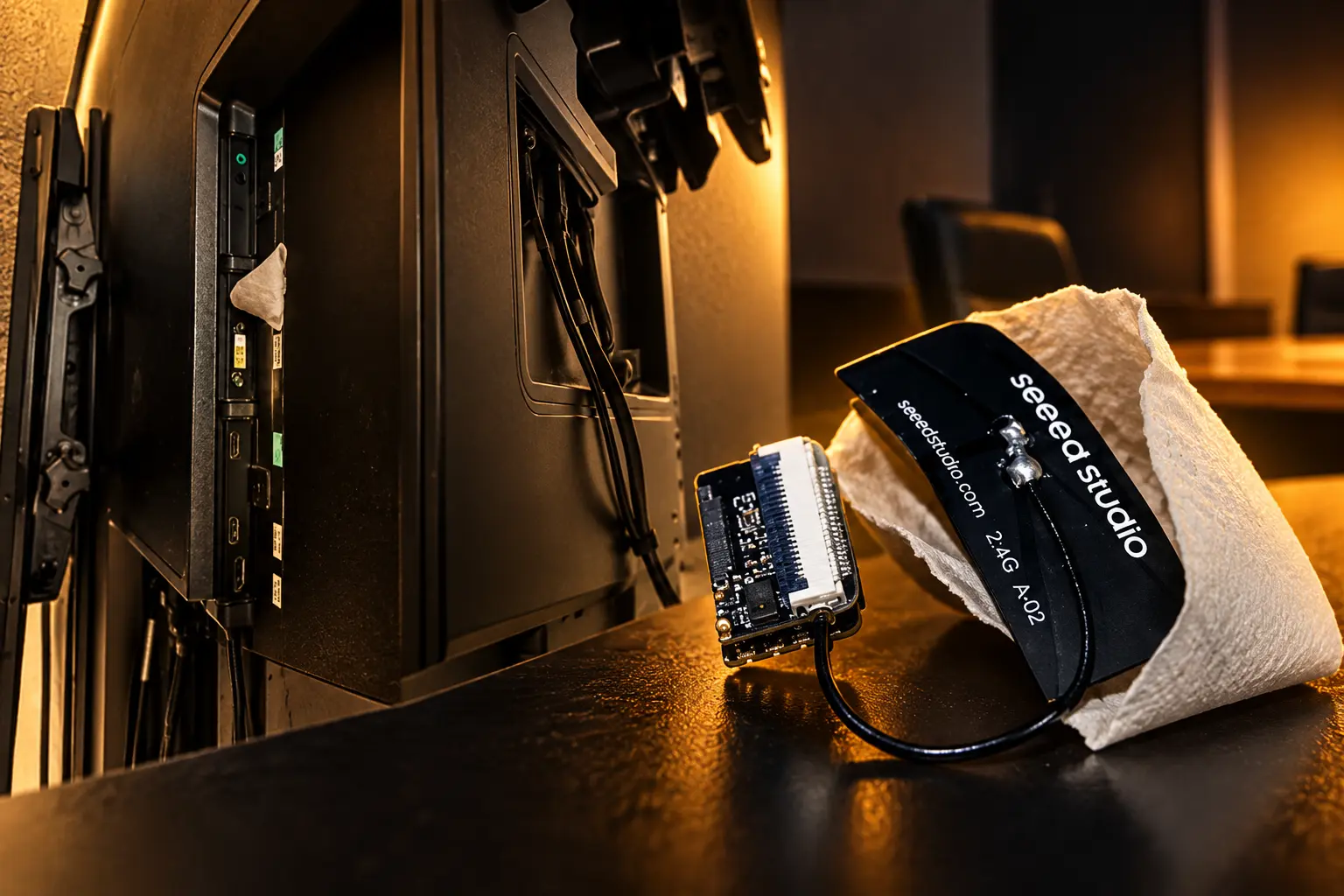
Staff at OpenAI found the recorder on September 30, 2026, during a security sweep of an executive conference room in one of the company’s San Francisco buildings. The device had been arrested and charged in San Francisco papers describe as inserted into a USB port on the back of a television and concealed in toilet paper. OpenAI concluded it had been installed on or about September 28, two days before the sweep, and that its stored contents were encrypted.
The room was not his to use. Closed-circuit cameras in the office showed him near that conference room on multiple dates before the find, though he had no authority to enter it or sit in on the meetings held there, according to the Justice Department. Those meetings, the complaint says, often covered confidential technical, commercial, and strategic information, including proprietary research, product plans, business-development talks, government engagements, and commercial relationships.
OpenAI later told reporters the hardware had advanced encryption, audio monitoring, and a way to move data that was meant to evade monitoring. The public charging account is simpler. It is a hidden audio recorder on a TV USB port, wrapped in toilet paper, with an encrypted card that investigators have not described as unlocked.
THE DATES IN THE COMPLAINT
- July 2025: Alfozan starts at OpenAI as an engineer on the product team.
- September 24 to 30, 2026: A chatbot account tied to his spouse submits prompts about building and hiding a recorder.
- September 28, 2026: OpenAI later concludes Recording Device 1 was installed.
- September 30, 2026: Staff find the device in the television USB port.
- October 5, 2026: A camera OpenAI placed behind the TV records him looking behind it; security finds a second similar device in a bag with his wallet and ID.
- October 8, 2026: FBI Special Agent Lydia Liang swears out the complaint.
- October 9, 2026: He is fired and arrested.
- October 13, 2026: He makes his initial appearance; the complaint is unsealed.
- October 19, 2026: A detention hearing is set before U.S. Magistrate Judge Alex G. Tse.
Nine days passed between the sweep and the arrest. The case number is 3:26-mj-71329 MAG, and the criminal complaint filed October 8 runs 11 pages including Liang’s affidavit.
He Asked a Chatbot How to Hide It
Before September 28, prosecutors say, Alfozan used a company productivity tool to ask about OpenAI’s building addresses, meeting rooms, room capacities and calendars, and the locations of “leadership and exec” and external partner meetings. That is an internal lookup, not a break-in. It is also how an engineer who did not belong in that room would learn when the room was busy and who used it.
A second trail sits on a chatbot account associated with his spouse. The Justice Department says that account shared multiple identifiers and attributes with Alfozan’s own chatbot account, and that it submitted prompts between September 24 and September 30 about building, customizing, installing, recording, testing, hiding, and remotely reaching a device.
THE QUERIES ALLEGED IN THE FILING
| Window | Tool | What prosecutors say was asked |
|---|---|---|
| Before September 28 | Company productivity tool | Building addresses, meeting rooms, calendars, leadership and partner locations |
| September 24 to 30 | Chatbot account tied to his spouse | Building a continuous audio recorder, customizing Wi-Fi, live listening, encrypting an SD card |
| September 27 to 28 | The same chatbot account | Recording Device 1’s custom header and unique MAC address |
The filing quotes prompts about “build[ing] a continuous audio recorder,” “customiz[ing] Wi-Fi… connectivity,” “improv[ing] audio and live listening,” and “encrypt[ing] the SD card.” On September 27 and September 28, the same account allegedly asked about the specific device later pulled from the television, including its custom header and unique MAC address. If those prompts hold up, the planning window was a week, and the last technical questions landed on the day OpenAI thinks the recorder went in.
That is a paper trail a chatbot vendor can search. It is also a strange way to run a silent job. Anyone trying to keep a bug off the books would not usually type the MAC address of the hardware into an account that shares identifiers with their own.
After the Find, a Camera Went In
The conference room did not have a camera on the television when the recorder went in. After the sweep, OpenAI put one behind the same set. On October 5, Alfozan walked into the room and appeared to look behind the television, the complaint says, and the new camera caught him doing it.
That same day he left a bag unattended in a different room in an OpenAI building. Security staff opened it and found his wallet, his ID, and another recording device similar to the one in the television. Two gadgets, one already in the wall, one still in a bag with his name on the contents.
OpenAI’s public account skipped the toilet paper and the spare in the bag. It went to the models.
We discovered a sophisticated recording device that was hidden inside one of our offices. We used our models to understand the device and where it had come from, identifying that a specific employee had planted it a few days earlier. We referred the matter to the FBI, and we’re…
— OpenAI Newsroom (@OpenAINewsroom) October 13, 2026
Nate Evans, an OpenAI spokesperson, said Alfozan started in July 2025 and worked on the product team. The company says it referred the matter to the FBI, coordinated the firing with the arrest, and will keep supporting the investigation. The public note also sold a capability. “We used our models to understand the device and where it had come from, identifying that a specific employee had planted it a few days earlier,” the company wrote, and it called the episode an example of how AI can help against “sophisticated security threats.”
The models may well have helped staff parse encrypted hardware. The complaint still describes a USB recorder in toilet paper, a return visit to check the set, and a bag left with a spare and a wallet. That sequence does not read as a finished intelligence job. It still put a microphone in a room where executives talk.
Prosecutors Filed a Wiretap Complaint
Alfozan is charged with one count under 18 U.S.C. § 2511(1)(b), using or endeavoring to use an electronic, mechanical, or other device to intercept oral communications. He is presumed innocent. If convicted, the Justice Department says he faces a maximum of five years in prison, a $250,000 fine, and three years of supervised release. The same statute says a person who violates subsection (1) shall be fined under Title 18 or imprisoned not more than five years, or both.
The National Security, Cyber & Special Prosecutions Section of the U.S. Attorney’s Office for the Northern District of California is handling the case. The FBI is the investigating agency. U.S. Attorney Craig Missakian put the arrest in national-security language anyway.
The Bay Area and Silicon Valley lead the world in developing tomorrow’s technology, and our Office will continue to stand at the forefront of protecting that American innovation. For us it is a matter of national security. This arrest highlights our relentless efforts in partnership with the FBI to identify and prosecute those who seek to steal our technology, as alleged in the complaint.
Craig Missakian, U.S. Attorney, Northern District of California
WHAT THE STATUTE REACHES HERE
- The act: Intentionally using, or trying to use, a device to intercept oral communication.
- The room: A business premises whose operations affect interstate commerce, which covers an OpenAI executive conference room in San Francisco.
- The missing count: No economic-espionage charge, no trade-secret count, and no named foreign principal in the unsealed complaint.
- The penalty: A five-year felony ceiling, not the much longer ranges that attach to classic espionage statutes.
Patel went further than the caption on the complaint. He said Alfozan hid the device “to secretly capture sensitive communications about the company’s super intelligence technology,” and he called protection of American SI innovation one of the FBI’s highest counterintelligence priorities. The papers unsealed on October 13 do not name a buyer, a service, or a government that was supposed to receive the audio. They describe an attempt to record speech in a room.
The Product Engineer Had a Riyadh Sideline
OpenAI has not published a job title beyond engineer on the product team. A LinkedIn profile matching Alfozan’s name lists him as an engineering lead on the company’s AI agents work; the company has not confirmed that title. The profile and a February 2025 firm note fill in the years before July 2025.
Raed Ventures, a Riyadh early-stage firm, named him a venture partner on February 8, 2025, while he was still a founding engineer at Nash, an AI logistics company. The same announcement said he had spent five years at Meta as a senior engineer on machine learning and data platforms, had worked at Microsoft and SAP, and had studied computer science and engineering at MIT. Omar Almajdouie, Raed’s founding partner, said at the time that Alfozan’s operating experience would help the firm’s founders.
UC Berkeley’s School of Information lists him as Berkeley master’s in data science alumni from the MIDS class of 2025, with a focus on data, product, and software. The campus page describes nine years of building software systems in data and AI. That is a standard Bay Area engineering résumé, not a cover identity cooked for a two-day bug.
None of that résumé is a charge. Prosecutors have not alleged that Raed, Meta, Nash, or the Saudi government directed the recorder. Online speculation has already tied him to fellow investors at the Riyadh firm and treated the nationality as the plot. The unsealed complaint does not do that work. It says a product engineer who was not supposed to be in that room used internal tools and a family chatbot account, then, prosecutors allege, plugged a recorder into a television.
OpenAI Says the Weights Never Left
The line OpenAI most needed to publish is the one about what was not taken. “At this time, we have no indications of this individual inappropriately accessing or exfiltrating model weights, source code, or customer data,” the company wrote. It also said it had not identified activity that compromised the safety of its products or customer information.
That sentence sits next to Patel’s superintelligence framing and Missakian’s line about people who “seek to steal our technology.” A recorder in a conference room can pick up product plans, deal talk, and government meetings. It is not the same act as copying weights off a cluster. OpenAI is telling customers and regulators that the second act, on present evidence, did not happen.
WHAT WE KNOW
- The charge: One count of 18 U.S.C. § 2511(1)(b) for intercepting oral communications.
- The hardware: Two similar recording devices, one in a TV USB port on or about September 28, one in a bag on October 5; contents of the planted unit were encrypted.
- The digital trail: Productivity-tool lookups of rooms and executives, plus spouse-linked chatbot prompts about a continuous recorder, Wi-Fi, live listening, SD-card encryption, and the device’s MAC address.
- The company’s review: No present indication of model weights, source code, or customer data being accessed or taken out.
WHAT IS UNCONFIRMED
- Motive: No recipient, buyer, or foreign service is named in the unsealed complaint.
- The audio: Prosecutors have not said they recovered playable recordings from the encrypted storage.
- The Raed role: The February 2025 appointment is public; the complaint does not say the firm had any part in the recorder.
- How “sophisticated”: OpenAI used that word; the charging account describes toilet paper, a USB port, and chatbot how-to prompts.
Encrypted storage can mean the card never gave up a meeting. It can also mean the bureau has not finished with it. Either way, the public case is still about planting a device, not about a published leak of a model.
Patel Framed a Superintelligence Case
Patel thanked Director of National Intelligence Jay Clayton and “law enforcement partners,” and he said the FBI will keep working with the government and the private sector to protect American businesses. Scott Schelble, special agent in charge of the FBI’s San Francisco field office, said any attempt to obtain protected information from U.S. super intelligence and technology companies threatens both innovation and national security. OpenAI, for its part, already argues in an open letter on AI cyber defense that this class of risk belongs on the government’s plate, and it described the arrest as a matter of national importance.
According to the complaint unsealed today, Abdulrahman Alfozan allegedly concealed a covert recording device inside his employer’s executive conference room to secretly capture sensitive communications about the company’s super intelligence technology. Protecting American SI innovation is essential to safeguarding our nation’s economic strength and national security, and the FBI views that mission as one of our highest counterintelligence priorities.
Kash Patel, FBI Director, Justice Department statement
The complaint is an allegation. Alfozan has not entered a public defense, and neither he nor a lawyer for him had a comment when the papers were unsealed. He remains in federal custody pending the October 19 detention hearing. The FBI’s investigation, OpenAI said, is ongoing.
A product engineer with a chatbot log, a USB recorder in toilet paper, and a spare in a bag is a serious workplace case even if no weights moved. It is also a thinner fact pattern than the superintelligence language that now sits on top of it. The court will take up custody on October 19. The statute in the caption is still a ban on bugging a room, not a completed theft of a model.
Disclaimer: This article is news reporting on an unsealed criminal complaint and related public statements, and it is for information only. It is not legal advice, a finding of guilt, or a prediction of how the Northern District of California will rule on detention or trial. Readers with a legal interest in the case, or in workplace recording and wiretap law, should consult a licensed criminal-defense attorney about their own facts. Names, charges, dates, and penalties are those in the Justice Department release and the October 8 complaint and can change as the case proceeds.

Ohtani Game 4 Logoman Card Sells for $3.24 Million

Cole Kmet’s Season Ends, and Chicago’s Tight End Plan Starts

NBA Seeks Soccer Money After EuroLeague Clubs Refused

Amazon’s First Bond Tests Leave the Broccoli Chair Empty

Tyrese Maxey Owns the Night Built for LeBron James

Warsh Rejects Rate Guidance and Still Moves Markets

Dana-Farber Exits an MGB Medicare Advantage Network Early

NASA Launches the Roman Space Telescope’s Cosmic Bet

OpenAI’s Cyber Letter Puts the Defense Bill on Governments

Russia Recycles Its Old Warning Over Storm Shadow Plants
-
 BUSINESS2 months ago
Warsh Rejects Rate Guidance and Still Moves Markets
-
 BUSINESS1 month ago
Dana-Farber Exits an MGB Medicare Advantage Network Early
-
 NEWS2 months ago
NASA Launches the Roman Space Telescope’s Cosmic Bet
-
 NEWS2 months ago
OpenAI’s Cyber Letter Puts the Defense Bill on Governments
-
 NEWS2 months ago
Russia Recycles Its Old Warning Over Storm Shadow Plants
-

 ENTERTAINMENT4 weeks ago
Primetime’s $2.7 Million Preview Tops Pitt’s Costlier Film
-

 BUSINESS2 months ago
Jet Drones Lock Down Kyiv and Strip Kherson of Heat
-

 ENTERTAINMENT2 months ago
Midnight Spider-Man Turns Peter Parker Into Oscorp’s Hybrid