
BUSINESS
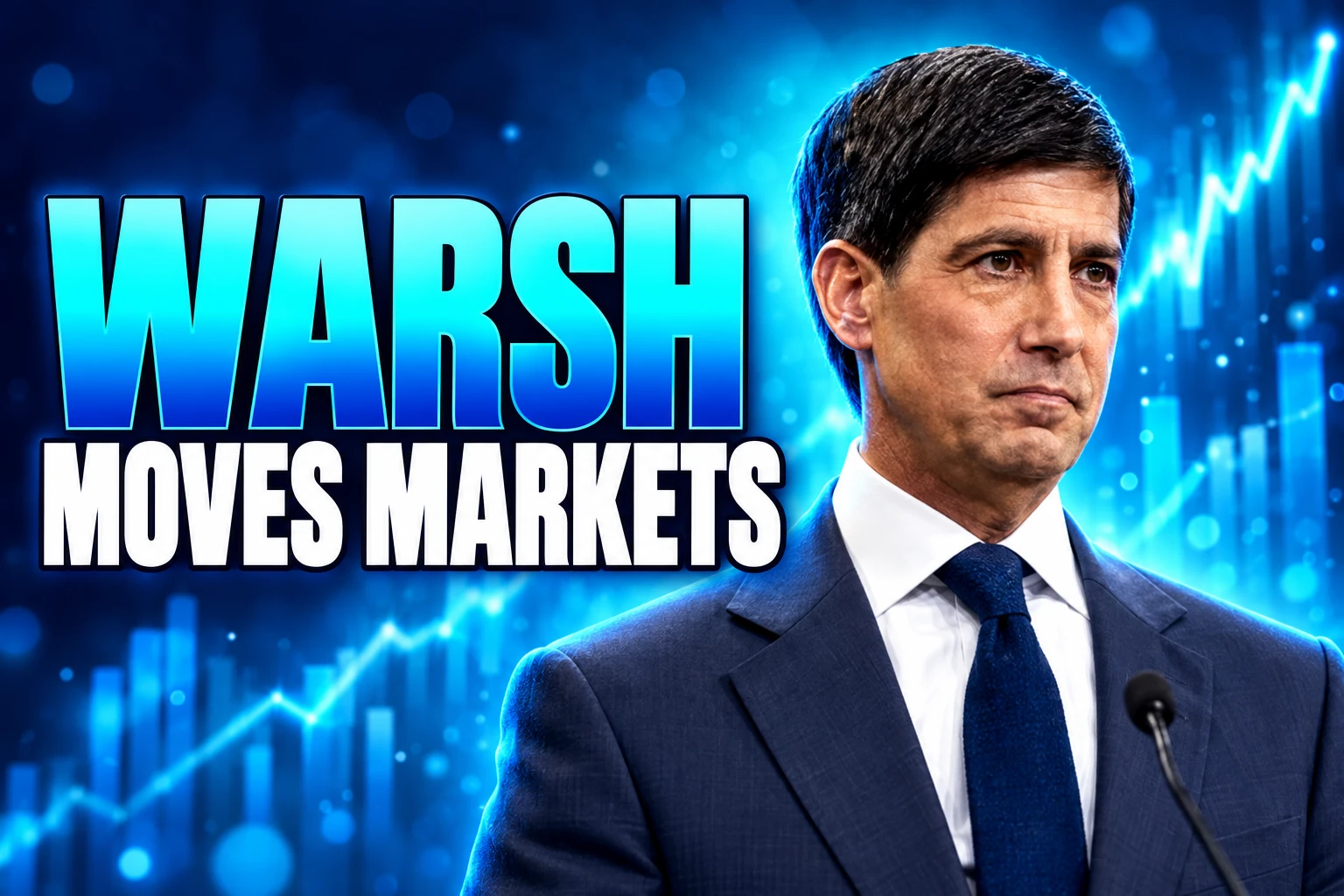
Warsh Rejects Rate Guidance and Still Moves Markets
Kevin Warsh refused to call Jackson Hole forward guidance, then set an inflation test that pushed September rate-hike odds above 66 percent.

Kevin Warsh told Jackson Hole on Friday not to treat his first speech as Fed chair as a rate signal. Traders treated it as one anyway.
In his prepared Jackson Hole keynote remarks, the new chairman spent his 100th day in the job burying forward guidance, then laid out an inflation reading hot enough that rate futures moved. Five days later, the implied odds of a September hike sit above 66 percent, up from about 35 percent before he spoke.
Don’t Call It Forward Guidance
The Kansas City Fed’s 49th Jackson Hole economic symposium ran August 27 to 29 at Jackson Lake Lodge, on a payments-and-innovation theme. Warsh spoke Friday at 10 a.m. Eastern, the slot chairs have used for more than 20 years to hint at the next rate move. He opened by asking the room not to hear it that way.
You can call it an outline. You can call it a trail map. Just don’t call it forward guidance.
Kevin Warsh, Chairman, Federal Reserve, Jackson Hole
He dated the habit to the 2008 crisis, when he sat on the Board as a governor, and said it has overstayed its welcome in normal times. Oversharing, he argued, creates ambiguity in the name of clarity and ties the committee’s hands when the facts change. He wants market prices “as unfiltered as possible,” and he does not want traders looking to the Fed for their next trade.
He even named the loop he is trying to break. If markets lean on the Fed’s words and the Fed leans on market prices, both sides miss the turn. He called that a hall-of-mirrors problem, and said the people who pay for a miss are not the traders. They are households stuck with high prices or sudden job risk.
Asked, in effect, to publish a reaction function instead, he refused that too. A Taylor-style rule, he said, works better in the lab than in the field, and he blamed 2021-style guidance for slowing the last fight against high inflation. “A quieter Fed, more purposeful in its communications, is better able to meet its objectives,” he said.
Inflation Is Still Running Too Hot
Then he did the thing a quieter Fed is not supposed to do. He walked through the price data in public, measure by measure, and left little doubt which side of the mandate he is watching.
The 12-month personal consumption expenditures index, the Fed’s preferred gauge, stands at 3.7 percent. The six-month change is 4.1 percent, so the recent pace is hotter than the year-long reading, not cooler. Core PCE and CPI, he said, tell the same story. Summer prints that beat forecasts “do not tell me that underlying trends have meaningfully improved.”
HOW WARSH READ THE PRICE DATA
| Measure | Latest reading | His comparison |
|---|---|---|
| 12-month PCE inflation | 3.7 percent | 2 percent “firm, fixed” target |
| 6-month PCE inflation | 4.1 percent | Speed of progress, not just the level |
| PCE items up more than 3 percent (12 months) | 54 percent of 199 components | 32 percent in the two pre-pandemic decades |
| Same share, six-month annualized | 49 percent | Still “quite elevated” |
| Post-pandemic peak of that share | About 77 percent | Down from the spike, not back to normal |
Wage growth, which many investors still treat as a leading inflation tell, is “not a reliable indicator of future inflation,” he said. Commodity prices “bear watching.” Medium-term inflation expectations look stable in surveys and in swaps, and he said that is a credit to the institution. He also warned that those measures “tend to look strong and durable until they don’t.”
The line that will follow him to the September meeting was the standard he set for himself. “We must be confident that underlying inflation is moving to our objective, clearly and at sufficient speed. Otherwise, we have work to do.” He added that the Fed owns “65 months of sustained, elevated inflation,” and that is where the blame belongs.
Markets Priced a Hike Anyway
He never named the September 15-16 meeting. He never said the word hike. He told the room he was “committed to a discipline, not to a decision.” The bond market still built a path.
WHAT FUTURES DID AFTER THE SPEECH
- Before Friday: Rate futures implied about a 35 percent chance of a quarter-point increase at the September meeting.
- By September 1: Those odds had moved above 66 percent, nearly double the pre-speech reading.
- Two-year yield: The note that tracks policy bets jumped about 10 basis points to 4.33 percent as he spoke.
- The policy rate: The target range is 3.50 percent to 3.75 percent, unchanged through his first two meetings.
That is the joke the speech cannot escape. Warsh said he does not believe in forward guidance, and traders wrote some for him before lunch. A quieter Fed, on this evidence, is not a silent one. It is a Fed whose inflation table now does the talking the old dot plot used to do, with the same result in the front end of the curve.
Some listeners still heard a blank. That reading is getting harder to hold in the rates market, where the two-year moved and the September contract repriced. The leftover doubt is not about what he thinks of 3.7 percent prices. It is about whether the committee will vote that way in two weeks.
Why Financial Conditions Look Loose
The hike case in the speech did not rest on prices alone. Warsh described an economy that, in his telling, can take higher short-term rates, and a set of financial conditions that are not doing the Fed’s work for it.
Labor, he said, is “consistent with full employment.” The jobless rate is 4.1 percent and has been roughly there for a couple of years. Four-week average jobless claims sit near their lowest level in decades. Low hiring and low firing, in his view, are partly the hangover from the huge post-pandemic job shuffle, not a stall. People who want work are, “by and large,” holding or finding it.
Output looks firm from the chair’s seat. Real consumer spending is up more than 2 percent over the past four quarters. Private domestic final purchases, a measure he prefers to GDP, have risen at a pace of nearly 3 percent so far this year. Business investment in equipment and intangibles is running at about 9 percent on a four-quarter basis, the strongest since 2021, and he said more than half of this year’s cap-ex growth is the AI buildout.
THE EVIDENCE HE CITED FOR EASY CREDIT
- Profits: For firms in the S&P 500, earnings are up more than 20 percent over the past year, with margins high against history.
- Spreads: Corporate-bond and leveraged-loan spreads sit near the low ends of their historical ranges, and issuance has been strong.
- Bank survey: In the July Senior Loan Officer Opinion Survey, standards for commercial and industrial loans were on the easier end of their historical range.
- The exceptions: Housing and agriculture show strain, which he noted and then set aside.
“Credit and loan markets are showing few signs of policy restraint,” he said. “I would be hard pressed to describe broad financial conditions as restrictive.” Put that next to 3.7 percent inflation and a labor market he calls fully employed, and the committee’s next debate writes itself, even if the chair will not.
The 100-Day Path to Jackson Hole
The speech landed because the first three months had trained the market to expect less, not more. Warsh replaced Jerome Powell in late May. He has now run two policy meetings and held the rate at both. In June he declined to put his own dot in the quarterly projections, a habit he had criticized before he took the job. In July the committee held again.
THE FIRST HUNDRED DAYS
- Late May 2026: Warsh takes over as chair after Powell’s term ends.
- June meeting: The committee holds the 3.50 percent to 3.75 percent range. Warsh skips a personal projection in the dot plot.
- July 28-29: The committee holds again. Three of 12 voters prefer a quarter-point increase. After the press conference, long-term yields jump as traders question whether the new chair will act.
- August 28: At Jackson Hole, he still refuses a rate path, and still gives the clearest inflation diagnosis of his tenure.
- September 15-16: The next vote. August jobs and inflation reports will be in hand.
July’s minutes, as he retold them, showed a unanimous view that labor was stable, output was solid, and inflation was too high. A “good majority,” including him, wanted more weeks of data before changing course, with “joint readiness to act as circumstances might require.” Three colleagues were already done waiting. Jackson Hole did not add a fourth public dissent. It added a chair who now sounds closer to those three on the facts, if not yet on the date.
He Came Ready to Talk About AI
The conference theme was payments and financial innovation, and a long stretch of the speech was the one Warsh seemed to want. He called this a hinge point after years of talk about stagnation and a global saving glut. Capital is pouring into AI infrastructure, he said, and the Fed is treating the technology as a possible new factor of production, not a sideshow.
He cited reports putting annualized token sales at the two leading labs above $100 billion, up 500-plus percent from a year ago. The open questions, in his telling, are when productivity shows up in the whole economy, whether tokens replace labor or sit beside it, and who keeps the returns, the labs and chipmakers or the firms and workers downstream. A task force on productivity and jobs, plus four others, will study those issues. Their recommendations, he stressed, “have no bearing on decisions we make in the current policy conjuncture.”
That caveat was easy to miss in a room waiting on rates, and it is the part of the speech that will age better than the September odds. If AI does lift supply, the inflation math changes. If it does not, the 9 percent cap-ex boom is just more demand against a 3.7 percent price level. He left that argument open on purpose. The rates market did not wait for the task forces.
The history of the Jackson Hole gathering is that the academic program is never the story. Chairs have used the Friday slot to preview easing, to preview pain, and, on Friday, to insist they were doing neither. The Tetons stay in the window. The rate path still gets written in New York.
What the September Meeting Can Still Change
The funds rate has not been raised since 2023. A quarter-point move on September 16 would be Warsh’s first tightening vote as chair, and the first test of whether Jackson Hole was a diagnosis or a decision. Patrick Harker, a former Philadelphia Fed president, put the pressure in one sentence after the speech: you cannot keep saying this is the job and then not act.
STILL AHEAD OF THE VOTE
- The data: August jobs and consumer prices land before the committee sits, along with the usual activity reports.
- The bar he set: Confidence that underlying inflation is moving to 2 percent, “clearly and at sufficient speed.”
- The politics: President Donald Trump chose Warsh and has wanted lower rates. A hike would be the first open break.
- The committee: Three voters already preferred a hike in July. Warsh’s inflation table gives them more company on the facts.
The burden of proof has flipped. Before Friday, incoming data had to justify a hike. After the speech, the data may have to weaken in a clear trend, not in one print, to justify another hold. He said the Fed should not set policy on stale or isolated numbers. That cuts both ways. A soft jobs report would not, on his own terms, settle it by itself.
He borrowed a line from Chuck Yeager: at the moment of truth, there are either reasons or results. The committee meets September 15 and 16. That is the first result that can match the speech.
Disclaimer: This article is news reporting and analysis of Federal Reserve communications and market pricing, and it is for information only. It is not investment, trading, or financial-planning advice, and it is not a recommendation to buy, sell, or hold any security, futures contract, or loan product. Readers who are making decisions about rates, bonds, or credit should consult a qualified financial advisor or investment professional who can review their own situation. Figures, policy odds, and official statuses reflect the sources available on September 2, 2026, and will change as new data and the September 15-16 meeting arrive.

Pixel Buds Firmware 6.144 Ties New Features to Pixel Gear

Eve Markoski-Wood Backs Her Mum as Wood Fights Bail

Trump Rejects an Iran Deal as Diesel Holds Near Records

Amazon Cuts the S26 Ultra to $979 After Samsung’s Hike

Ice Caves Land in Minecraft 26.4 Snapshot 3

Warsh Rejects Rate Guidance and Still Moves Markets

Dana-Farber Exits an MGB Medicare Advantage Network Early

NASA Launches the Roman Space Telescope’s Cosmic Bet

Russia Recycles Its Old Warning Over Storm Shadow Plants

Primetime’s $2.7 Million Preview Tops Pitt’s Costlier Film
-
 BUSINESS4 weeks ago
Dana-Farber Exits an MGB Medicare Advantage Network Early
-
 NEWS1 month ago
NASA Launches the Roman Space Telescope’s Cosmic Bet
-
 NEWS1 month ago
Russia Recycles Its Old Warning Over Storm Shadow Plants
-
 ENTERTAINMENT2 weeks ago
Primetime’s $2.7 Million Preview Tops Pitt’s Costlier Film
-

 BUSINESS1 month ago
Jet Drones Lock Down Kyiv and Strip Kherson of Heat
-

 NEWS1 month ago
Congo Starts Ervebo Vaccinations for a Different Ebola Virus
-

 ENTERTAINMENT1 month ago
Midnight Spider-Man Turns Peter Parker Into Oscorp’s Hybrid
-

 BUSINESS1 month ago
Record Cyclospora Outbreak Follows Seven Years Without an Inspection