
BUSINESS
Record Cyclospora Outbreak Follows Seven Years Without an Inspection
The FDA rated a Taylor Farms iceberg lettuce recall Class I after 11,458 cyclospora illnesses tied to a plant last inspected in 2019.

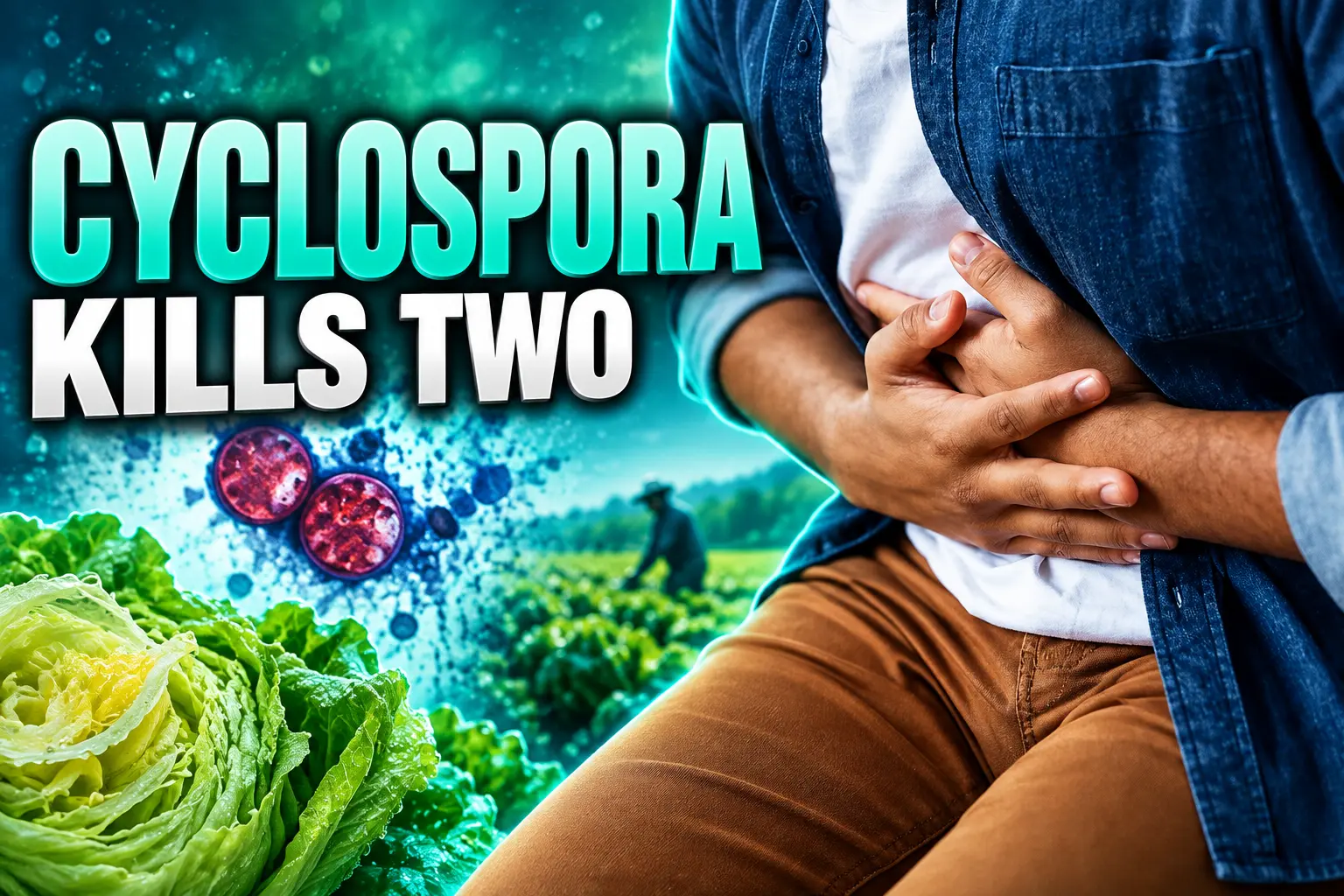
The Food and Drug Administration classified a Taylor Farms de Mexico iceberg lettuce recall as Class I on August 28, after 11,458 confirmed cyclospora illnesses in 20 states. Two people died in Michigan. The rating landed six weeks after the company pulled the lettuce, and seven years after the last FDA inspection of the plant now tied to the outbreak.
Federal investigators still have staff in Guanajuato. They say the recalled bags are gone. The case file is not.
FDA Rates the Recall Class I
On August 28 the agency posted its hazard rating for the July 17 recall of iceberg lettuce sourced from central Mexico. A Class I finding means there is a reasonable probability that eating the product will cause serious health harm or death. Best-if-used-by dates on the bags ran from July 18 to August 3, and audit checks found none of that lettuce still for sale.
The FDA has classified this recall as Class I, meaning the agency deemed the recall a situation in which there is a reasonable probability that the use of, or exposure to, a recalled product will cause serious health consequences or death.
U.S. Food and Drug Administration, August 28 constituent update
The same notice said the epidemiology tying the outbreak to the recalled lettuce, and the size of the event, stood apart from earlier cyclospora incidents. As of August 27 the outbreak investigation listed 11,458 illnesses reported from 20 states, 495 hospital stays, and 2 deaths. Georgia, Tennessee, and Texas were added in the latest weekly update.
Most people who get the parasite develop diarrhea with frequent bowel movements. Other common symptoms, the FDA said, include loss of appetite, weight loss, stomach cramps, bloating, gas, nausea, and fatigue. Some patients also report vomiting, body aches, headache, and fever. Symptoms can fade and then return. People with weak immune systems can stay sicker for longer and need closer care.
THE ILLNESS
- The parasite: Cyclospora is a microscopic organism that infects the bowels after someone swallows it in contaminated food.
- The usual season: U.S. outbreaks cluster in late spring and summer, when heat-loving contamination on produce is easier to miss.
- The lag: CDC and state labs can take about six weeks to decide whether a sick person belongs in this outbreak, so confirmed counts keep rising after a recall.
- The treatment gap: Many people recover without a test, which is why the true number of illnesses is higher than the laboratory tally.
The Class I label does not expand the recall. Taylor Farms de Mexico’s July 17 notice still governs which bags and food-service lots were pulled. What changed is the agency’s written judgment of how dangerous that product was.
The Same Plant Went Seven Years Unchecked
Before this outbreak, the FDA last inspected Taylor Farms de Mexico in 2019. Agency records described that visit as clean. The visit before that, in 2013, was not a routine check. It was an environmental assessment after a salad-mix outbreak already had people sick in Iowa and Nebraska.
The processor sits in Doctor Mora, in the state of Guanajuato. It supplies shredded and chopped iceberg for restaurants and retailers in the United States. This summer’s traceback converged on that single supplier because sick people had eaten shredded iceberg used by Taco Bell locations. Retail Marketside bags sold at select Walmart stores were in the same recall.
Inspectors did not walk the Mexican plant at the start of the 2026 outbreak. FDA updates show an onsite inspection and sampling at Taylor Farms de Mexico beginning around August 13, almost a month after the recall, then more sampling at iceberg growers. The agency said those visits continue with Mexican officials.
THE INSPECTION CALENDAR
- 2011: FDA records show a visit to the Guanajuato processor years before the first large salad-mix outbreak tied to the plant.
- August 12 to 19, 2013: FDA, with Mexican authorities and the company, conducts an environmental assessment at the processing facility and five farms after restaurant cases in Iowa and Nebraska.
- 2019: The last pre-outbreak inspection of Taylor Farms de Mexico finds no violations, according to agency records cited this summer.
- July 17, 2026: Taylor Farms de Mexico starts a voluntary recall of all iceberg lettuce sourced from central Mexico.
- August 13, 2026: FDA says it has begun onsite inspection and sampling at the plant, in coordination with Mexican officials.
- August 28, 2026: The agency classified this recall as Class I in its Enforcement Report.
Small domestic farms still get frequent visits for milk and other products that never cross a border. A major import processor that feeds national restaurant chains went seven years between FDA inspections, then became the named source of the largest cyclospora outbreak on U.S. record. That mismatch is the part of the file that will outlast any one week’s case count.
A 2013 Salad Mix Outbreak Left the Same Questions
In June through August 2013, CDC counted 631 people infected with Cyclospora cayetanensis in 25 states and New York City. Eight percent of ill people were hospitalized. No deaths were reported. Iowa and Nebraska tied restaurant cases to a bagged salad mix of iceberg, romaine, red cabbage, and carrots produced by Taylor Farms de Mexico and served at Olive Garden and Red Lobster.
FDA’s environmental assessment at the Doctor Mora plant ran August 12 to 19, 2013. The team collected produce, process water, irrigation water, environmental samples, and samples from sanitary facilities. Taylor Farms de Mexico itself logged 793 samples, including human feces from those facilities. The outbreak parasite was not detected in any of them. The written conclusion was that the assessment did not identify a source of the pathogen or a clear route onto the salad mix.
The plant was allowed to resume shipping after that review and after the company described a sampling plan for products and water. Thirteen years later, investigators again have epidemiology pointing at iceberg from the same processor, and again they have no confirmed positive product test. The 2013 file closed without a laboratory smoking gun. This year’s file is larger, and it still has that hole.
How Many People Got Sick From the Lettuce?
Illnesses in the lettuce outbreak began on June 14, and onset dates run through August 15, 2026. CDC said most of those people got sick before the July 17 recall. The two Michigan deaths involved residents with serious underlying health conditions; both had onset dates before the recall, the FDA said, after information from the state.
Confirmed food-service distribution of recalled iceberg ran June 29 through July 16 in 31 states. Recalled product may have moved farther, into places such as the District of Columbia, Puerto Rico, and several New England and Plains states. Marketside Iceberg Salad in 12-ounce and 24-ounce bags, and Shredded Lettuce in 8-ounce and 16-ounce bags, sold at select Walmart stores in 15 states. Customer records also show recalled product was sold in Mexico.
Taco Bell said it stopped using lettuce from Taylor Farms de Mexico as of July 17. That restaurant exposure is why early case maps clustered in the Midwest before the outbreak list grew to 20 states: Arkansas, Georgia, Iowa, Illinois, Indiana, Kansas, Kentucky, Massachusetts, Maine, Michigan, Missouri, Nebraska, New Hampshire, North Carolina, Ohio, Oklahoma, Pennsylvania, Tennessee, Texas, and West Virginia.
THE COUNTS COMPARED
| What was counted | Illnesses | Hospital stays | Deaths |
|---|---|---|---|
| 2013 U.S. cyclospora outbreaks (final CDC update) | 631 | 8 percent of ill people | 0 |
| 2019 national year, previously the worst on record | about 4,700 | not given in that year-end figure | not given in that year-end figure |
| May 1 to August 31, 2025, U.S.-acquired cases | 1,180 | not listed on the 2026 comparison table | not listed on the 2026 comparison table |
| 2026 lettuce outbreak as of August 27 | 11,458 | 495 | 2 |
| May 1 to August 24, 2026, all U.S.-acquired cases | 17,180 | 922 | 2 |
The lettuce cluster is not the whole year. Since May 1, CDC has received 17,180 laboratory-confirmed cases of cyclosporiasis acquired in the United States, across 48 states and the District of Columbia. That is more than 14 times the 1,180 cases logged in the same May-through-August window of 2025. Median age is 46. Fifty-six percent of patients are female. CDC is also aware of 11,844 additional cases that are not yet laboratory confirmed or still need work to show they were acquired in the United States.
CDC said the Taylor Farms iceberg outbreak was a major driver of this year’s rise, and that it is investigating other cyclospora illnesses that are not part of this cluster. The two deaths sit in both the lettuce table and the national table.
No Confirmed Positive Test, and a False Alarm
On July 18, FDA told Taylor Fresh Foods that a sample of iceberg from central Mexico had tested positive for cyclospora. The next day the agency reversed itself. Laboratory experts re-reviewed the result, said it did not represent true amplification, and treated it as a false positive. As of July 19, and still in the company’s August 20 update, there were no confirmed positive product tests.
That gap is real, and it is also not the whole investigation. Traceback still converged on shredded iceberg from Taylor Farms de Mexico used at Taco Bell locations where sick people had eaten. CDC said genotyping on samples from patients shows genetically related Cyclospora parasites caused these illnesses, extra evidence they share a source. Cyclospora on produce is hard to find in a lab even when it is present at levels that can make people sick.
Today, FDA and @CDCgov are providing an update on the multi-state Cyclospora outbreak linked to recalled iceberg lettuce from Taylor Farms de Mexico. https://t.co/X8VHuadvCL
Important things to know:
➡️ Cyclosporiasis can be a serious illness. We encourage anyone who suspects… pic.twitter.com/12LUHA59Ck— U.S. FDA (@FDA) August 6, 2026
The agency warned in that August 6 update that confirmed numbers would keep climbing after the recall because of the six-week linking lag. They did. The outbreak list went from 6,358 illnesses in 15 states on August 5 to 11,458 in 20 states on August 27, while FDA kept saying the recalled iceberg was off the market.
WHAT WE KNOW
- The traceback: FDA identified convergence on Taylor Farms de Mexico as the supplier of shredded iceberg used at Taco Bell sites tied to illnesses.
- The genetics: Patient samples in this outbreak typed as related to one another, which supports a shared source.
- The product window: Recalled food-service lots moved June 29 through July 16; retail best-by dates ended August 3.
WHAT IS UNCONFIRMED
- A positive food test: FDA has not confirmed cyclospora in a product sample after withdrawing the July 18 result.
- The field source: Onsite sampling at Mexican growers and the processor is still underway, and no public finding has named a ranch or a wash-water failure.
- Other 2026 clusters: CDC is investigating cyclospora illnesses that it says are unrelated to this lettuce, without naming those foods.
Company statements leaned on the missing lab result. Epidemiology and genotyping leaned the other way. Class I is the agency choosing the second pile of evidence.
Taylor Farms Says It Spends $200 Million on Safety
Taylor Farms, the Salinas, California, produce supplier that operates Taylor Farms de Mexico, said it invests more than $200 million annually in independently audited food safety work. It said it uses an FDA-validated cyclospora testing method, traces each lot to grower, ranch, harvest date, and time, and holds ranches to third-party GFSI audits. On July 17 it recalled all iceberg grown in central Mexico that had been named as a potential source, then widened that pull to all iceberg from the region.
As of July 18 the company temporarily suspended production of all products at the central Mexico facility and commissioned outside experts for a full review. It said it is no longer sourcing iceberg grown in central Mexico for the rest of the growing season. It also said no Taylor Farms branded salads or kits are in this outbreak, and that no Taylor Farms branded salad kits contain iceberg lettuce.
In an earlier note the firm wrote that traceback was indicating a specific independent farm that represents less than 1 percent of U.S. iceberg supply, and that it had still removed all iceberg from the region. That farm has not been named in the FDA outbreak table. The recall list that is named runs through food-service brands and Marketside retail bags, not a Taylor Farms logo on a supermarket salad kit.
The company remains confident in its systems, its hub page says, and it repeats the FDA line that no product sample has confirmed cyclospora as of August 20. Confidence is a statement. Class I is a rating.
Inspectors Are Still in Guanajuato
FDA’s August 27 update said onsite inspections and sampling at iceberg growers and the processing facility in Mexico are ongoing. The agency also said it remains confident that all recalled iceberg related to this outbreak is off the market. Those two sentences now sit side by side with a Class I label and a case curve that was still adding states in late August.
Some of that rise is paperwork. A person who got sick in mid-July can take weeks to be interviewed, tested, and assigned to the lettuce cluster. Last onset in the official table is August 15, so more laboratory-confirmed names can still land on the list. CDC already warns that the true number of sick people is higher because many never get a test.
Washing a leaf does not reliably kill this parasite. Cooking greens to a high enough temperature does. For a country that eats shredded iceberg on tacos and in bagged salads, that is a hard instruction to live with all summer. Shoppers who have stayed away from lettuce are waiting on something the 2013 assessment never produced: a public finding of how the parasite got on the plant, and proof the next load will be cleaner.
Until the Mexico sampling is finished, the record is this. A processor last inspected in 2019 shipped iceberg that federal epidemiologists tied to 11,458 confirmed illnesses. The bags are gone. The inspectors are still in the fields.
Disclaimer: This article is news reporting and analysis of a foodborne outbreak and related federal actions, and it is for information only. It is not medical advice, a diagnosis, a treatment plan, or a guide to whether any food in a home or restaurant is safe to eat. Readers who have diarrhea, fatigue, or other symptoms, or who have questions about food they recently ate, should consult a licensed physician or other qualified clinician. Case counts, recall status, hospital figures, and inspection findings reflect FDA and CDC updates available as of early September 2026 and may change as the investigation continues.

Pixel Buds Firmware 6.144 Ties New Features to Pixel Gear

Eve Markoski-Wood Backs Her Mum as Wood Fights Bail

Trump Rejects an Iran Deal as Diesel Holds Near Records

Amazon Cuts the S26 Ultra to $979 After Samsung’s Hike

Ice Caves Land in Minecraft 26.4 Snapshot 3

Warsh Rejects Rate Guidance and Still Moves Markets

Dana-Farber Exits an MGB Medicare Advantage Network Early

NASA Launches the Roman Space Telescope’s Cosmic Bet

Russia Recycles Its Old Warning Over Storm Shadow Plants

Primetime’s $2.7 Million Preview Tops Pitt’s Costlier Film
-
 BUSINESS1 month ago
Warsh Rejects Rate Guidance and Still Moves Markets
-
 BUSINESS4 weeks ago
Dana-Farber Exits an MGB Medicare Advantage Network Early
-
 NEWS1 month ago
NASA Launches the Roman Space Telescope’s Cosmic Bet
-
 NEWS1 month ago
Russia Recycles Its Old Warning Over Storm Shadow Plants
-
 ENTERTAINMENT2 weeks ago
Primetime’s $2.7 Million Preview Tops Pitt’s Costlier Film
-

 BUSINESS1 month ago
Jet Drones Lock Down Kyiv and Strip Kherson of Heat
-

 NEWS1 month ago
Congo Starts Ervebo Vaccinations for a Different Ebola Virus
-

 ENTERTAINMENT1 month ago
Midnight Spider-Man Turns Peter Parker Into Oscorp’s Hybrid