
ENTERTAINMENT
Davina McCall Reveals Cardiovascular Disease After Cholesterol Warnings
Davina McCall says she has cardiovascular disease after years of high cholesterol that was treated as offset by good HDL, the same miss her guest faced.

Davina McCall told listeners on 18 October 2026 that she has cardiovascular disease, on a British Heart Foundation episode of Begin Again. The 59-year-old presenter did not describe the type or the treatment. She put the news next to a cholesterol story she has carried for decades.
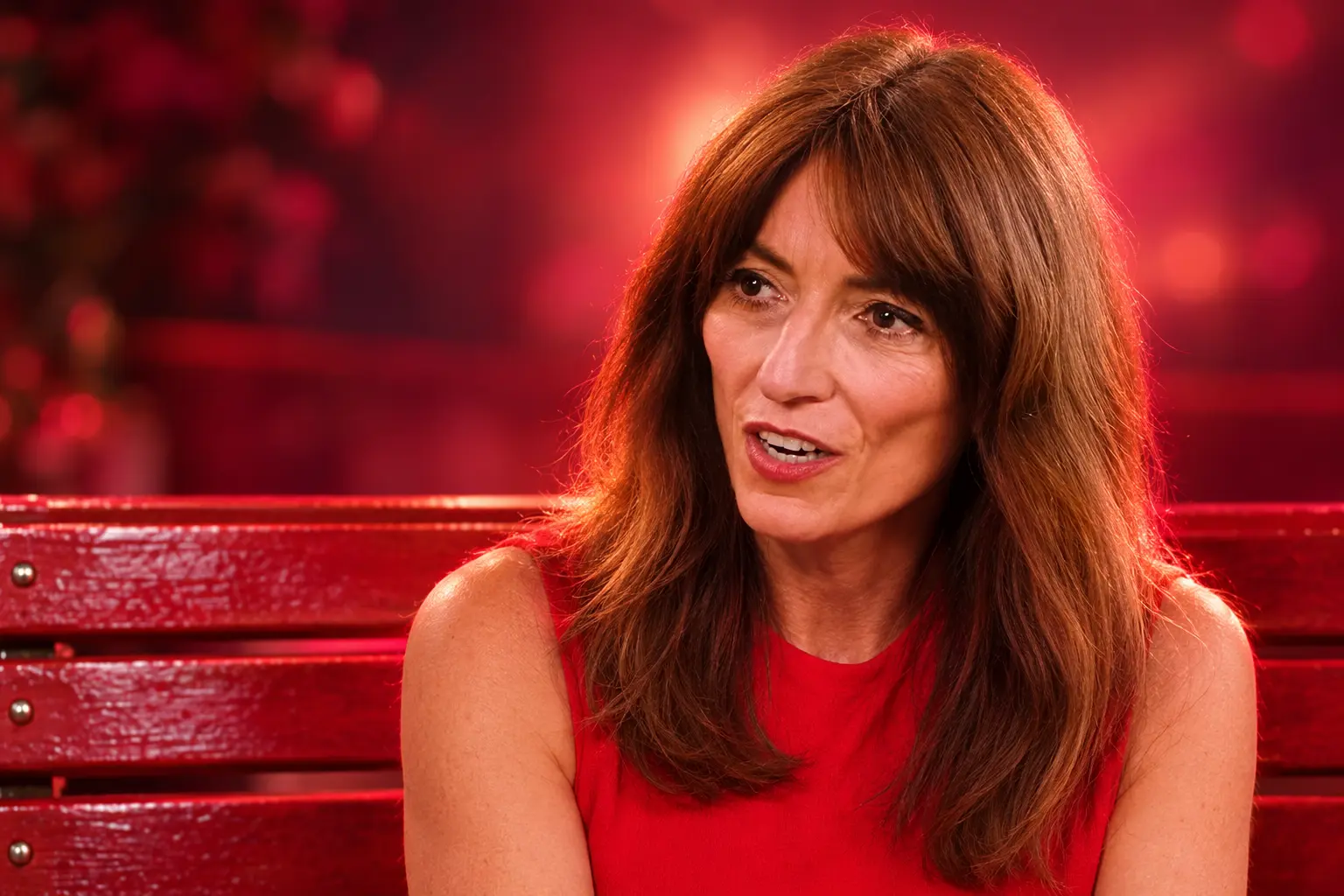
The episode went out at 8am BST for World Menopause Day. McCall sat with heart-attack survivor Louise McGill and Cambridge cardiologist Dr Rouchelle Sriranjan-Rothwell on one of the charity’s red In Living Memory benches.
Davina McCall Says She Has Cardiovascular Disease
Introducing McGill, McCall made the disclosure in one line, then moved the conversation on to women and heart risk. “I just also wanted to let you know that I also have cardiovascular disease, and this is a very important conversation to have,” she said.
She later tied the news to her cancer year. “Anyone can get sick and when I had my cancer experience, you just suddenly feel vulnerable in a way you weren’t before,” she said. “Once you’ve been ill, you think, ‘Oh, I thought I was invincible.’”
The 23-minute special, titled The Surprising Link between Menopause & Your Heart! (She Was Considered Low Risk), was made with the British Heart Foundation. McCall has given almost no extra detail since it landed, which is the point she seemed to want: the condition named, the camera pointed at other women.
She has spent two years in public with harder diagnoses. Surgeons removed a rare benign colloid cyst from her brain in November 2024. Breast cancer followed in October 2025, with an all-clear in April 2026. In a January interview she said she was moving to a four-day week, calling herself “my latest project.” This latest disclosure is quieter, and closer to the disease that actually kills most women in her age group.
Louise McGill Was 45 and Called Low Risk
McGill’s story is the one McCall used as a mirror. She was 45, with twin girls aged nine, when she woke with chest pain. “I woke up with a pain in my chest and I did think this is it. My time’s off,” she said. Paramedics told her they were pretty sure she was having a heart attack. She later had a stent fitted.
Ten weeks earlier she had been called in for a routine check at her local surgery. Cholesterol was slightly high. Everything else, she was told, put her outside the high-risk group, with no further action. About four weeks before the attack she finished a 5k run and felt fine. McCall admitted the picture in her own head was older. “When we think about heart attacks, I’m always thinking 60 plus,” she said.
A clean score and a finished race are poor shields if the test never looked hard at the artery. McGill was not idle, and she was not unexamined. She was labelled low risk, then she was in an ambulance. That is the pattern the episode was built to name, and it is why McCall’s own cholesterol history sat so neatly beside it.
HOW LOUISE’S CHECK MISSED THE ATTACK
- Ten weeks before: A routine surgery check finds slightly high cholesterol and still rates her low risk, with no further action.
- About four weeks before: She completes a 5k run and has no warning symptoms she later recalls.
- The morning of the attack: Chest pain on waking; paramedics tell her they are pretty sure it is a heart attack, and she later has a stent fitted.
Fitness culture still treats a 5k and a passed check as proof the heart is sound. McGill had both, at 45, and the attack still came. The louder lesson from that hour is not that training is pointless. It is that a low-risk stamp can sit on top of a blocked artery and look like reassurance.
She Was Told Good Cholesterol Offset the Bad
McCall recognised the pattern immediately. “That’s exactly what happened to me,” she said. “I had high cholesterol and I’d had it for quite a long time and it was deemed because I had high good cholesterol that that offset the bad or something. But actually, is it true that high cholesterol is quite a good warning sign actually that we should look out for?”
I had high cholesterol and I’d had it for quite a long time and it was deemed because I had high good cholesterol that that offset the bad or something.
Davina McCall, Begin Again, 18 October 2026
She first heard she had high cholesterol about 20 years before a 2021 interview, when she was trying to get pregnant and asked for blood tests. She has spoken of a family history of high cholesterol and a grandmother who had a heart attack. In 2021 she called it a hidden danger you cannot see, and said too few people get it checked. She also said diet and food swaps had helped her keep it in check. The new diagnosis sits on top of that long, managed, slightly waved-away number.
British Heart Foundation guidance still uses the old labels, good and bad, but the numbers it wants treated are the bad ones. Healthy HDL and LDL cholesterol levels are set as HDL of 1.2 mmol/L or above for women (1.0 for men), LDL below 3.0 mmol/L, non-HDL at 4.0 or below, and total cholesterol at 5.0 or below. High HDL is not a free pass on a high LDL or non-HDL reading. Trials that raised HDL with drugs did not cut heart attacks the way lowering LDL does, which is why current targets ignore the offset story McCall was told.
DAVINA MCCALL’S PUBLIC HEALTH DATES
- Around 2001: High cholesterol found on blood tests when she is trying for her first pregnancy, a fact she later dated as about 20 years before a 2021 interview.
- November 2024: Surgery to remove a rare benign colloid cyst from her brain, found during a health scan tied to her menopause work.
- October 2025: Breast cancer diagnosed after she found a lump; she later has a lumpectomy and radiotherapy.
- April 2026: All-clear from breast cancer after a March scan.
- 18 October 2026: On Begin Again, she says she also has cardiovascular disease.
She still has not said which form of cardiovascular disease she has, or whether she is on a statin, a stent pathway, or only closer monitoring. The cholesterol line is the part she chose to put on the record.
What Menopause Does to Cholesterol and Arteries
Before menopause, women as a group have a lower risk of coronary heart disease than men. After it, that gap closes. The British Heart Foundation says an oestrogen fall raises coronary risk because the hormone helps control cholesterol and keeps blood vessels in better shape. When it drops, fat can build up in arteries. Cholesterol can rise. Blood pressure can rise. Sugar control can worsen. Weight often gathers at the waist, and fat around the heart can increase.
Women’s Health Concern, in a July 2025 factsheet reviewed with the British Menopause Society, says cholesterol rises for most women in midlife: around 59 per cent of women aged 45 to 55, 66 per cent of those aged 55 to 64, against 37 per cent at ages 33 to 44. That is the window McCall and McGill were talking about, and it is the window a 10-year risk score can still call low if the woman is slim, does not smoke, and has a tidy HDL number.
A UK Biobank analysis of 501,389 adults, published in Open Heart, found dyslipidaemia was less common in younger and premenopausal women than in men, then more common after 60 and after menopause. Treatment and control of dyslipidaemia were both lower in women than in men, by 12.5 per cent and 12.6 per cent. The blood result is only half the miss. The prescription rate is the other half.
WHAT SHIFTS AFTER PERIODS STOP
- Oestrogen: Levels fall in perimenopause and menopause, and the hormone’s usual help with cholesterol and vessel health fades with them.
- Cholesterol: The British Heart Foundation says levels can go up after menopause, raising the chance of a heart attack or stroke.
- Blood pressure and sugar: Vessels may respond less well to change, and the body may handle glucose less well, which can feed diabetes and weight gain.
- Where fat sits: Weight often gathers at the waist, and fat around the heart can increase.
McCall’s takeaway on the episode was blunt. “Heart attacks and cardiovascular disease is rife, especially in women post-menopause, and we don’t know that,” she said. “If there’s one takeaway today, it’s not to brush things off. Get your blood pressure and cholesterol checked, and if something feels wrong, listen to your body.”
Heart Disease Kills More Women Than Breast Cancer
Dr Sriranjan-Rothwell opened her contribution with the global line. “Cardiovascular disease is the biggest killer of women worldwide,” she said. In England the British Heart Foundation’s July 2026 factsheet is more specific: coronary heart disease kills nearly twice as many women as breast cancer, and it kills more women before 75 as well. One in 16 women in England, and one in eight men, die from coronary heart disease.
That is the mismatch behind McCall’s cancer-to-heart sequence. Breast cancer is the diagnosis the public already associates with her, and with midlife women. Coronary disease takes more of those lives and gets a fraction of the same attention, including inside GP risk scores that still read a 45-year-old runner as safe.
ENGLAND HEART FIGURES, JULY 2026 FACTSHEET
| Measure | Figure |
|---|---|
| People dying from CVD in England, 2024 | 137,572 |
| People dying from CVD in the UK, 2024 | 169,205 |
| Living with CVD in England | More than 7 million |
| Living with coronary heart disease in England | About 1.9 million |
| CHD deaths in England each year | About 50,000 |
| Heart-attack hospital admissions in England each year | About 80,000 |
| Adults in England with cholesterol above 5 mmol/L | 48 per cent |
| CHD deaths in women vs breast cancer, England | Nearly twice as many |
Around 48 per cent of adults in England have cholesterol above the 5 mmol/L national guide. McCall has been in some version of that group since her first pregnancy tests. The factsheet also records about 80,000 hospital admissions for heart attacks in England each year. McGill was one of those admissions, after a check that had already seen the cholesterol flicker and filed it.
Adults in England aged 40 to 74 are meant to be offered a free NHS Health Check from age 40, usually every five years, covering blood pressure, cholesterol, and a 10-year cardiovascular risk score. McGill’s “random call up from your local doctors” was that machine working as designed. The design still let a 45-year-old woman with slightly high cholesterol walk out as low risk.
A $10 Million Search for Silent Artery Damage
The research guest on the episode, Dr Sriranjan-Rothwell, is an NIHR clinical lecturer in cardiology at the University of Cambridge. Her clinical work is interventional cardiology, the stent-and-artery end of the specialty McGill met the hard way. The study she discussed is SHE-HEALS, Stopping atherosclerotic heart and vessel disease in women, funded by a US $10 million SHE-HEALS award from the Global Cardiovascular Research Funders Forum in January 2026.
BHF Professor Ziad Mallat at Cambridge and Professor Martha Hickey at the University of Melbourne lead a network of 13 institutions across seven countries. The plan is to watch what happens inside arteries during perimenopause, including the effect of age at menopause and of HRT, then run the largest trial of its kind to find silent atherosclerosis in women around that turn and test whether earlier treatment of blood pressure and cholesterol can slow, stop, or reverse it. Current guidelines, the team says, miss that window.
Today the devastating reality is that too many women still die from heart disease because they have been under-diagnosed and under-treated.
Dr Charmaine Griffiths, Chief Executive, British Heart Foundation
WHAT WE KNOW
- The disclosure: McCall said on 18 October 2026 that she has cardiovascular disease, on a BHF partnership episode of Begin Again.
- The cholesterol history: She has described high cholesterol since her first pregnancy tests, and said high HDL was treated as offsetting the rest.
- The guest parallel: Louise McGill had a heart attack at 45, 10 weeks after a low-risk check and about four weeks after a 5k.
WHAT IS UNCONFIRMED
- The diagnosis type: She has not said whether this is coronary disease, a prior event, angina, or another vessel condition.
- The treatment: No public record yet of statins, procedures, or a change in her four-day working plan.
McCall has now put three diagnoses in two years in front of a mass audience, and the quietest of them is the one that matches how most women in Britain actually die. She asked for blood pressure and cholesterol checks, and for symptoms not to be brushed off. She did not ask anyone to treat a famous HDL number as a shield.
Frequently Asked Questions
What Is Cardiovascular Disease?
Cardiovascular disease is an umbrella for conditions that affect the heart or blood vessels, usually tied to fatty build-up in arteries, called atherosclerosis, and sometimes to vessel damage in the brain, heart, kidneys, or eyes. The four main groups are coronary heart disease, stroke, peripheral arterial disease, and aortic disease, and the World Health Organization attributes four in five CVD deaths to heart attacks and strokes.
Does High HDL Cholesterol Cancel Out High LDL?
No. HDL helps carry unused cholesterol back to the liver, which is why it is still nicknamed good, but a high HDL reading does not cancel a high LDL or non-HDL result, and drugs that raised HDL have not cut heart attacks the way LDL-lowering has. Women’s Health Concern notes that 1.4 mmol/L HDL is often called optimal and that levels above that do not add extra protection.
When Should Women in England Get Cholesterol Checked?
In England, people aged 40 to 74 without certain existing conditions should be offered an NHS Health Check every five years, which includes a cholesterol test and a 10-year heart-risk score, and anyone can also ask a GP or some pharmacies for a lipid profile outside that cycle. After menopause, or with a family history of high cholesterol or early heart disease, waiting for the next five-year letter is a weak plan, which is the practical edge of McCall’s warning.
Can HRT Lower Heart Risk After Menopause?
The British Heart Foundation says there is evidence that HRT can reduce the risk of coronary heart disease, heart attack, and stroke when it is started within 10 years of menopause and before age 60, because it replaces hormones that help protect the heart. That window is a medical decision with a GP or menopause clinic, not a podcast prescription, and SHE-HEALS is still testing how HRT changes artery risk in a dedicated trial.
What Is the SHE-HEALS Study?
SHE-HEALS is a five-year global programme, co-led from Cambridge and Melbourne, that won about US $10 million in 2026 to map how perimenopause changes arteries and to run a large trial for silent atherosclerosis in women around menopause. Funders include the British Heart Foundation through the Global Cardiovascular Research Funders Forum, and the team wants the results to change prevention guidelines rather than add another awareness week.
Disclaimer: This article is news reporting and analysis of Davina McCall’s public health disclosure and of published British Heart Foundation, NHS, and research figures. It is for information only and is not medical advice, a diagnosis, or a treatment plan for cholesterol, menopause, HRT, or cardiovascular disease. Readers who are worried about heart symptoms, blood-test results, or hormone therapy should speak to a GP, cardiologist, or qualified menopause specialist before changing medicines, diet, or screening. Figures and statuses are those given by the named sources on the dates cited and can change with new tests, new guidelines, or a fuller account of McCall’s own condition.

Ohtani Game 4 Logoman Card Sells for $3.24 Million

Cole Kmet’s Season Ends, and Chicago’s Tight End Plan Starts

NBA Seeks Soccer Money After EuroLeague Clubs Refused

Amazon’s First Bond Tests Leave the Broccoli Chair Empty

Tyrese Maxey Owns the Night Built for LeBron James

Warsh Rejects Rate Guidance and Still Moves Markets

Dana-Farber Exits an MGB Medicare Advantage Network Early

NASA Launches the Roman Space Telescope’s Cosmic Bet

OpenAI’s Cyber Letter Puts the Defense Bill on Governments

Russia Recycles Its Old Warning Over Storm Shadow Plants
-
 BUSINESS2 months ago
Warsh Rejects Rate Guidance and Still Moves Markets
-
 BUSINESS1 month ago
Dana-Farber Exits an MGB Medicare Advantage Network Early
-
 NEWS2 months ago
NASA Launches the Roman Space Telescope’s Cosmic Bet
-
 NEWS2 months ago
OpenAI’s Cyber Letter Puts the Defense Bill on Governments
-
 NEWS2 months ago
Russia Recycles Its Old Warning Over Storm Shadow Plants
-

 ENTERTAINMENT4 weeks ago
Primetime’s $2.7 Million Preview Tops Pitt’s Costlier Film
-

 BUSINESS2 months ago
Jet Drones Lock Down Kyiv and Strip Kherson of Heat
-

 ENTERTAINMENT2 months ago
Midnight Spider-Man Turns Peter Parker Into Oscorp’s Hybrid