
GAMING
Greg Zeschuk Says the Buyout Finished BioWare
Greg Zeschuk says EA’s $55 billion buyout was the final nail for BioWare, 78 days before Mass Effect Universe and the Edmonton studio died.

Greg Zeschuk was fishing for steelhead on the Babine River when Electronic Arts closed BioWare and cancelled Mass Effect on October 21, 2026. He learned from ten texts in a British Columbia lodge with bad cell service. The Edmonton studio he co-founded in 1995 was gone 78 days after a $55 billion buyout.
He had already done his grieving in 2012. What he would not swallow is who made the call, and the idea that a game like Mass Effect can be rebuilt with spare headcount and software.
Zeschuk Heard the News Off a Steelhead River
He did not find out until later that Wednesday. He came off the river, opened his phone, and the messages were already waiting. “I got like ten texts,” he told interviewer Brian Crecente. “I came off the river and got to my little room and opened my phone, and it’s like, ‘I’m so sorry to hear about BioWare.’ And I’m like, ‘Oh shit.’”
By the Friday flight home he had “already shelved it away.” He spoke with fellow co-founder Ray Muzyka, who declined to talk. This was Zeschuk’s first interview on the shutdown, given from Edmonton on October 28, 2026.
“I didn’t have the immediate impact,” he said. “I wasn’t there to share in the moment, which in some ways was nice because I was able to kind of just take my time with it.”
The studio’s own goodbye went up the same afternoon the cuts landed, naming Baldur’s Gate, Neverwinter Nights, Star Wars: Knights of the Old Republic, Dragon Age, Mass Effect, and Anthem, then ending early work on the next Mass Effect.
— BioWare (@bioware) October 21, 2026
About 400 jobs went across Electronic Arts, about 3 percent of staff, including about 50 at BioWare. He called the hunt those people now face “a sort of terrifying endeavor and super sad.”
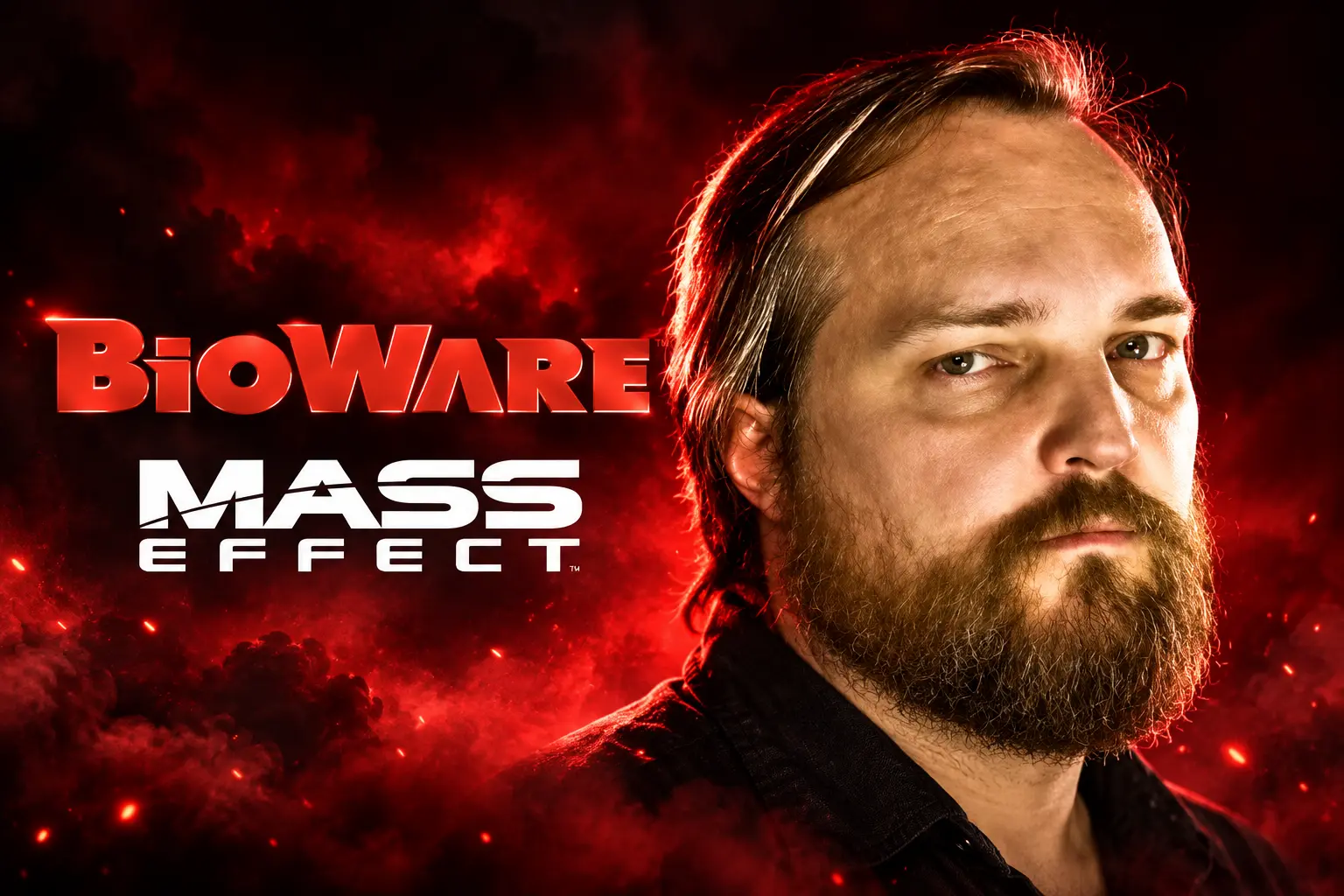
78 Days After EA Went Private
The acquisition by PIF, Silver Lake, and Affinity Partners closed on August 4, 2026. Shareholders got $210 a share. The stock left Nasdaq. Counsel to the buyer group described $18.5 billion of debt financing behind the take-private, which had been announced on September 29, 2025 and approved by stockholders on December 22, 2025.
On close day, Silver Lake’s Egon Durban said the group was proud to “invest heavily in EA’s growth, including what AI can do to enhance game development and player experience.” PIF’s Turqi Alnowaiser talked up “massive global sports and gaming franchises.” Andrew Wilson, EA’s chairman and chief executive, promised to “invest boldly, accelerate innovation, and build the next generation of games.”
Zeschuk had an inkling as soon as that sale went through. “I think it was the final nail in the coffin,” he said. “I think that was the crux of it in a sense. Once again it’s a completely different company now.” He suspects the purchase was mostly about sports titles and “maybe Battlefield,” with everything else “kind of extraneous.”
“BioWare makes these kind of unusual games that take a long time and they’re complicated and so it’s easier just to pump out sports games every year and that’s a better business model in some ways,” he said.
Chief operating officer David Tinson and chief studios officer Cam Weber put that math in writing. They said they had taken “a hard look” for months and would put people and money on fewer big bets: Battlefield, Apex Legends, Marvel’s Iron Man, the next Star Wars Jedi, EA Sports FC, a social football project called Project Gridiron, and a Fight Night revival. A Sims project, Project Lotus, was paused so another Sims effort, Project Evergreen, could keep going. The skate. team shrank. Then the Mass Effect line.
“We’ve had a small team at BioWare working on early-development for Mass Effect,” they wrote, before closing the studio and our Edmonton workspace.
WHAT EA KEPT AND WHAT IT CUT
| Project | October 21 decision |
|---|---|
| BioWare / next Mass Effect | Studio closed, game ended |
| Project Lotus (The Sims) | Paused |
| Project Evergreen (The Sims) | Kept, with more time |
| skate. | Kept, with a smaller team |
| Battlefield and Apex Legends | Further investment |
| Marvel’s Iron Man and next Star Wars Jedi | Still coming |
| Project Gridiron and Fight Night | New sports work |
Video game analyst Joost van Dreunen said a 50-person team on a game years from launch is the easiest line to cut, whatever its legacy. That is the business case. It is also the thing Zeschuk says those bosses cannot see from a spreadsheet.
The Executives Who Never Made a Game
He does not pin the long fade on the day he and Muzyka walked out. “I’m not going to have so much hubris to say Ray and I were the linchpin in the chain, our departure ruined everything,” he said. Studios are a function of the people, and people leave. The change is “slow and insidious.”
EA still gave the place several tries after 2012. He counts Dragon Age: The Veilguard as the last of those. “The first three shots happened, which is, I think, a pretty huge success.” The fourth was the next Mass Effect. It never got that chance after the buyout.
He also rejected the old story that BioWare sold in 2007 because it was failing. “There was no coercion or pressure. We were in good shape.” A lot of it, he said, was funding the Star Wars work in Austin and the stability of sitting inside a bigger company. “We had options actually. We thought we chose the best option that was available to us at the time.”
Warren Spector, the retired Deus Ex designer, tore into the shutdown in public. Zeschuk would not join that fight. “Honestly, it’s not my rodeo,” he said. “I had to break with it emotionally 15 years ago.”
The part that still bothers him is how the people who greenlight games treat the people who make them.
There’s this weird belief that you can just kind of recreate great games with random people and AI. It doesn’t work.
Greg Zeschuk, BioWare co-founder, in his first interview after the closure
“The other harsh reality of almost all these companies, the people that go down the business track never really come from the development track,” he added. “Because none of these people have ever made a game, like, never really sat and made one, like, from start to finish, even a small thing, they just don’t know how it works.”
That is a direct hit on the close-day pitch that AI will enhance how EA builds games. It is also why a trailer-stage Mass Effect still died as “early development.” Bosses who never shipped a title still expect the years of craft they just dismissed, and they still talk as if a new roster plus generation tools can stand in for the room that learned how those games actually get made.
Why Edmonton Is Who Lost BioWare
Zeschuk said the shutdown is saddest for Edmonton, the city that used a side project from three doctors to prove you could ship famous role-playing games from a place nobody filed under game making. Former BioWare senior writer Ben Gelinas called the studio part of the city’s DNA and said it pulled a whole generation of developers north. The founders already left. The city kept the beacon until October 21.
“I’m not saying it doesn’t hurt and doesn’t suck,” Zeschuk said. “And I think it’s kind of sad. It’s actually, in some ways, saddest for the city of Edmonton, where we’re from, because we were kind of this beacon of hope and excitement and possibility. We showed you could do something really special in a place that was not known for doing things like that.”
He and Muzyka later received the Order of Canada for that work. Gelinas, who wrote BioWare: Stories and Secrets from 25 Years of Game Development, said he never thought the studio would truly shut. “It just seemed like a forever place here in the city.”
FROM THREE DOCTORS TO A DARK FLOOR
- 1995: Greg Zeschuk, Ray Muzyka, and Augustine Yip, medical students in Edmonton, found BioWare.
- 1996: The studio ships its first commercial game, Shattered Steel.
- 2007: They sell to Electronic Arts while still, Zeschuk says, in good shape and with other options.
- 2012: Zeschuk and Muzyka retire after Mass Effect 3 and break with the company on purpose.
- August 4, 2026: The PIF-led group completes the $55 billion buyout.
- October 21, 2026: EA closes the Edmonton workspace and ends the next Mass Effect.
Gelinas said BioWare started small, “an indie before indies,” then brought developers into a city that was not on the usual map. In later years the staff fractured into other local teams. “You can trace almost all of them to BioWare in some form.”
WHAT THE STUDIO PLANTED IN EDMONTON
- The origin: Three doctors built a hit factory in a city known for other work, then spent more than 30 years there.
- The pipeline: Gelinas said its rise pulled an entire generation of developers to Edmonton, and that many local careers still trace back to that floor.
- The kinship: He described a staff that stayed for life in a business where people usually hop studios, bonded over “strange, giant story games.”
- The afterlife: He argued even the brewery Zeschuk runs would not exist without BioWare, and that the company is “the most Edmonton thing I can think of.”
“I don’t think it could have happened anywhere else, because we’re such a city of people who hunker down and make weird stuff,” Gelinas said. The weird stuff now lives in other rooms. The name on the door does not.
The Trailer Arrived a Day After the Studio Died
The next Mass Effect was first teased at The Game Awards in December 2020. In November 2025, BioWare still said the game was in development and that EA remained committed to more stories in that universe. On October 21 the same company called the work early and killed it.
On October 22 a roughly two-minute internal reel hit Reddit. On-screen text said it was in-engine footage from a small team using pre-production assets. Jason Schreier later confirmed the video as genuine. The title card read Mass Effect: Universe, with a Coming Soon line that no longer had a studio behind it.
The clip is a small spy-thriller beat in the Milky Way: a new ex-military human in an N7 coat, Liara T’Soni older than fans last saw her, a bar fight, glimpses of a sleek ship, a krogan, a salarian, a turian. Shepard and Ryder are not the lead. For a project Tinson and Weber still filed as early, it was far enough along to pitch the people who then closed the building.
That gap is the tell. A 50-person group had already cut a leadership trailer, and the public letter still used the language that makes a cut look cheap and tidy. Unusual, slow, complicated games lose that argument every time the other column is a yearly football sim.
He Already Walked Out of That Crucible
Fans wanted to know if he would try to take the name and the Mass Effect rights back. He did not let the question land. “No, no,” he said. “For me it was time to go, and I kind of walked out of the games business without any intention of ever returning.”
He is happy as a player. He skipped Mass Effect: Andromeda, tried a bit of Anthem, then came back as “a pretty avid player.” Combat games have replaced the story epics he used to ship. He has more than 1,200 hours in Nioh 2 and calls Elden Ring probably the greatest game ever made, “though the Zeldas are pretty close.”
Since 2017 he has run his Edmonton lambic brewing company, Blind Enthusiasm, which started inside his restaurant Biera. It now employs a dozen people, makes 60,000 to 100,000 bottles a year in 750-milliliter format, and ships to the United States, Europe, Japan, and soon China. He calls it “a big boutique.”
“I’m just at a point in my life where I’ve got my own other business,” he said. “My brewing business is going really well. I’ve got a whole other thing I’m doing, and I’m not sentimental or nostalgic. I’m kind of, like, that chapter’s closed.”
Making a great game, he said, is still a personal struggle he will not repeat. “Having gone through the crucible of game development, I’m not going back in there.”

Ken Urker’s Accidental Overdose Leaves His Finders Waiting

A Third Carrier Arrives as Hormuz Tankers Keep Burning

Shoe Prices Hit a Record as Flagship Pairs Stay Put

Nvidia’s First Call Without Huang Tests the Money Machine

Blake Griffin Says Oklahoma City Taxpayers Bought a Thunder Arena

Warsh Rejects Rate Guidance and Still Moves Markets

Davina McCall Reveals Cardiovascular Disease After Cholesterol Warnings

Dana-Farber Exits an MGB Medicare Advantage Network Early

NASA Launches the Roman Space Telescope’s Cosmic Bet

OpenAI’s Cyber Letter Puts the Defense Bill on Governments
-
 BUSINESS3 months ago
Warsh Rejects Rate Guidance and Still Moves Markets
-
 ENTERTAINMENT4 weeks ago
Davina McCall Reveals Cardiovascular Disease After Cholesterol Warnings
-
 BUSINESS2 months ago
Dana-Farber Exits an MGB Medicare Advantage Network Early
-
 NEWS3 months ago
NASA Launches the Roman Space Telescope’s Cosmic Bet
-
 NEWS3 months ago
OpenAI’s Cyber Letter Puts the Defense Bill on Governments
-

 NEWS3 months ago
Russia Recycles Its Old Warning Over Storm Shadow Plants
-

 ENTERTAINMENT2 months ago
Primetime’s $2.7 Million Preview Tops Pitt’s Costlier Film
-

 BUSINESS3 months ago
Jet Drones Lock Down Kyiv and Strip Kherson of Heat