
BUSINESS
Euro Zone Inflation Jumps While Core Prices Barely Move
September prints from France, Italy, Germany and Spain jumped on war-time energy, but core rates and wages have not, and Lagarde still backs a measured ECB path.

France, Italy, Germany and Spain all posted faster euro zone inflation in September as energy costs jumped after months of war around Iran. Each reading sits above the European Central Bank’s 2% target, and each one is an energy story first.
The gauge the bank actually watches for a wage spiral has barely shifted. German core inflation is still 2.4%, Italian core is 1.7%, and pay growth slowed in the second quarter. Christine Lagarde told the European Parliament on 28 September that a measured reply remains the plan, even as markets price four more rate increases over the next year.
Four Capitals Print the Same Energy Bill
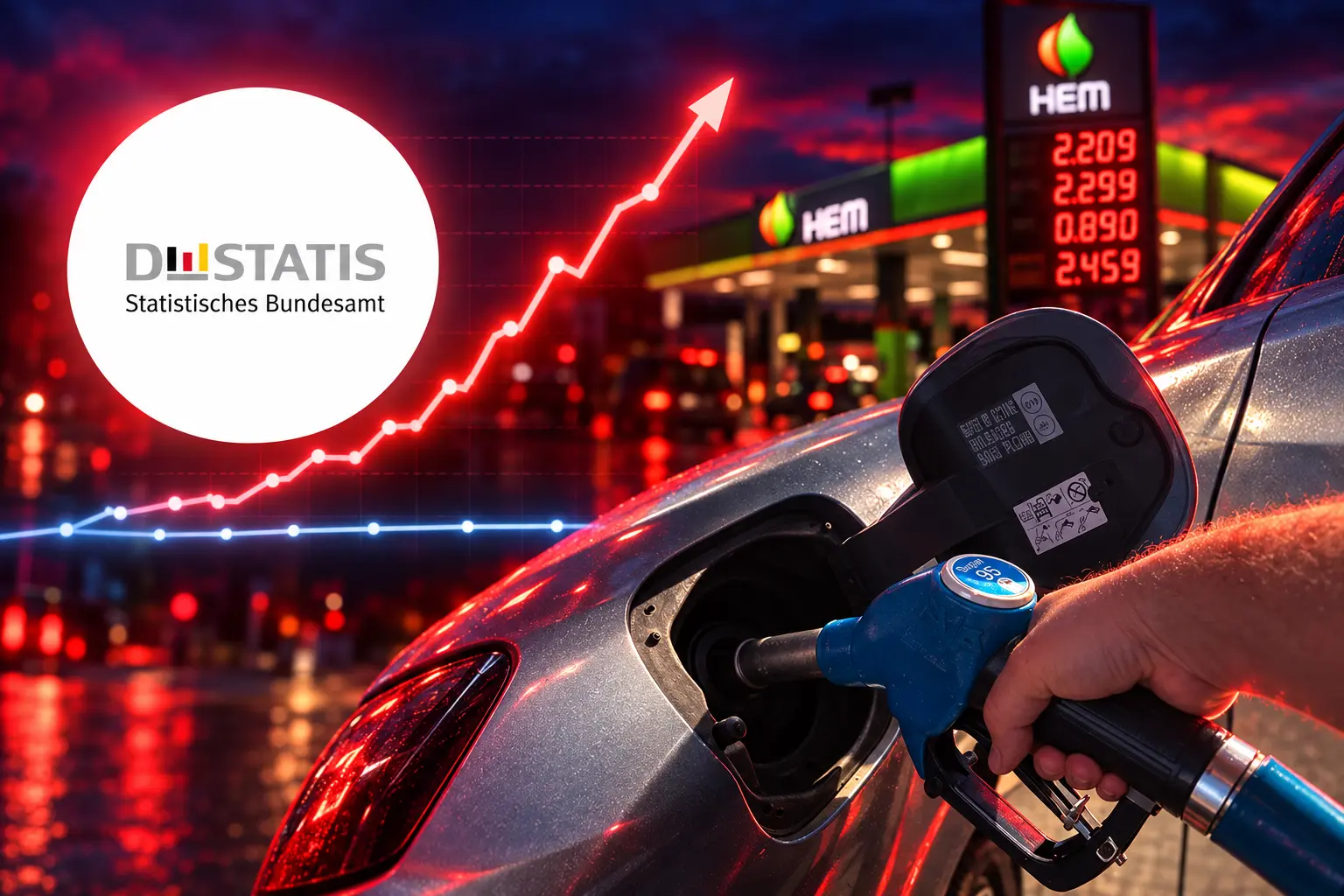
Destatis, Germany’s federal statistics office, put the first September reading at 3.3% year on year, up from 2.9% in August and a touch above the 3.2% forecast. Energy prices were 14.9% higher than a year earlier, after 10.5% in August, which is the whole step-up in the headline. Food rose 0.4%, after 0.1%. Services eased to 2.7% from 2.8%. It is the highest German rate since late 2023, and prices were 0.6% higher than in August.
INSEE in Paris said France’s comparable rate, the HICP used across the currency union, jumped to 3.4% from 2.6%. A poll of 19 economists had centred on 3.1%. The national consumer price index, which France uses at home, rose to 3.0% from 2.4%. Energy prices were 21.2% higher than a year earlier, after 16.7% in August. Fresh food rose 9.9%, after 5.9%. Services rose 2.2%, after 1.9%. Manufactured goods still fell, by 0.3%. On the month the HICP dropped 0.4%, because summer travel prices fell, though energy and gas rose again.
Istat in Rome said Italy’s harmonised index rose to 4.1% from 3.2%, with a 2.0% monthly jump after summer sales ended. The national NIC index, which ignores those sales, was 4.2% year on year, after 3.3%, and 0.7% higher than in August. Energy goods rose 22.3%, after 17.1%. Regulated energy, including protected-market gas, rose 25.9%, after 18.6%. Unregulated energy rose 22.2%, after 17.0%. Diesel for transport was 34.9% dearer than a year earlier. Petrol was 21.8% dearer. Unprocessed food rose 5.5%, after 3.8%.
Spain had already set the week’s ceiling on 29 September. The National Statistics Institute put Spain’s flash HICP reading of 5.0% after 4.6% in August. The national CPI was 4.9%, after 4.3%, the highest since February 2023, when it was 6%. Fuels and lubricants rose this September and fell a year earlier. Package holidays also fell by less than they did last September. Core CPI, which leaves out unprocessed food and energy, rose to 3.1% from 2.9%. The HICP core rate was 3.2%.
SEPTEMBER HICP IN THE FOUR LARGE ECONOMIES
| Country | Sept HICP | Aug HICP | Monthly | Main driver |
|---|---|---|---|---|
| Spain | 5.0% | 4.6% | +0.6% | Fuels and holidays |
| Italy | 4.1% | 3.2% | +2.0% | Energy goods 22.3% |
| France | 3.4% | 2.6% | -0.4% | Energy 21.2% |
| Germany | 3.3% | 2.9% | +0.6% | Energy 14.9% |
Mariana Monteiro at J.P. Morgan said energy inflation had surprised to the upside in every country that had reported, with food also firmer, though by less. That is the map the Governing Council will take into the euro zone flash on 2 October. It is also a map of pump prices, gas tariffs and diesel, not of rents, haircuts and factory wages moving in lockstep.
Germany’s Core Rate Has Not Budged
Destatis held German inflation excluding food and energy at 2.4% for a third month. That is the line Frankfurt uses when it asks whether an energy shock is seeping into the rest of the basket. In Italy, core inflation excluding energy and unprocessed food was 1.7%, after 1.5% in August, and prices excluding energy were 2.0%, after 1.7%. Spain is the outlier among the four, with core CPI at 3.1%.
Euro zone inflation excluding energy and food was already 2.4% in August, Lagarde told MEPs, after a fall in services inflation that only partly offset firmer goods. Compensation per employee, the bank’s preferred wage measure, was 3.3% in the second quarter, down from 3.6% in the first. Unemployment was 6.4% in July.
THE GAUGES THAT HAVE NOT SPIRALLED
- German core: 2.4% in July, August and September, with services easing to 2.7%.
- Italian core: 1.7% on the national index, still below the 2% target even as diesel jumped 34.9%.
- Euro zone wages: pay per employee slowed to 3.3% in the second quarter from 3.6% in the first.
- August core: the currency union’s rate excluding energy and food was 2.4%, with food at 1.1%.
A rate rise can cool a wage round. It cannot drill a well in the Gulf or clear a tanker queue. That is why the split between these figures and the headlines is the live policy problem, not a rounding error. Rory Fennessy, senior European economist at Oxford Economics, has already warned that a renewed spike in energy can still lift core inflation into early 2027 even if pay has not turned yet.
Lagarde Still Walks the Middle Path
The Governing Council raised its three key rates by 25 basis points on 10 September, the second such move of the summer after June. The deposit rate is 2.50%, the main refinancing rate 2.65% and the marginal lending rate 2.90%, all effective from 16 September. Investors have since priced four further increases over the next year. Lagarde spent 28 September pushing back on the most aggressive of those bets without pretending the shock can be ignored.
We see higher inflation ahead but no signs yet that it is becoming embedded.
Christine Lagarde, President, European Central Bank, European Parliament, 28 September 2026
She said the bank does not react to energy prices themselves. It reacts if those prices look likely to become embedded, and it judges that risk on three tests. She added that there is no evidence at this stage of energy feeding into higher wages, and that long-term market rates have already risen since the September meeting, which will slow growth and blunt pass-through by more than the staff round assumed.
THE THREE TESTS LAGARDE CITED
- The outlook: staff now see higher inflation in 2027 and 2028 than a few months ago, mostly because of energy.
- Underlying prices: the question is how far energy is feeding into other prices and wages, which she said it has not, yet.
- Transmission: borrowing costs have tightened through long-term rates even before any further official move.
Taken together, she said, the bank stays on the “middle path” she set out earlier this year, which means the shock is too large to look through and a measured response as appropriate to keep inflation in check. Jack Allen-Reynolds, chief euro zone economist at Capital Economics, said the indirect effects of higher energy are starting to come through and still look unlikely to tip that balance. The tension is obvious: markets have already paid for a campaign Lagarde has not endorsed, while she has already hiked twice because looking through a shock this size would be a different kind of bet.
What Friday’s Euro Zone Flash Is Likely to Show
Economists polled before the 2 October release put the currency union’s September rate at 3.6%, up from 3.2% in August. That monthly figure is a different object from the 3.6% peak ECB staff pencilled in for the fourth quarter as a whole, even though the two numbers match. August had already risen from 2.9% in July, with energy inflation at 14.3% after 10.3%, a jump Lagarde blamed in part on fat refining margins on liquid fuels as well as on crude and gas.
Staff had expected inflation to pick up from 3.3% in the third quarter to 3.6% in the final three months of 2026. Several private-sector desks now put the actual peak nearer 4%, given where energy has traded. If Friday lands on or above 3.6%, it will confirm the national prints rather than surprise them. It will not, on its own, tell the Council that wages have turned. That is still the gap Lagarde is asking markets to respect, and it is the gap a single flash cannot close.
The Strait That Still Prices Diesel
The war that began in late February, with US and Israeli strikes on Iran and a blockade of the Strait of Hormuz, is the common cause sitting under every national table. INSEE noted that French consumer prices were rising by about 1% year on year before those events. About a fifth of the world’s oil used to move through the strait. Oil has spent September near $100 a barrel after sitting near $72 before the crisis, and Destatis said German producer prices for mineral oil products up 40.5% in August from a year earlier, with the Iran conflict named in the release.
Refined products have done more damage than crude. Istat’s diesel and petrol lines are the household version of that margin story, and France’s 21.2% energy rate is the same mechanism in another basket. Qatar’s LNG routes have been snarled, which hits European gas harder than a landlocked US market. A stronger dollar would make dollar-priced cargoes even dearer in euros, though the euro itself barely moved on the German print.
Fennessy put the near-term energy outlook in one line: “With very few signs of a resolution of tensions in the Middle East on the horizon and winter approaching, a correction in energy prices is unlikely any time soon.” Talks have flickered and stalled. Middle East crude loadings recovered in September from the worst weeks of the war, which is why prices have chopped rather than marched in a straight line, but a recovered loading week is not a reopened strait. A central bank can tax demand. It cannot escort a tanker.
September Prints Track the Bank’s Harsher Paths
The September staff round still treats a fading energy shock as the baseline. Annual HICP inflation goes from 2.1% in 2025 to 3.0% in 2026, then 2.5% in 2027 and 2.1% in 2028. Inflation excluding energy and food is 2.5% this year, 2.6% next year and 2.3% in 2028. Staff wrote of headline inflation peaking at 3.6% in the fourth quarter of 2026, with energy inflation almost 15% by the end of the year, then turning negative in 2027 as base effects kick in before ETS2 lifts the energy component again in 2028. Growth is 0.9% in 2026, 1.4% in 2027 and 1.5% in 2028 after a 0.4% rise in real GDP in the second quarter.
The same document publishes harsher illustrations, not forecasts, and they are the pages that now look less hypothetical. The adverse path puts HICP at 3.1% in 2026, 3.2% in 2027 and 2.3% in 2028, with core peaking at 2.8% in 2027. The severe path puts HICP at 3.3% this year, 5.4% in 2027 and 3.2% in 2028, with growth slowing to 0.4% in 2027.
ECB STAFF HICP PATHS, SEPTEMBER ROUND
| Scenario | 2026 | 2027 | 2028 |
|---|---|---|---|
| Baseline | 3.0% | 2.5% | 2.1% |
| Adverse | 3.1% | 3.2% | 2.3% |
| Severe | 3.3% | 5.4% | 3.2% |
| Baseline core | 2.5% | 2.6% | 2.3% |
September’s national headlines are still compatible with a 3.0% annual average if energy cools. They are also how an adverse year begins. Indirect effects are supposed to stay contained in the baseline. Fennessy’s warning is that they may not if pumps stay expensive into the heating season. That is the fork, and it is a fork about Hormuz and winter, not about whether Destatis printed 3.2% or 3.3%.
A Fuel Rebate, a Ballot and a Long Winter
Households are already changing shape to match the bill. INSEE said French household spending fell 0.5% in August, with energy outlays down 2.3% as purchases of petroleum products dropped. Istat’s “shopping trolley” of food and household goods rose 1.7% year on year, after 0.9% in August, and goods bought often rose 5.3%, after 4.3%. Prime Minister Giorgia Meloni is trying to cap family and firm energy costs ahead of a national election due next year, with the 4.2% national rate the highest in three years.
Germany has a narrower lever. Holger Schmieding, chief economist at Berenberg, said a fuel rebate should take about 0.3 percentage points off October inflation. That is a one-month dent in a year-on-year rate, not a fix for diesel at war prices. Cash that earns nothing still loses several hundred euros a year on a €10,000 balance at these rates, which is why a “measured” path does not feel measured at the pump.
HOW THE SHOCK MOVED FROM THE STRAIT TO THE CPI
- Late February 2026: The war around Iran closes in on the Strait of Hormuz, and French inflation is still near 1% year on year.
- June 2026: The ECB raises its three key rates by 25 basis points, the first of two summer moves.
- 10 September 2026: A second 25 basis-point increase takes the deposit rate to 2.50%, with effect from 16 September.
- 28 September 2026: Lagarde tells MEPs the shock is too large to look through and still not embedded in wages.
- 29 September 2026: Spain’s flash HICP prints at 5.0%, the highest since February 2023.
- 30 September 2026: France, Italy and Germany print 3.4%, 4.1% and 3.3% on the comparable index.
- 2 October 2026: Eurostat publishes the euro zone flash, with economists centred on 3.6%.
Friday’s flash will almost certainly ratify what the four capitals already printed. The open question is the same one Lagarde set on 28 September: whether energy stays high long enough to drag core and pay with it, or whether a measured path can hold while winter tests the adverse scenario in public. The strait is still the price-setter. The next rate decision cannot move it.
Disclaimer: This article is news reporting and analysis of official inflation releases and European Central Bank communications, and it is for information only. It is not investment, trading, or interest-rate advice and should not be used as a basis for buying or selling bonds, deposits, or any other financial instrument. Readers who need to act on rate or inflation outcomes should consult a licensed financial adviser or an authorised investment professional who can consider their own circumstances. The figures and policy signals here reflect the statistical offices, ECB staff projections, and public remarks as dated in the piece, and later prints, meetings, or energy-price moves can change them.

Ohtani Game 4 Logoman Card Sells for $3.24 Million

Cole Kmet’s Season Ends, and Chicago’s Tight End Plan Starts

NBA Seeks Soccer Money After EuroLeague Clubs Refused

Amazon’s First Bond Tests Leave the Broccoli Chair Empty

Tyrese Maxey Owns the Night Built for LeBron James

Warsh Rejects Rate Guidance and Still Moves Markets

Dana-Farber Exits an MGB Medicare Advantage Network Early

NASA Launches the Roman Space Telescope’s Cosmic Bet

OpenAI’s Cyber Letter Puts the Defense Bill on Governments

Russia Recycles Its Old Warning Over Storm Shadow Plants
-
 BUSINESS2 months ago
Warsh Rejects Rate Guidance and Still Moves Markets
-
 BUSINESS1 month ago
Dana-Farber Exits an MGB Medicare Advantage Network Early
-
 NEWS2 months ago
NASA Launches the Roman Space Telescope’s Cosmic Bet
-
 NEWS2 months ago
OpenAI’s Cyber Letter Puts the Defense Bill on Governments
-
 NEWS2 months ago
Russia Recycles Its Old Warning Over Storm Shadow Plants
-

 ENTERTAINMENT4 weeks ago
Primetime’s $2.7 Million Preview Tops Pitt’s Costlier Film
-

 BUSINESS2 months ago
Jet Drones Lock Down Kyiv and Strip Kherson of Heat
-

 NEWS2 months ago
Congo Starts Ervebo Vaccinations for a Different Ebola Virus