
BUSINESS
CMS Cuts 760,000 ACA Enrollees Ahead of Open Enrollment
CMS already cut 760,000 ACA slots and froze new brokers through 2027 signup, after marketplace enrollment had already fallen to 19.2 million.

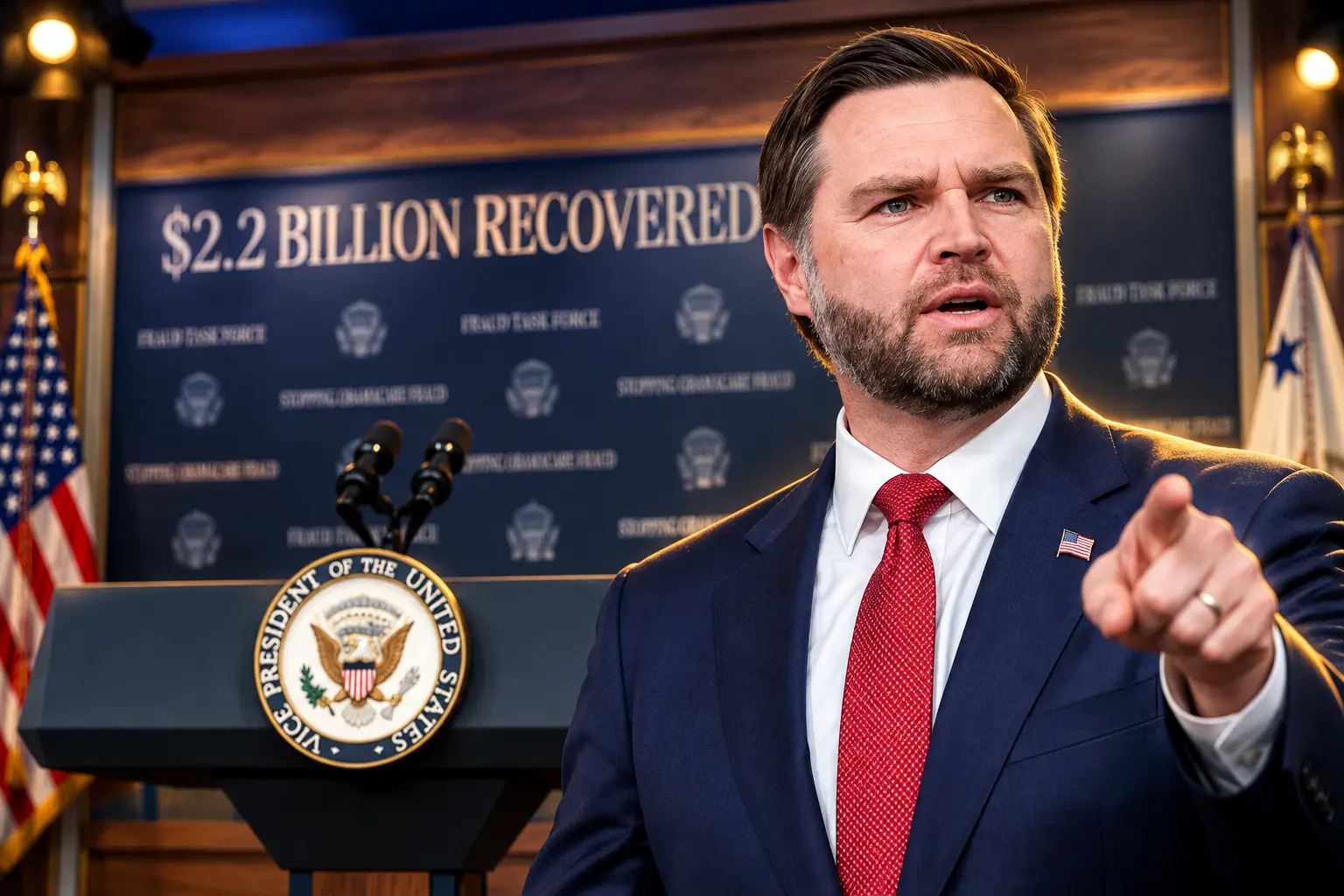
CMS canceled about 315,000 Affordable Care Act enrollments on August 31, covering more than 760,000 people and $2.2 billion in subsidies. Vice President JD Vance and CMS Administrator Dr. Mehmet Oz announced the action on September 22 and froze new broker sign-ups through the 2027 open enrollment window.
New agents who lack a 2026 Exchange agreement cannot register for 2027 until February 1, 2027, which covers the whole HealthCare.gov signup period.
315,000 Enrollments Were Canceled in August
The cut was already done when Vance stepped to the microphone. CMS said it pulled the policies on August 31 after the agency and health insurers reviewed files under its existing process for unauthorized enrollments, and it expects a return of roughly $2.2 billion in advance premium tax credits.
Vance, who leads the White House Task Force to Eliminate Fraud, said the government had not been checking whether people on the exchanges were eligible. “We’re actually making sure that the people receiving Obamacare subsidies are actually entitled to receive them,” he said, with Oz beside him.
HHS Secretary Robert F. Kennedy Jr. tied the same number to brokers. “CMS is strengthening safeguards, pursuing bad actors, and holding agents and brokers accountable when they break the rules,” he said in the agency’s written statement. CMS also created a Federally-facilitated Exchange anti-fraud group across CMS and HHS to keep the enforcement work going after the press conference.
Cynthia Cox, a vice president who directs the ACA program at the research group KFF, did not dispute that a fraudulent enrollment should be canceled. She questioned the method. The cancellations, she said, sat outside the normal regulatory process, and it is not clear that every person removed was fraudulently enrolled.
The Freeze Runs Straight Through Signup Season
Oz told the briefing there would be no new brokers for Obamacare for the next six months. The interim final rule CMS issued the same day is more precise, and it is aimed at the calendar that actually matters for coverage. Agents and brokers without a 2026 Exchange agreement cannot complete 2027 registration until February 1, 2027. The rule took effect September 22. Comments are due November 21, 2026.
HealthCare.gov open enrollment for the coming year still runs from November 1 through January 15. December 15 remains the last day to pick a plan that starts January 1. People who enroll from December 16 through January 15 get coverage that starts February 1, the same day the freeze lifts. In other words, the ban on new brokers covers the entire federal signup season.
Existing brokers with an active 2026 agreement can keep working. CMS said newly registered 2026 agents were only a small share of assisted enrollments and a much larger share of the high-risk ones. Mychal Walker, president of the National Association of Benefits and Insurance Professionals, said a blanket pause on new registrations would punish legitimate professionals instead of the people who committed the fraud.
THE SIGNUP CALENDAR AGAINST THE FREEZE
- August 31, 2026: CMS cancels about 315,000 enrollments covering more than 760,000 people after insurer reviews.
- September 22, 2026: Vance and Oz announce the cuts; the broker registration freeze takes effect.
- November 1, 2026: Open enrollment for 2027 coverage begins on HealthCare.gov.
- December 15, 2026: Last day to enroll for coverage that starts January 1.
- January 15, 2027: Open enrollment ends on the federal marketplace.
- February 1, 2027: The new-broker freeze ends; late open-enrollment coverage also starts this day.
CMS said it will train brokers on the new rules before open enrollment and send consumers tips on spotting fraud. That help will come from the agents already in the system, not from a fresh class of 2027 registrants.
Why Newly Registered Brokers Were Singled Out
The written case against new 2026 brokers is a set of risk flags, not a count of convictions. Compared with agents who registered before 2026, CMS said this group’s assisted enrollments were 2.8 times more likely to have unresolved income checks and 2.7 times more likely to be missing Social Security numbers.
HOW NEW 2026 BROKERS COMPARE
| Risk flag on assisted enrollments | Vs. brokers registered before 2026 |
|---|---|
| Unresolved income verification | 2.8 times more likely |
| Missing Social Security numbers | 2.7 times more likely |
| Unresolved citizenship or immigration checks | 2.6 times more likely |
| Special enrollment periods not subject to verification | 1.6 times more likely |
| Medicaid denial attestations | 1.4 times more likely |
| Dual enrollment in Medicaid or CHIP and the marketplace | 1.4 times more likely |
Since January 2026, CMS has sent termination notices to over 200 non-compliant agents and brokers. This summer it issued 569 notices of intent to terminate Exchange agreements for 2026 applications that lacked identifying information such as a Social Security number. The response window has closed for the first 100 of those 569 notices, and 66 of that batch have already been terminated. The remaining 469 notices are still in their response window.
The rule text behind the freeze says CMS received over 624,000 consumer complaints from 2023 through 2025 about unauthorized enrollments or plan switches on the federally facilitated exchanges, confirmed by issuer review. That complaint load is the consumer side of the same broker problem, and it is why the agency is changing how agents get onto an application, not only who may register.
NEW CHECKS BEFORE OPEN ENROLLMENT
- Identity re-proofing: All existing agents and brokers must verify identity again through Login.gov or ID.me.
- Traceable IDs: Broker-assisted applications must include a Social Security number or an immigration document number CMS can check for every non-newborn applicant.
- Self-serve lock: The system will block agents and brokers from being added to applications that consumers should finish on HealthCare.gov themselves.
- Electronic consent: Before open enrollment, CMS will require electronic consumer authorization before an agent or broker can act on an application or enrollment.
Those four changes land on the brokers who remain, including the ones CMS still allows to work through February. They are the operational answer to a marketplace in which an agent could, for years, move a person’s plan with weak proof that the person had asked.
GAO’s Fake Applicants Still Drew Monthly Subsidies
The watchdog record is why the fraud claim cannot be dismissed as a slogan, and why a mass cancellation still needs a public method. In a December 3, 2025, preliminary report, the Government Accountability Office said the federal marketplace approved subsidized coverage for all four of its fictitious 2024 applicants. CMS paid about $2,350 a month in advance premium tax credits in November and December 2024 for those fake enrollees, even after GAO skipped requested documents.
For plan year 2025, 18 of 20 fictitious applicants were still covered as of September 2025, with more than $10,000 a month in credits going to insurers for those 18 names. GAO warned that the covert tests illustrate control failures and cannot be generalized to the full enrollee population. The same report said CMS last assessed APTC fraud risk in 2018 and did not turn that assessment into an antifraud strategy.
The data work around those tests is larger than 24 fake people. GAO could not find tax-reconciliation evidence for over $21 billion in advance credits for 2023 enrollees who had given Social Security numbers. Unreconciled credits are not automatically overpayments, the auditors wrote, but they can hide money paid for people who were never eligible. Auditors also found over 29,000 Social Security numbers in 2023 and nearly 68,000 in 2024 used to collect more than one year’s worth of subsidized coverage in a single plan year. CMS told GAO it does not block multiple enrollments on one number, so a real person can still get in after identity theft or a typing error.
For plan year 2024, CMS estimated it paid nearly $124 billion in advance premium tax credits for about 19.5 million enrollees. That is the scale on which a leaky intake process spends money even when each fake file looks small.
People Who Never Asked for Coverage
Unauthorized enrollment is not only a Treasury problem. It is a patient problem. GAO’s July 13, 2026, report found at least 160,000 federal marketplace applications in plan year 2024 had likely unauthorized changes by agents or brokers, which can cut off medications when a plan switches without the enrollee knowing. The auditors said CMS processes for consent are weak, that agents who are not the agent of record can still reach consumer files, and that CMS does not tell people about every broker action on their account. GAO made two recommendations for stronger controls on agent and broker actions, including a one-time passcode. HHS concurred.
Some state marketplaces already use passcodes. CMS told GAO in March 2026 it was looking at new controls for 2027 open enrollment and had not decided. The September 22 package, including electronic authorization, is that delayed answer arriving weeks before signup starts.
I think there’s no question that somebody who was fraudulently enrolled should have their coverage canceled. I think the question is whether this was the appropriate process by which to identify fraudulent enrollees, and also whether all of them were indeed fraudulently enrolled.
Cynthia Cox, vice president and director of the ACA program, KFF
Ellen Montz, who ran the Center for Consumer Information and Insurance Oversight at CMS in the Biden years, said the Trump team has done some useful work against actual fraudsters and that Tuesday’s announcement still lacked a public account of how names were chosen. “I would imagine we’ll hear from some subset of consumers that ask: why did my enrollment get cancelled?” she said.
The online fight around the briefing treated the 760,000 as a round-up of people who should not be in the country. CMS’s own fact sheet is narrower. It describes unauthorized enrollments confirmed with insurers, applications missing identifying information, and brokers who first registered for 2026. Vance did say extra checks on the next batch will test legal residency and income. Those are different screens, and mixing them is how a broker-consent cleanup turns into a midterm slogan.
Rep. Richard E. Neal of Massachusetts, the ranking Democrat on Ways and Means, called the cancellations another step in taking coverage away after premiums had already jumped. Premiums doubled or tripled for many enrollees after enhanced COVID-era subsidies expired for 2026, and millions left or downgraded plans.
Another 419,000 Enrollments Sit in Extra Checks
Vance said about 419,000 more enrollments will get added verification, first on legal residency and then on income. Those people are still on the books. CMS said it will keep working with insurers to find unauthorized enrollments, cancel the ones it confirms, and recoup the associated credits. No public list, no appeal script, and no share of the 760,000 who were ghosts versus people signed up without consent has been released.
The marketplace those reviews land on is already smaller. CMS said 23.1 million consumers selected a 2026 plan or were automatically re-enrolled during open enrollment. KFF’s reading of CMS monthly files puts February 2026 effectuated enrollment, the people who had paid and still had coverage, at 19.2 million. Plan selection and paid coverage are different counts, and the gap is the first picture of who signed up and then could not keep the policy after the subsidy cliff.
Oz said at the briefing that officials were chasing phantoms who never filed a claim and could not be reached. Healthy people who do not see a doctor are also how insurance pools work, which is why a non-use rate cannot, by itself, prove a file is fake. The GAO tests show the intake system would accept a fake. Cox’s point is that a closed-door match against insurer files is not the same thing as proving each of more than 760,000 people was one.
The freeze lasts until February 1, 2027, after the last day of federal open enrollment. Anyone shopping on HealthCare.gov this fall will do it with the 2026 broker class, new identity checks, and 419,000 enrollments still waiting on a second look.
Disclaimer: This article is news reporting and analysis of a federal marketplace action, and it is for information only. It is not insurance advice, legal advice, or a determination of any person’s eligibility, subsidy, or enrollment status. Readers who think their plan was changed or canceled should check their HealthCare.gov or state-exchange account and consult a licensed broker, navigator, or benefits lawyer before dropping a policy or ignoring a notice. Enrollment counts, subsidy figures, and verification outcomes come from the cited agency materials as of this report and can change as CMS, insurers, and auditors update their files.

Ohtani Game 4 Logoman Card Sells for $3.24 Million

Cole Kmet’s Season Ends, and Chicago’s Tight End Plan Starts

NBA Seeks Soccer Money After EuroLeague Clubs Refused

Amazon’s First Bond Tests Leave the Broccoli Chair Empty

Tyrese Maxey Owns the Night Built for LeBron James

Warsh Rejects Rate Guidance and Still Moves Markets

Dana-Farber Exits an MGB Medicare Advantage Network Early

NASA Launches the Roman Space Telescope’s Cosmic Bet

OpenAI’s Cyber Letter Puts the Defense Bill on Governments

Russia Recycles Its Old Warning Over Storm Shadow Plants
-
 BUSINESS2 months ago
Warsh Rejects Rate Guidance and Still Moves Markets
-
 BUSINESS1 month ago
Dana-Farber Exits an MGB Medicare Advantage Network Early
-
 NEWS2 months ago
NASA Launches the Roman Space Telescope’s Cosmic Bet
-
 NEWS2 months ago
OpenAI’s Cyber Letter Puts the Defense Bill on Governments
-
 NEWS2 months ago
Russia Recycles Its Old Warning Over Storm Shadow Plants
-

 ENTERTAINMENT4 weeks ago
Primetime’s $2.7 Million Preview Tops Pitt’s Costlier Film
-

 BUSINESS2 months ago
Jet Drones Lock Down Kyiv and Strip Kherson of Heat
-

 NEWS2 months ago
Congo Starts Ervebo Vaccinations for a Different Ebola Virus