
NEWS
Chinese Imagery Firms Sit Offstage After Three Deaths
U.S. officials tied Chinese commercial satellite pictures to the July 17 Jordan strike that killed three soldiers.

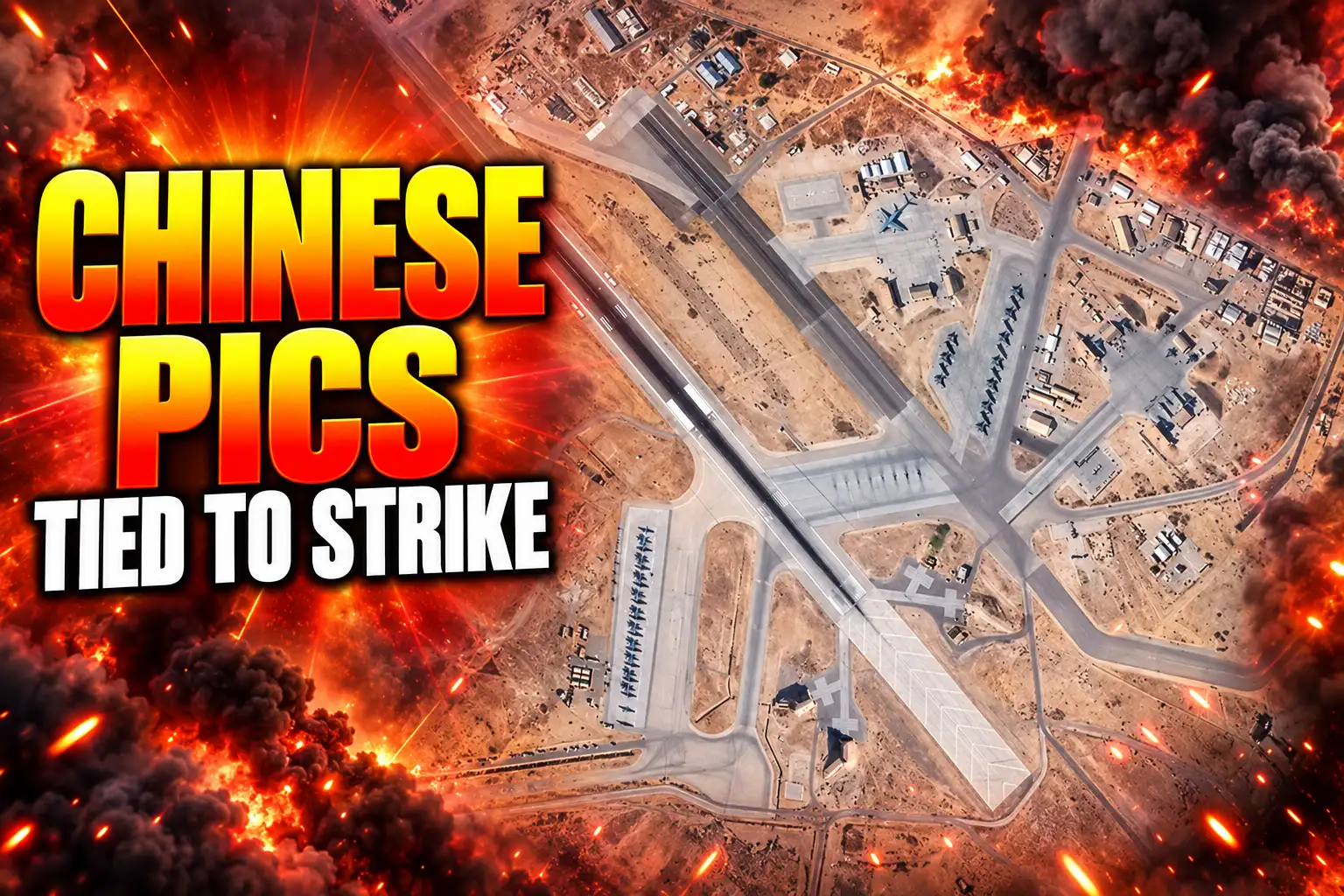
U.S. officials have tied Chinese high-resolution satellite pictures of a Jordan air base to the July 17 Iranian missile strike that killed three American soldiers. Tehran got the images of Muwaffaq Salti Air Base from Chinese entities before the hit, and again after it, officials familiar with the incident said, and they have connected those pictures to the attack.
They would not name the July vendors and did not accuse Beijing of directing the strike. The companies that sell this kind of picture were already on a U.S. sanctions list from May 8, and President Donald Trump still wants Chinese leader Xi Jinping at the White House on Sept. 24.
Three Soldiers Died in Housing Iran Had Photographed
Iranian ballistic missiles struck a housing area at Muwaffaq Salti Air Base in northeastern Jordan, where American troops were sleeping. The July 17 attack was one of three missile strikes on the installation within 24 hours, and it produced the first U.S. combat deaths since an April ceasefire in the wider war faltered. Iran also aimed at manned and unmanned aircraft on the field.
A July 20 Pentagon casualty release named two of the dead; a later statement added the third soldier, who had been listed as missing.
THE THREE SOLDIERS
- 1st Lt. Tyler James Feehan: Age 25, of Ewa Beach, Hawaii, assigned to 2nd Battalion, 55th Air Defense Artillery Regiment, 32nd Army Air Missile Defense Command, Fort Bragg, North Carolina.
- Pvt. Isabella Gonzales: Age 19, of Carrollton, Texas, assigned to 1st Battalion, 57th Air Defense Artillery Regiment, 52nd Air Defense Artillery Brigade, 10th Army Air Missile Defense Command, Ansbach, Germany.
- Sgt. Angel S. Rampersad: Age 28, of Ozone Park, New York, assigned to the same Ansbach air-defense battalion as Gonzales, previously listed as missing.
Four other U.S. service members were wounded and medically evacuated. Within three days, Iranian outlets published high-resolution pictures of damage across three parts of the base. Public lower-resolution imagery reviewed alongside those releases showed harm to more than 20 military and support structures, including hangars and drone shelters.
Officials described the Chinese-sourced pictures as the clearest evidence so far that Chinese support for Iran during the war has had lethal consequences for U.S. forces. They still stopped short of saying the Chinese government pulled the trigger.
The May File on Three Chinese Firms
On May 8, more than two months before the housing strike, the State Department sanctioned China-based firms it said were feeding Iran the view from orbit. The supply of satellite pictures of U.S. facilities in the Middle East to Iran, the department wrote, threatens American and partner personnel. The targeting of U.S. service members and partners, it added, will not go unanswered.
Officials have not said those three names were the July 17 suppliers. They have said Iran bought high-resolution pictures of the same base from Chinese entities, and that this is the same commercial circuit Washington tried to interrupt in May.
WHAT WASHINGTON NAMED ON MAY 8
| Firm | What the State Department said | Prior U.S. action |
|---|---|---|
| Meentropy Technology (Hangzhou), known as MizarVision | A geospatial intelligence firm that published open-source images of U.S. military activity during Operation Epic Fury | Named in the May 8 package |
| The Earth Eye (TEE) | A China-based entity that provided satellite imagery to Iran during Operation Epic Fury | Named in the May 8 package |
| Chang Guang Satellite Technology | A commercial satellite company that collected pictures of U.S. and allied military facilities to support Iranian imagery requests | Previously designated on Dec. 12, 2023; State also said it had supplied imagery to the Houthis |
A fourth State target in the same package, Iran’s Ministry of Defence Export Center, is an Iranian export arm, not a Chinese imaging company. Treasury issued a separate round of designations the same day against procurement networks. The imaging firms are the ones that matter for a housing block in Jordan.
An April review of leaked Iranian military documents said the Islamic Revolutionary Guard Corps had taken control of a Chinese reconnaissance satellite known as TEE-01B and tasked it against U.S. and allied sites. Researcher Jeffrey Caruso, testing that leak against the public satellite catalog, treated the TEE-01B story as documented and treated a parallel claim about encrypted BeiDou missile guidance as a rumor that does not hold. State’s May file named Earth Eye as a provider of imagery to Iran. It did not say TEE-01B took the July 17 pictures.
Why a Mapped Base Still Needed Fresh Pictures
Muwaffaq Salti is a known, fixed target. Aircraft, hangars, and housing there have been photographed for years by commercial constellations that sell to anyone who can pay. Fresh high-resolution passes still change what a missile crew can do with that map.
New pictures show which pads are occupied, which shelters went up after the last strike, and which trailers are actually sleeping quarters. Iran bought images before the attack and after it, officials said, which is the classic pair: target development, then bomb-damage assessment. Can Kasapoglu, a senior fellow at the Hudson Institute, wrote in May that commercial satellites as targeting support helped Tehran pick high-value American sites even while under air attack, and that nominally private Chinese firms give Beijing a way to stay one step removed.
The supply of satellite imagery of U.S. facilities in the Middle East to Iran threatens American and partner personnel. The targeting of U.S. service members and partners will not go unanswered.
U.S. Department of State, May 8 fact sheet
That warning is now attached to named dead. The pictures did not have to be a live video feed. A recent, sharp still of a housing cluster is enough for a ballistic missile that is already accurate enough to hit a trailer park on a defended field.
Commercial imagery is now ordinary kill-chain supply, on more than one side of a modern war. The argument inside the Pentagon is not that Iran invented satellite targeting in July. It is that a Chinese commercial product, sold through firms that sit under extensive state oversight, showed up in a strike that killed three Americans after Washington had already said that product threatened them.
Wagner, the Houthis, Then a Jordan Housing Block
Chang Guang, operator of the Jilin-1 constellation, is the firm with the longest U.S. paper trail. Hudson’s report calls it a leading example of China’s commercial space sector: innovative, nominally private, and heavily dependent on the state, with longstanding ties to the Chinese Communist Party and apparent support from the People’s Liberation Army. The May 8 fact sheet said the company had already provided satellite imagery to the Houthis to target U.S. military assets, and that it had been designated on Dec. 12, 2023.
That earlier action was the 2023 sanctions over Wagner imagery, after U.S. officials said Chang Guang had supported Russia’s then-private army in Ukraine. The Jordan housing strike is the first time U.S. officials have publicly drawn a lethal line from Chinese-sourced pictures to American combat deaths. They still have not put Chang Guang’s name, or Earth Eye’s, or MizarVision’s, on the July 17 file.
THE IMAGERY RECORD WASHINGTON CITES
- December 12, 2023: The United States designates Chang Guang Satellite Technology, later described as a supplier of imagery to the Wagner Group.
- April 2025: The State Department says Chang Guang supported Houthi targeting of shipping and U.S. naval forces in the Red Sea.
- April 2026: Leaked IRGC documents, tested against orbital records, describe Iranian control of the Chinese reconnaissance satellite TEE-01B.
- May 8, 2026: State sanctions MizarVision, Earth Eye, and Chang Guang for imagery work tied to Operation Epic Fury.
- July 17, 2026: Iranian ballistic missiles hit housing at Muwaffaq Salti; three U.S. soldiers are killed and four are wounded.
- July 20, 2026: Iran’s high-resolution damage pictures of three areas of the base are in circulation, three days after the strike.
- September 11, 2026: U.S. officials say they have connected Chinese-sourced pictures of the base to the attack that killed the three soldiers.
The pattern is a market, not a single smoking satellite. Wagner, the Houthis, and the Guard all needed the same product: timely pictures of someone else’s base, ship, or camp. Chinese commercial operators sold that product, or were accused of selling it, while Beijing could call the sellers companies.
Close Calls Against American Warships
The same officials who tied pictures to the Jordan housing strike are now asking whether Chinese help is also improving Iran’s aim against ships that move. In the days around the disclosure, Iran fired ballistic missiles at a U.S. aircraft carrier and other warships. U.S. Central Command said every attack failed. Officials described some as close calls and said Iran’s ability to target moving ships appeared to be getting better.
A fixed air base is a simpler problem than a carrier under way. Optical pictures still help if they show where a strike group was, which escorts are nearby, and how a formation has changed since the last pass. Other Chinese systems, including ocean-surveillance satellites, are built for that maritime job. Officials have not said they have the same quality of evidence on warships that they now claim on Muwaffaq Salti.
That gap is the next fight. A housing trailer does not steam at 30 knots. If the pictures that cued July 17 were only the land half of a larger feed, the companies in the May file become a navy problem, not only a base-hardening problem. Washington can bomb launchers inside Iran. It cannot shoot down a Chinese imaging satellite without turning one war into two, which is why the firms, and the banks and ground stations around them, are the only pressure point that does not require a second conflict.
Beijing Wants Proof, Trump Wants the Summit
Senior U.S. officials took the July 17 imagery finding to their Chinese counterparts, who pushed back and asked for evidence. China has repeatedly refused to accept that any Chinese companies are in this business with Iran, the U.S. officials said. The Chinese Embassy in Washington did not answer the specific allegation about the Jordan strike.
Unnamed critics were maliciously linking and smearing other countries by exploiting the conflict, and China’s cooperation with Iran complied with international law.
Liu Chang, spokesperson, Chinese Embassy in Washington
On Sept. 12, speaking at the BRICS gathering in New Delhi, Xi said the Middle East war had caused serious losses and does not serve the common interests of the international community, according to remarks carried by Xinhua. He did not address satellite pictures, Jordan, or the three soldiers.
The Trump administration has spent months warning Chinese counterparts in private and playing the same file down in public. After the July 17 strike, Secretary of State Marco Rubio was asked whether China was giving Iran targeting information. He did not answer directly. He said nothing China has done has in any way changed the course of the conflict. A White House official said outside assistance had not enhanced Iran’s ability to attack the United States, and declined to speak to the satellite pictures as such.
Trump has told his team that keeping relations with Xi in working order is a priority, and senior officials have tried to keep a public fight from crowding out the Sept. 24 meeting. The May 8 sanctions were already a shot across that bow, fired days before Trump flew to Beijing. The July 17 deaths, and the pictures now tied to them, are the cost that arrived after that trip. The companies that sell the pictures remain the stakeholder Washington can still name, even as it declines to name the July vendors and still wants Xi in the room on Sept. 24.

Delta Chooses Proven Cities Over New European Airports

Primetime’s $2.7 Million Preview Tops Pitt’s Costlier Film

UK Food Export Volumes Fall to Crisis-Era Lows

Tandem Foods Plants Its Biggest Line in Pennsylvania

Putin Calls Troop Talks a War as Drones Hit Ukraine

Warsh Rejects Rate Guidance and Still Moves Markets

NASA Launches the Roman Space Telescope’s Cosmic Bet

Russia Recycles Its Old Warning Over Storm Shadow Plants
Primetime’s $2.7 Million Preview Tops Pitt’s Costlier Film

Jet Drones Lock Down Kyiv and Strip Kherson of Heat
-
 BUSINESS1 month ago
Warsh Rejects Rate Guidance and Still Moves Markets
-
 NEWS1 month ago
NASA Launches the Roman Space Telescope’s Cosmic Bet
-
 NEWS1 month ago
Russia Recycles Its Old Warning Over Storm Shadow Plants
-
 ENTERTAINMENT4 days ago
Primetime’s $2.7 Million Preview Tops Pitt’s Costlier Film
-
 BUSINESS1 month ago
Jet Drones Lock Down Kyiv and Strip Kherson of Heat
-

 BUSINESS1 month ago
Record Cyclospora Outbreak Follows Seven Years Without an Inspection
-

 NEWS1 month ago
OpenAI’s Cyber Letter Puts the Defense Bill on Governments
-

 BUSINESS1 month ago
Iran Pulls Oman Into a Hormuz Revenue Bargain