
BUSINESS
Iran Pulls Oman Into a Hormuz Revenue Bargain
Iran says Hormuz stays shut until Washington yields, while the Guards claim an Oman revenue split Muscat did not put in writing.

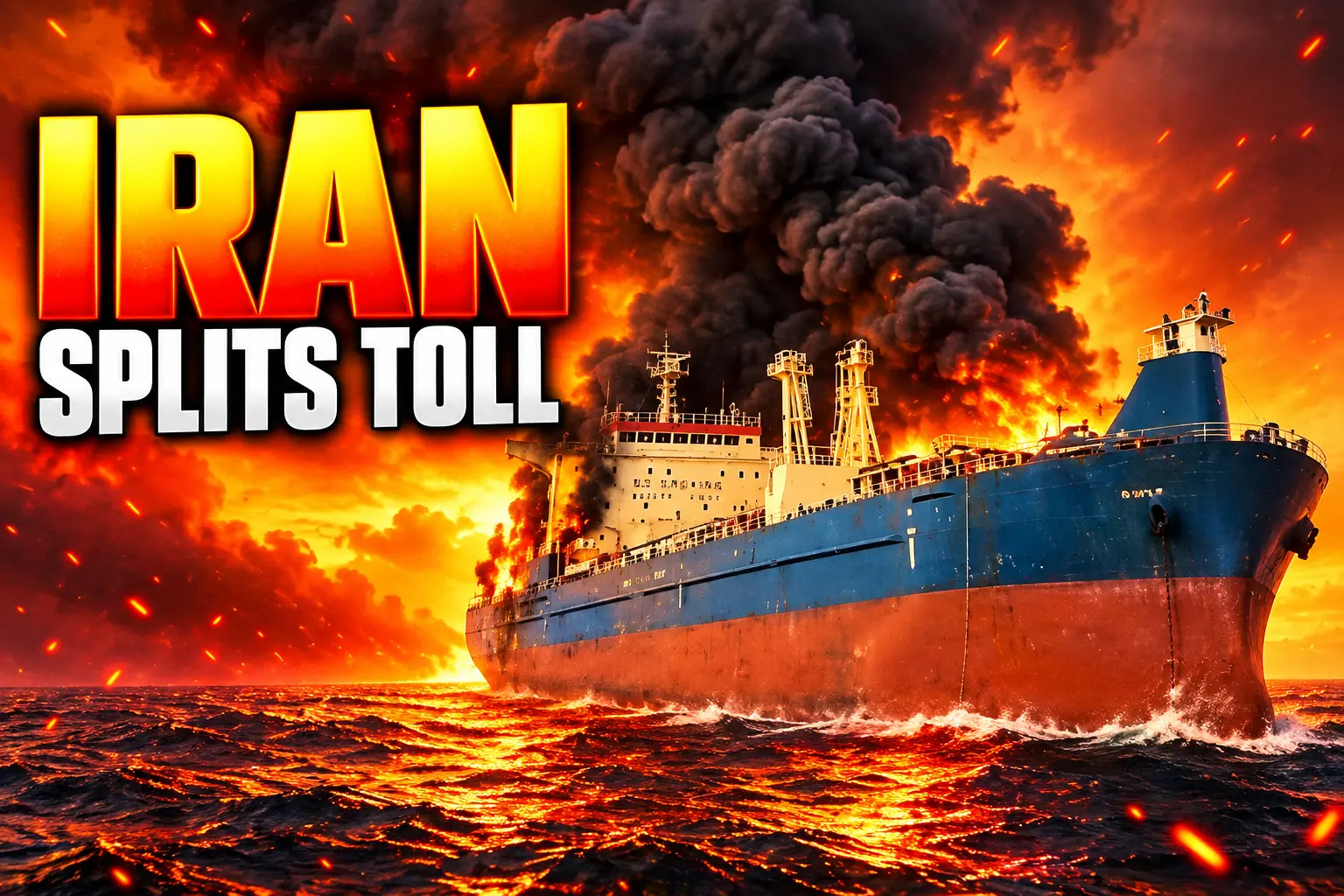
Iran will not reopen the Strait of Hormuz until Washington meets Tehran’s terms, security chief Mohsen Rezaei said on 27 August. The Revolutionary Guards add that Oman has already agreed to share the waterway’s revenues.
Oman’s foreign ministry issued a joint statement two days earlier that never uses that word. Oil is already leaving the Gulf on a southern track through Omani waters, which is why Muscat, not the ceasefire text, now sits at the center of who may charge for passage.
Iran Wrote Oman Into a Hormuz Toll Split
Hossein Mohebbi, spokesman for the Islamic Revolutionary Guard Corps, said on 26 August that talks with Oman had settled both geography and money. “Agreements have been reached regarding each country’s share of the strait’s waters as well as Iran and Oman’s share of its revenues,” he said.
He went further than the foreign ministries had gone the day before. The strait “belongs to Iran and the country of Oman,” he said, and even the route near Oman was “under our full control.” Enemy warships, he claimed, stood at least 400 km away. If the United States “does not accept our conditions, the Strait of Hormuz will not be opened under any circumstance.”
Deputy Foreign Minister Kazem Gharibabadi, speaking on state television, sketched the map Tehran wants. Ships heading into the Gulf would travel in Iranian waters. Ships heading out would use a mix of Iranian and Omani water. The arrangement would last 30 to 60 days while the two capitals talked about a lasting plan. If the deal bound anyone, he said, “no military vessel will be allowed through the Strait of Hormuz.”
That is a coastal-state bargain dressed as a shipping fix. It also puts Oman’s name on a fee that Muscat has not described as a fee.
Muscat’s Joint Statement Never Mentions Fees
Sayyid Badr Albusaidi, Oman’s foreign minister, was in Tehran on 25 August with Abbas Araghchi, Iran’s foreign minister. The joint temporary navigational corridor they discussed is the closest thing either side has put on paper.
WHAT THE 25 AUGUST STATEMENT LISTS
- Safe navigation: Both sides said they want ships moving again while keeping their sovereignty and sovereign rights.
- Temporary corridor: They discussed a joint short-term shipping lane through the strait and a joint project to clear mines.
- Later talks: Technical teams would keep working on a lasting corridor and on “future administration of the Strait.”
- Services, not a tariff: The text names information-sharing, traffic management, and “navigational and security services.” It does not name revenues, tolls, or a split of proceeds.
- Other Gulf states: Oman and Iran said they should bring in regional states that border Gulf waters and uphold applicable international law.
Badr put the same limit in his own words the same day, tying any lasting plan to a clause Washington already signed and then fought over.
I am hopeful we will soon announce a temporary corridor for the Strait of Hormuz and practical arrangements to restore safe navigation. Future management of the Strait and a permanent solution will follow in due course, as per article 5 of the Islamabad Memorandum. Discussions with regional partners will be conducted in support of peace and cooperation, stability and freedom of navigation.
Sayyid Badr Albusaidi, Foreign Minister of Oman, on X
Oman’s ministry posted the full joint text from its official account. It is the document to read against Mohebbi’s revenue line, because the two do not match.
#Joint_Statement between the Sultanate of Oman and The Islamic Republic of Iran ، following the consultations between the Foreign Ministers of the Sultanate of Oman and The Islamic Republic of Iran .
His Excellency Foreign Minister Sayyid Badr bin Hamad bin Hamood Albusaidi paid… pic.twitter.com/3LPDUEpNl2
— وزارة الخارجية (@FMofOman) August 25, 2026
Iran’s Guards turned “services” into a share of revenues within 24 hours. Muscat has not repeated that upgrade. Anyone reading the Oman text as a toll ticket is doing Iran’s work for it.
International Law Still Bans a Toll
The old shipping lanes through Hormuz were drawn so that the deep water sits mainly on the Omani side. Oman ratified the United Nations Convention on the Law of the Sea. Iran signed it and never joined. The United States never joined either, but treats the navigation rules as custom that binds everyone.
Under those rules, Hormuz is an international strait. Ships and aircraft enjoy transit passage in international straits, which coastal states may not suspend and may not sell. They can set traffic lanes and safety rules with the International Maritime Organization. They cannot demand a permit, pick winners, or levy a charge for the mere fact of going through.
Iran prefers “innocent passage,” a thinner right it says it can condition. That reading is how Tehran built the Persian Gulf Strait Authority earlier in the war, a permit-and-fee zone that stretched toward Fujairah. The U.S. Treasury in May designated that authority as an IRGC-linked extortion scheme. The UAE rejected the zone. Bahrain, Kuwait, Qatar, and Saudi Arabia warned operators through the IMO not to comply.
WHERE EXPERTS DISAGREE
- Iran’s claim: As a coastal state with Oman, Tehran says it may administer the strait, require coordination, and collect for security and navigation services.
- The UNCLOS reading: Transit passage is non-suspendible and carries no toll; joint “ownership” of Hormuz has no basis in that text.
- Oman’s bind: Muscat is a party to the convention, so a revenue split of the kind Mohebbi described would collide with a treaty Oman already accepted.
That is the hidden cost for Oman. Article 5 of the Islamabad text already named Muscat as the capital that would talk to Iran about future administration. If those talks become a billed joint gate, Oman wears the legal breach and the anger of every navy and tanker owner that uses the strait. If they stay as mine clearance and a temporary lane, Oman remains the mediator it has spent decades being.
How Much Oil Still Depends on Hormuz
The International Energy Agency says about 25 percent of seaborne oil moved through the strait in 2025, along with about 20 percent of the world’s liquefied natural gas. Its executive director called the war that began on 28 February the greatest threat to global energy security in history, and the oil shock the largest supply disruption the market has seen.
On 11 March, IEA members agreed to make 400 million barrels of emergency stocks available, the agency’s largest such release. Brent futures peaked at more than 60 percent above pre-war levels in late April, eased after the June pause, then jumped again when fighting resumed in July. The IEA’s August oil report still treats a full return of Hormuz flows as the single variable that would ease pressure on supply, prices, and the wider economy.
HORMUZ CARGO BEFORE THE WAR
| Cargo | 2025 share through Hormuz | Way around it |
|---|---|---|
| Seaborne oil | About 25 percent of world trade | Saudi and UAE pipelines, about 3.5 to 5.5 million barrels a day |
| LNG | About 20 percent of world supply, over 110 billion cubic metres | None for Qatar and UAE volumes |
| Qatar LNG | 93 percent of national exports | None |
| UAE LNG | 96 percent of national exports | None |
| Oil headed to Asia | About 80 percent of Hormuz oil and products | Limited |
| Urea | More than 30 percent of world trade | Limited |
Ras Laffan in Qatar, the world’s largest liquefaction plant, has been offline since an attack on 2 March. The IEA puts the gas loss from Qatar and the UAE at more than 300 million cubic metres a day from 1 March, more than 2 billion cubic metres a week. It also flags a cumulative LNG shortfall of around 140 billion cubic metres between 2026 and 2030 if repair and delay drag on. About 80 percent of the oil that used the strait went to Asia. Iraq, Kuwait, Qatar, and Bahrain have almost no other way to load crude.
The physical picture in late August was less binary than Rezaei’s closed-or-open line. TankerTrackers, which counts barrels that clear the U.S. Navy blockade line, put Arab-state crude at 6.92 million barrels a day over 28 days to 31 August. Of that, 2.53 million barrels a day left from terminals in the Gulf of Oman and 4.39 million barrels a day passed through Hormuz, much of it to waiting ships. A lot of that Hormuz volume is moving dark along the southern, Omani-side track, with AIS off. Charter rates for very large crude carriers inside the Gulf have gone to levels crews and owners only accept when the alternative is sitting still.
So the argument in Tehran is no longer only about whether oil can leave. It is about who stamps the lane that is already carrying it.
A Warship Ban Would Trap Four Gulf Fleets
Gharibabadi’s commercial-only rule would hit more than U.S. destroyers. Iraq, Kuwait, Bahrain, and Qatar have no coast outside the strait. Their warships would be bottled in the Gulf if “no military vessel whatsoever” became the working rule. Saudi Arabia and the UAE would still have Red Sea and Gulf of Oman options. Those four would not.
Oman would also host the contradiction. It already lets a southern commercial track run through its waters, the same geography the United States tried to organize in May under the name Project Freedom. Iran has attacked ships on that track, including in Omani water. A joint corridor that bills “security services” would ask Muscat to collect on a route Washington has been trying to keep open without Iranian permission.
That is why a U.S. government source, speaking as Rezaei set out conditions, said the Iran-Oman papers were of no interest to Washington. The White House is not looking to Muscat for a hall pass. It is looking at whether Iran will stop shooting at the southern lane and return to the June text that said commercial ships would pass with no charge.
Rezaei Tied Reopening to a U.S. Climbdown
Rezaei, secretary of Iran’s Supreme National Security Council, spoke on 27 August after mediators asked Tehran to write its terms down. Ending the regional war, he said, belongs on that list. Ships would use a designated central channel if the United States met the conditions. After he met Qatari Prime Minister Sheikh Mohammed bin Abdulrahman Al Thani, he said the United States “must first take practical measures toward fulfilling Iran’s conditions, after which Iran will move to reopen the Strait of Hormuz.”
Five days earlier he had told Iranian state media the strait was closed “despite American claims” and would stay closed until Washington “honors its commitments.” If the blockade held, he warned, “we will not allow a single drop of Persian Gulf oil to leave via any route.” Guards officials have separately demanded that Washington lift what Tehran calls a blockade of Iranian ports, pay compensation, and remove sanctions, and that it return to the June memorandum.
FROM CLOSURE TO THE CONDITIONS LIST
- 28 February 2026: U.S. and Israeli strikes on Iran begin. Iranian forces declare the strait closed. Cross-strait traffic largely stops, with hundreds of vessels stuck in the Gulf.
- 7 April 2026: A two-week ceasefire is announced. President Donald Trump says it depends on a complete, immediate, and safe opening of Hormuz. Traffic ticks up, then stalls again.
- 13 April 2026: After talks in Islamabad fail, Washington orders a blockade of Iranian ports, with a humanitarian exception. CENTCOM later said it redirected more than 140 ships and disabled 9 in that first blockade period.
- 17 June 2026: Trump and Iranian President Masoud Pezeshkian sign a 14-point June memorandum of understanding in Islamabad. It declares removal of the U.S. naval blockade and Iranian arrangements for safe passage of commercial vessels with no charge, for 60 days only. Future administration of the strait is left to Iran in consultation with Oman and other Gulf states. That consultation is the Article 5 Badr now cites.
- July 2026: Fighting resumes. The United States puts the blockade back on after attacks on commercial ships. Oil flows that had jumped after 17 June fall back. IEA data show inventories, already drawn down at a record pace from February to May, drop again.
- 25-27 August 2026: Oman and Iran issue the corridor statement. The Guards announce a revenue share. Rezaei says Washington must move first. A U.S. source calls the bilateral papers irrelevant to American policy.
The June text is the trapdoor under Iran’s fee. It already said commercial ships would pass with no charge for 60 days. It already named Oman as a consultative partner, not a ticket clerk. Rezaei’s new list (end the war, lift the blockade, pay damages, drop sanctions) tries to reopen that bargain from a position of control over a waterway that, on the water, is only partly closed.
Late August and the first of September did not settle it. Ship-warning channels confirmed a tanker hit on 29 August in the southern corridor. Fresh fire toward U.S. ships in the Sea of Oman was reported on 1 September. Mohebbi’s line the same week was unchanged: if Washington rejects the terms, Hormuz stays shut. Technical talks between Tehran and Muscat are still the process both foreign ministries described. The revenue share is still a Guards claim that Oman has not written down. The barrels that are moving are moving on Oman’s side of the rock.

Pixel Buds Firmware 6.144 Ties New Features to Pixel Gear

Eve Markoski-Wood Backs Her Mum as Wood Fights Bail

Trump Rejects an Iran Deal as Diesel Holds Near Records

Amazon Cuts the S26 Ultra to $979 After Samsung’s Hike

Ice Caves Land in Minecraft 26.4 Snapshot 3

Warsh Rejects Rate Guidance and Still Moves Markets

Dana-Farber Exits an MGB Medicare Advantage Network Early

NASA Launches the Roman Space Telescope’s Cosmic Bet

Russia Recycles Its Old Warning Over Storm Shadow Plants

Primetime’s $2.7 Million Preview Tops Pitt’s Costlier Film
-
 BUSINESS1 month ago
Warsh Rejects Rate Guidance and Still Moves Markets
-
 BUSINESS4 weeks ago
Dana-Farber Exits an MGB Medicare Advantage Network Early
-
 NEWS1 month ago
NASA Launches the Roman Space Telescope’s Cosmic Bet
-
 NEWS1 month ago
Russia Recycles Its Old Warning Over Storm Shadow Plants
-
 ENTERTAINMENT2 weeks ago
Primetime’s $2.7 Million Preview Tops Pitt’s Costlier Film
-

 BUSINESS1 month ago
Jet Drones Lock Down Kyiv and Strip Kherson of Heat
-

 NEWS1 month ago
Congo Starts Ervebo Vaccinations for a Different Ebola Virus
-

 ENTERTAINMENT1 month ago
Midnight Spider-Man Turns Peter Parker Into Oscorp’s Hybrid