
NEWS
Lufthansa Cuts 1,000 Jobs While City Airlines Grows
Lufthansa will cut 1,000 Frankfurt and Munich jobs as the core brand shrinks short-haul flying onto City Airlines A220s.

Lufthansa Airlines will cut 1,000 full-time jobs at Frankfurt and Munich after a nine-month operating loss of €180 million ($197 million). A November 19 staff letter signed by airline chief Jens Ritter and four other board members says the core brand is not competitive on cost, efficiency and productivity, and that this is the third year in a row without financial success.
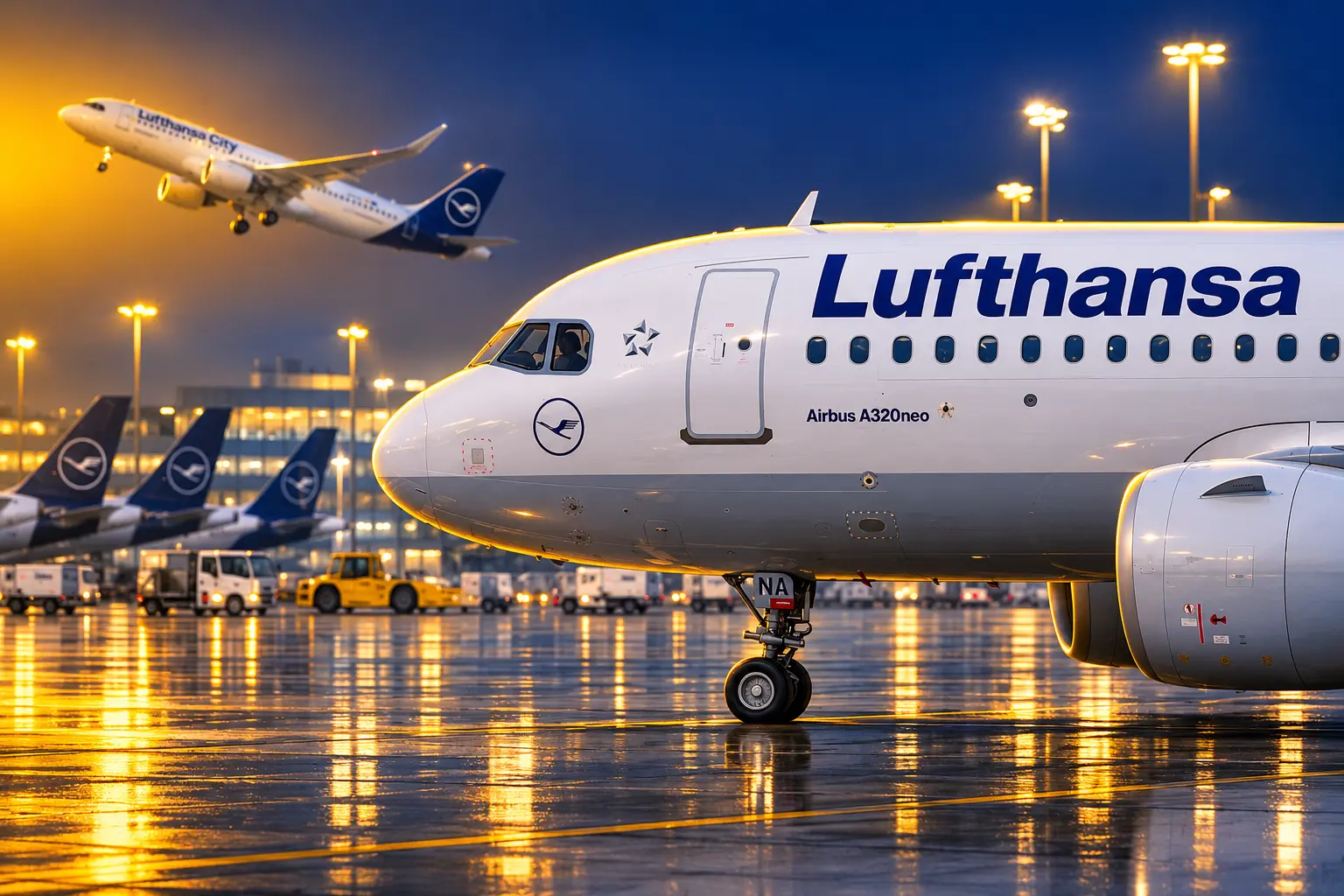
The jobs sit inside a smaller flying plan. The core brand will run fewer Airbus A320-family jets, move more short-haul work toward Lufthansa City Airlines and its incoming A220s, trim crew nights abroad, and put Starlink on 10 aircraft a month while thinning staff travel perks.
1,000 Jobs at Two German Hubs
The letter, signed as the Lufthansa Airlines board by Ritter, Jörg Beißel, Astrid Neben, Heiko Reitz and Francesco Sciortino, put the cut in one line: “We are now planning to cut a total of 1,000 full-time positions in the Lufthansa Airlines division at our Frankfurt and Munich hubs.” It did not say which teams, which city takes the larger share, or whether people will be dismissed or left unreplaced.
A company spokeswoman later said the 1,000 posts are extra savings, covering office work and operations at both hubs. That answers the first question unions asked, whether the figure was already inside the group plan, announced in September 2025, to remove around 4,000 administrative jobs worldwide by 2030, most of them in Germany. It still leaves the timetable blank.
The board wrote that after two years of turnaround work, the original steps were no longer enough. The war in the Middle East, still-high fuel costs, nine days of strikes and an already high cost base had made the squeeze worse, and the letter said the program had still delivered more than €1.5 billion since 2024. “On average, we therefore lost €20 million every month in the first nine months,” the managers wrote. They also said the fourth quarter would not bring a material earnings lift.
Asked about the letter, a spokesman said the company had nothing to add to the board’s words. At the end of 2025 the group employed about 67,100 people in Germany, up 1 percent from a year earlier. A voluntary scheme called New Ways, open since late July, already targets up to 550 full-time jobs at the core brand and in central units.
Sister Airlines Outran the German Core Brand
The parent group still made money. In the third quarter, operating profit rose six percent to 1.4 billion euros on revenue of €12.2 billion, even after fuel costs jumped €543 million. Premium tickets and routes to Asia and North America held up, and CFO Till Streichert pointed to Cargo and Technik as well as unit-cost discipline.
THE PROFIT SPLIT IN THE THIRD QUARTER
| Unit | Q3 operating profit | Versus 2025 |
|---|---|---|
| Network airlines (Lufthansa, SWISS, Austrian, Brussels) | €853 million | €108 million lower |
| Lufthansa Airlines sub-group (includes Discover and City Airlines) | €300 million | Down from €454 million |
| Lufthansa Cargo | €162 million | Tripled from €49 million |
| Lufthansa Technik | €200 million | Up 54 percent from €130 million |
| Point-to-point airlines | €214 million | Up €16 million |
SWISS, Austrian Airlines and Brussels Airlines beat their prior-year results. The German core did not. Strike costs of about €65 million in the first half sat on Lufthansa Airlines, and network yields were up 6.8 percent on 1.6 percent more seats, with unit costs excluding fuel and emissions up 0.5 percent. Technik’s revenue rose 20 percent to €2.3 billion, mostly from outside customers. Cargo lifted tonnes and yields as Middle East disruption kept freight tight, helped by ITA Airways belly space.
The focus remains on Lufthansa Airlines. Following the successful turnaround in reliability and customer satisfaction, we must now accelerate the financial turnaround of our core brand through both previously planned and additional measures, in order to restore it to its position as the flagship and benchmark of the Lufthansa Group in terms of value creation as well.
Carsten Spohr, CEO of Deutsche Lufthansa AG, third-quarter statement
Those third-quarter figures and the letter’s nine-month loss are not the same snapshot. The €300 million summer profit is for the Lufthansa Airlines sub-group, which includes Discover Airlines and City Airlines. The €180 million adjusted loss is the nine-month figure the board sent to staff. A profitable peak quarter can still sit inside a losing nine months, and the pilots’ union has asked for a clean, separate profit account for the core brand alone.
City Airlines and the Smaller Jet
The letter says short- and medium-haul capacity will fall further. The core brand will operate fewer A320-family aircraft, with some of that flying “partially replaced” inside the division by Airbus A220s. It gives no aircraft count. Lufthansa Airlines itself still does not fly the A220. City Airlines does, on paper, and that is the shift the letter only hints at.
In December 2023 the group ordered 40 Airbus A220-300s for City Airlines, plus 20 options, for short-haul feeder work from Frankfurt and Munich. The jet is listed at 148 seats and about 2.5 liters of fuel per 100 passenger kilometers. First delivery was due in 2026. Trade coverage of the staff letter says the first A220-300 had been slated for November and has slipped, with arrival still expected this year.
City Airlines already flies A319s and A320neos in Lufthansa colors on German and European feed. Moving seats onto a smaller jet at a younger airline is a different act from making the same core-brand network cheaper. Fewer A320s at the mainline means fewer crews, fewer turns, and fewer people at the two hubs that handle them. The 1,000 jobs are how that shrink shows up in the headcount file.
Vereinigung Cockpit has already poked at the fleet logic, noting the delayed A220 induction and arguing that Swiss, another group carrier, plans to phase its own A220s out by 2027. The letter does not answer that. It only says the remaining flying should be more modern and more efficient.
Six First Steps, Few Hard Dates
Ritter’s board listed six opening moves. Two of them, the hub jobs and the A320-to-A220 mix, set the size of the airline. The other four change how the leftover flying is crewed, sold to staff families, and wired for wifi.
THE SIX MEASURES IN THE STAFF LETTER
- Hub jobs: Save 1,000 full-time posts in the Lufthansa Airlines division at Frankfurt and Munich, with no date and no named departments.
- Short-haul fleet: Cut short- and medium-haul capacity further, shrink the core A320-family fleet, and replace part of that flying with A220s inside the division.
- Frankfurt waves: Rebuild the long-standing arrival and departure banks so fewer crews stay overnight abroad, following the Munich pattern, in the name of a more stable schedule.
- Staff travel: Reduce the subsidy on companion ID-travel tickets for people who do not work at the airline, and review other private travel rules such as Family Plus.
- Outstations: Check every area of Lufthansa outside the two hubs for whether the setup still earns its keep.
- Starlink: Fit 10 more aircraft a month and charge for onboard internet where the product can be sold.
The overnight cut is a productivity play dressed as a network redesign. Crews who sleep in hotels cost money and sit idle; bringing more of them home the same day raises hours on the aircraft if the banks actually connect. The union’s retort is that any airline management already knew that, and that presenting it as a crisis tool is theatre.
Starlink is the revenue line in a cost letter. The group’s deal covers about 850 aircraft across Lufthansa, SWISS, Austrian Airlines and Brussels Airlines by 2029, free for Miles & More members and Travel ID users. The first jet, A320neo D-AINM, flew Frankfurt to Rome as LH234 on August 19, 2026, with Ritter switching the system on. The August plan had been up to 10 more A320-family aircraft by year-end. Ten a month is a different pace, and the letter is explicit that wifi should become a paid extra.
A €9.3 Billion Fuel Bill This Year
Payroll is not the line that moved the accounts. Fuel is. Streichert said the full-year bill is now €9.3 billion, and the group’s 2025 spend was €7.27 billion. That forecast is €600 million higher than it was three months earlier. Passenger-airline hedging covers about 86 percent of 2026 and already more than 60 percent of 2027.
FUEL AND THE YEAR-END GUIDE
- Third-quarter hit: Group fuel costs rose €543 million against the same quarter last year, more than €400 million of that at the network airlines.
- Full-year bill: €9.3 billion, €600 million above the summer forecast, after Middle East prices stayed high.
- Hedge book: About 86 percent of 2026 passenger-airline fuel and more than 60 percent of 2027 already covered.
- Profit guide: Full-year operating profit narrowed to €1.7 billion to €2.0 billion, from a range that previously reached €2.2 billion, with Cargo’s fourth quarter named as the swing factor.
Network unit costs excluding fuel were held to a 0.5 percent rise, which the group tied to fees, lower project spend, automation in the Lufthansa Airlines turnaround, and a little help from flying more seats. That does not change the kerosene invoice. A thousand hub jobs can lower a wage line. They cannot rebase a €9.3 billion fuel bill, and the letter does not pretend they will. It argues that the core airline’s cost, efficiency and productivity are still off the market, and that the flying itself has to get smaller.
Why the Pilots Call It Pressure
Vereinigung Cockpit says the letter is meant to rattle staff after mediation with the company collapsed. Dark scenarios, the union said, were being used to stir uncertainty and put pressure on employees, and concrete answers were missing. It also said the nine-month loss was already known when third-quarter numbers were presented on November 3, and that the story told to investors then was friendlier than the story now told to the workforce.
Verdi, which represents ground staff at the core brand and cockpit and cabin crews at City Airlines and Discover, called it irresponsible to walk into the company with a vague plan to cut 1,000 full-time jobs. The union wants management to be plain about who is in scope. On the Frankfurt wave redesign, Cockpit said saving money by flying tighter banks and cutting hotel nights is basic airline work, not a special crisis recipe.
The timing is the labor fight, not a coincidence of the calendar. On November 17, after seven months of talks, Lufthansa put a new cockpit package on the table: up to 1,000 pilot hires by the end of 2033, up to 150 extra captain promotions a year, pay held steady at the core brand for now, one-off payments in 2027 and 2028, and rises from 2029. Two days later the hub letter landed. Offering 1,000 new cockpit jobs on a long fuse while taking 1,000 hub posts now is how a board talks to two audiences at once.
Arne Karstens, spokesman for the union’s group tariff commission, said that after 18 rounds with the mediator a concrete solution was on the table, that it would still mean cuts for pilots, and that the airline’s rejection was incomprehensible. The union set November 23 as the date for Lufthansa to treat the mediator’s paper as a basis for talks. The company has refused that paper and tabled its own. Strikes are legally possible again. In April, after a five-day walkout by pilots and cabin crew, the group shut regional unit Cityline early.
THE CLOCK ON THE HUB CUTS
- September 29, 2025: The group says it will remove around 4,000 administrative jobs worldwide by 2030, most of them in Germany, citing overlap, digital tools and AI.
- Late July 2026: The New Ways voluntary scheme opens, aimed at up to 550 full-time jobs at the core brand and in central units.
- November 3, 2026: Third-quarter results show group profit up and the Lufthansa Airlines sub-group down, and Spohr says the core brand’s financial turnaround must speed up.
- November 17, 2026: Mediation with Vereinigung Cockpit ends without a deal; Lufthansa offers up to 1,000 cockpit hires through 2033.
- November 19, 2026: Ritter’s board sends the staff letter cutting 1,000 hub jobs and shrinking short-haul flying.
- November 23, 2026: Cockpit’s deadline for the company to work from the mediator’s proposal.
- November 24, 2026: The board hosts a “Spotlight on Lufthansa Airlines” session to take staff questions.
Human resources board member Michael Niggemann has said the core brand needs to get profitable again so it can hire, and that the first nine months showed the pressure on the turnaround had grown. Cockpit, for its part, says it could even live with a controlled shrink of loss-making short-haul flying if dismissals were off the table. The letter does not give that guarantee.
Staff Hear the Plan on November 24
Monday’s Spotlight session is the first date on which Ritter’s board has promised to answer the gaps the letter left: which jobs, which hub, what legal path, and how the 1,000 posts sit beside the 4,000 already on the books. The spokeswoman’s line that the cuts are additional, and that they reach into operations as well as office work, is the only extra detail the company has offered in public.
Until then the plan on paper is a smaller German mainline. Fewer A320s, more of the remaining short-haul on City Airlines metal, fewer hotel nights, tighter companion tickets, faster Starlink, and 1,000 fewer full-time jobs at the two hubs that still define the brand. The rest of the group can live with that mix. Cargo, Technik and the sister network airlines already are. The people in Frankfurt and Munich now wait to hear which of them is the cost line that moves.

Jeeno Thitikul Passes Annika on Three $4 Million Checks

Cohen Locks Skubal for $450 Million With No Opt-Outs

TCU Fires Sonny Dykes Seven Months After Extending Him

BepiColombo Reaches Mercury After a Shortened Capture Burn

Andromeda’s Bao Merger Times How Binary Stars Tighten

Warsh Rejects Rate Guidance and Still Moves Markets

Davina McCall Reveals Cardiovascular Disease After Cholesterol Warnings

Dana-Farber Exits an MGB Medicare Advantage Network Early

NASA Launches the Roman Space Telescope’s Cosmic Bet

OpenAI’s Cyber Letter Puts the Defense Bill on Governments
-
 BUSINESS3 months ago
Warsh Rejects Rate Guidance and Still Moves Markets
-
 ENTERTAINMENT1 month ago
Davina McCall Reveals Cardiovascular Disease After Cholesterol Warnings
-
 BUSINESS2 months ago
Dana-Farber Exits an MGB Medicare Advantage Network Early
-
 NEWS3 months ago
NASA Launches the Roman Space Telescope’s Cosmic Bet
-
 NEWS3 months ago
OpenAI’s Cyber Letter Puts the Defense Bill on Governments
-

 NEWS3 months ago
Russia Recycles Its Old Warning Over Storm Shadow Plants
-

 ENTERTAINMENT2 months ago
Primetime’s $2.7 Million Preview Tops Pitt’s Costlier Film
-

 BUSINESS3 months ago
Jet Drones Lock Down Kyiv and Strip Kherson of Heat