
BUSINESS
Trump Rejects an Iran Deal as Diesel Holds Near Records
Trump says he does not want an Iran deal even as Tehran offers terms, CENTCOM readies energy strikes, and diesel stays near $6.30 a gallon.

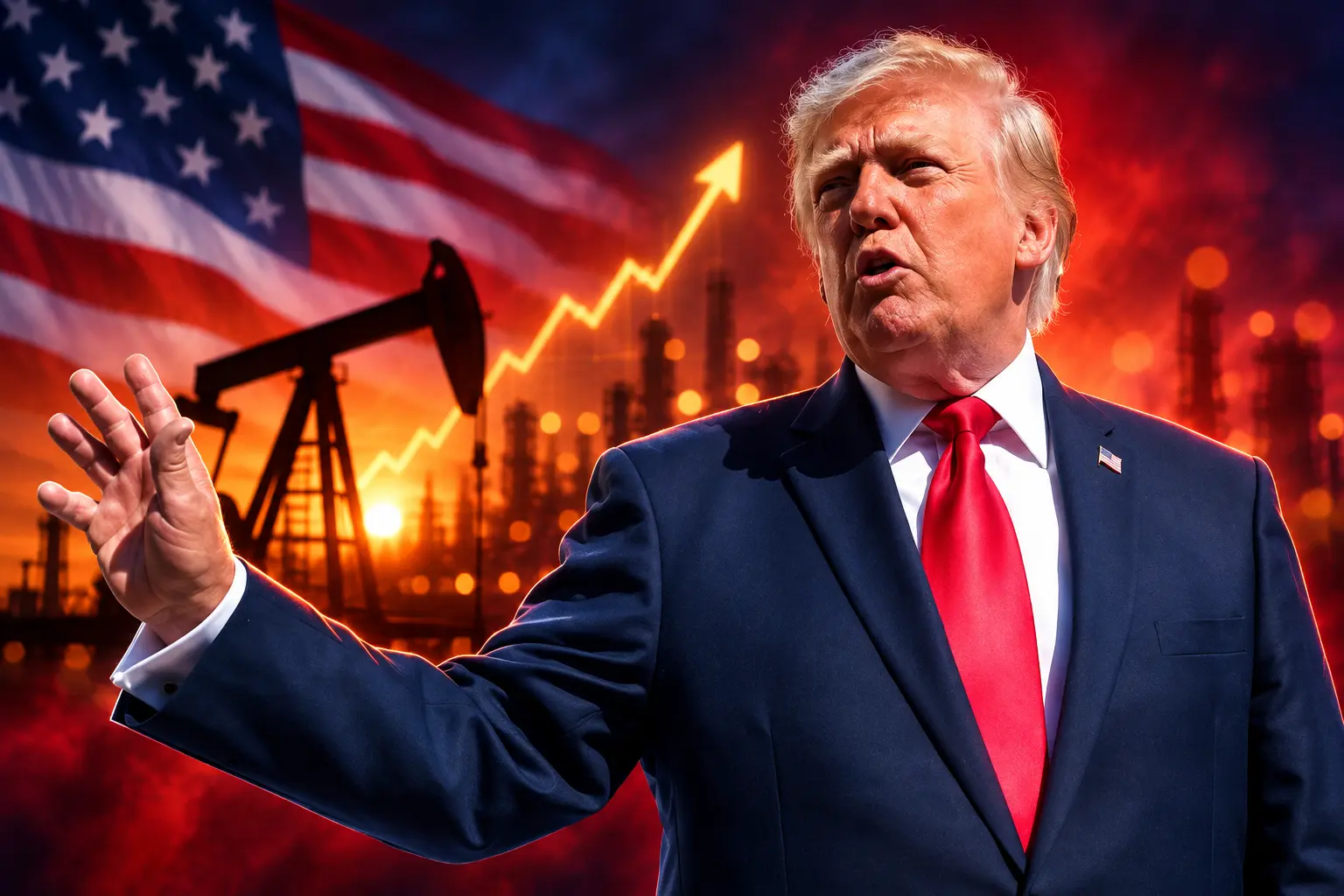
President Donald Trump said on Oct. 7 he does not want a deal with Iran, even as Tehran, he claimed, will offer anything to stop the war. He said it at a Republican rally in San Antonio for Senate candidate Ken Paxton, while praising special envoy Steve Witkoff for working the file.
U.S. officials said the same day that the Pentagon had told Central Command to finish options for a possible return to large-scale strikes, including energy, infrastructure and nuclear sites, before the Nov. 3 midterms. Trump has not made that call.
Trump Tells a Texas Rally He Does Not Want the Deal
Witkoff, Trump told the room, is “doing very well” on an Iran deal. Then he pulled the other way. Iran, in his telling, is a “failed nation” with “a little spunk left, but not much,” and it will never have a nuclear weapon.
He’s working on the Iran deal and doing very well. I think the deal isn’t really something that I want to do, but they’re willing to offer us anything to stop.
Donald Trump, U.S. president, San Antonio rally, Oct. 7, 2026
He also said the war ends “very soon” and that it has “got to be very soon.” Those lines sat beside each other in one speech: a negotiator he likes, a deal he does not want, and a war he says is nearly over. Indirect nuclear talks in New York had already taken place. Washington had already turned down an Iranian seven-day plan, floated around the U.N. meeting on Sept. 22, that would have reopened the Strait of Hormuz in exchange for sanctions relief before a broader nuclear bargain.
Witkoff has sat in mediated sessions with Iranian officials alongside Jared Kushner, and Trump has pointed to Witkoff’s Gaza ceasefire work as proof of craft. The Texas remarks treated that craft as real and the prize as optional. If Iran will “offer us anything to stop,” the leverage is the fighting, not the paper.
Pentagon Orders and a Camp David Session
Officials described a directive, issued several days before the rally, for Central Command to complete preparations for a resumption of major combat operations. No launch date came with it. A Defense official said the Pentagon’s job is to have options ready for the president, which is a different thing from an order to use them.
Trump’s national security team spent hours at Camp David on Oct. 2 on the war and on diplomacy. He spoke with Israeli Prime Minister Benjamin Netanyahu on Oct. 7, their second call in days. U.S. and Israeli sources said any new operation could start before the American vote, or even before Israel’s election a week earlier. An Israeli official also said a move before the U.S. vote was not highly likely, and that the odds would rise after Nov. 3.
WHAT WE KNOW
- The order: The Pentagon told Central Command to finish preparations for a possible return to large-scale operations, without a start date.
- The targets: Officials said a resumed campaign would include heavy bombing of energy sites, infrastructure and nuclear-related facilities, with Israel likely to join if Trump gives the go-ahead.
- The politics: The options were drawn up so they could be used before Nov. 3, after a Camp David session on Oct. 2.
WHAT IS UNCONFIRMED
- A launch: Trump has not decided to resume the fighting, and no date has been set.
- The sequence: Some officials have talked about a limited raid first and a larger campaign after the vote; that split has not been ordered.
- Iran’s reply: Tehran says its answer to the latest U.S. proposal will travel through mediators and has not been published.
Qatar is still carrying paper. Officials said Tehran had not yet answered a revised U.S. proposal that seeks nuclear concessions. Secretary of State Marco Rubio, speaking in Athens on Oct. 7, said Iran had failed to take “multiple opportunities” for an agreement. That is the public case for keeping the military file open while Witkoff keeps talking.
Why Diesel, Not Crude, Is the Midterm Problem
The political problem at home is not a missing crude cargo. It is fuel. AAA put regular gasoline at $4.366 a gallon on Oct. 7 and diesel at $6.30. Diesel set a record of $6.53 on Sept. 22. Before the war it averaged $3.76.
Ipsos polling in September put Trump’s job approval at 32%, with 17% backing his handling of living costs. Republican approval in that survey slipped from 82% to 73%. On Oct. 5, two days before the Texas rally, he signed an order to temporarily allow off-road dyed diesel on highways and to defer the 24.4-cent federal excise tax through year-end, a break the White House said could save truckers more than $100 a fill. Farmers and truckers, the order said, have been hit by a restricted global diesel supply.
Crude recovered faster than the fuel made from it. Kpler, the tanker-tracking firm, puts combined crude volumes around pre-conflict levels of 18.5 million barrels a day leaving the Gulf, excluding Iran, plus Saudi west-coast and UAE east-coast barrels. Natasha Kaneva, head of global commodities strategy at JPMorgan, said the crude market has largely normalized even as refined product supplies remain constrained. Francisco Blanch, head of global commodities at Bank of America, called diesel the biggest source of pain.
CRUDE RECOVERED, FUEL DID NOT
| Flow or pump | Latest reading | Baseline |
|---|---|---|
| Combined Gulf crude, excluding Iran (Kpler) | 18.5 million b/d | Pre-conflict 18.5 million b/d |
| Hormuz crude, 7-day average (Kpler) | 13.5 million b/d | Matches the prewar strait baseline |
| Hormuz refined products, 7-day average (Kpler) | 677,000 b/d | 3.6 million b/d before the war |
| U.S. diesel (AAA, Oct. 7) | $6.30 a gallon | $3.76 before the war; $6.53 record on Sept. 22 |
| U.S. regular gasoline (AAA, Oct. 7) | $4.366 a gallon | Held nearly steady overnight, still far above early-war levels |
Refined products moving through Hormuz, on Kpler’s figures published with that 13.5 million barrel crude print, were 677,000 barrels a day against 3.6 million before the war. Combined crude and product shipments through the strait were 14.2 million barrels a day, against a 17 million barrel prewar baseline. Matt Wright, Kpler’s freight analyst, wrote that clean-product loadings from the Gulf and diverted routes hit 3 million barrels a day earlier in September, then eased to 2.5 million, still around 50% below pre-war levels. Refined products, he wrote, remain the principal constraint.
The U.S. Energy Information Administration, in its Oct. 6 Short-Term Energy Outlook, now has Brent averaging $105 a barrel in the fourth quarter, $14 above the prior month’s outlook, and it pointed to extreme tightness in diesel as extra demand for crude. Kpler separately raised its 12-month crude forecast for North Sea Dated to $81 a barrel from $73, on the view that the U.S.-Iran confrontation is the market’s setting through year-end, flipping the second half of 2026 from a 1.5 million barrel-a-day surplus to a deficit of nearly 2 million. Monthly North Sea Dated still averaged $82.1, down from $85.3 in June, because Chinese refiners pulled back. Kpler put Chinese crude intake at 12.5 to 12.6 million barrels a day in June and July, 18% below a year earlier, a 2.8 million barrel hole that has capped prompt prices even as Brent once traded near $100.
A Leadership Vacuum in Tehran
A day before the rally, Trump said the hardest part of the talks was that nobody knew who was running Iran. “Their leaders are gone, their second group of leaders are gone, and the biggest problem I have is nobody knows who the hell is running the country,” he said. The war is in its eighth month. Supreme Leader Ayatollah Ali Khamenei was killed on the first day of the U.S.-Israeli campaign that began Feb. 28. His son, Mojtaba Khamenei, succeeded him and has not been seen in public since he was hurt in the same strike.
Esmaeil Baghaei, the Iranian foreign ministry spokesman, rejected the premise. Washington, he said, knows its counterpart and how decisions are made. “The problem is actually the opposite: it lies in the contradictory positions and mixed messaging from US officials.” After Rubio’s Athens remarks, Baghaei said distorting history cannot erase “the United States’ repeated breaches of its commitments,” citing the 2018 exit from the nuclear accord, attacks during talks, and what Tehran calls a violation of the June 18 understanding. Iran, he said, had set out its terms for ending the war and restoring security in the Gulf, and “the necessary response to the proposals of the other side will also be provided through the mediators.”
President Masoud Pezeshkian and Foreign Minister Abbas Araghchi are the named civilian faces on the Iranian side. Baghaei has said Iran’s present focus is Hormuz, not the nuclear annex Washington wants attached to any immediate halt, and that restoring the waterway requires the United States to stop interfering with Iranian merchant ships and to ease sanctions. That split, Hormuz first versus nuclear first, is the same split that broke the summer truce.
The 60-Day Window Closed in August
The United States and Israel opened the war on Feb. 28. Iran answered with missiles and drones and moved to choke Hormuz, the channel for a large share of seaborne oil. A memorandum of understanding, mediated by Pakistan and Qatar and signed June 18 by Trump and Pezeshkian, paused the fighting and opened a 60-day diplomatic window. It did not settle enrichment, missiles or who runs the strait. It was a pause with a clock.
FROM THE FIRST STRIKES TO THE TEXAS RALLY
- February 28, 2026: The United States and Israel open the war; Operation Epic Fury begins before dawn, and Khamenei is killed on day one.
- June 18, 2026: Trump and Pezeshkian sign the Islamabad memorandum, opening a 60-day window on Hormuz, sanctions and nuclear talks.
- August 17, 2026: The 60-day window lapses with no extension and no successor deal; Kpler later described the truce as having moved crude without restoring the strait.
- September 22, 2026: Iran, through mediators at the U.N. meeting in New York, offers a seven-day halt and a Hormuz reopening; Washington refuses to peel that off from the nuclear file.
- October 2, 2026: Trump’s national security team meets at Camp David on the war and on diplomacy.
- October 5, 2026: Trump signs the dyed-diesel order as AAA diesel sits near records.
- October 7, 2026: In San Antonio he says he does not want a deal; officials describe CENTCOM finishing strike options that could be used before Nov. 3.
Every operative piece of the June paper failed early, on Kpler’s later ledger of the window: the U.S. oil waiver lasted 20 of the 60 days, the blockade lift 27, and Iran’s mine-clearance duty was never finished. Tehran now talks about permits and tolls on the strait; Washington rejects that claim. Baghaei’s list of broken promises and Rubio’s list of missed chances are the same chronology, read from opposite ends.
How Tankers Cleared Hormuz Without a Peace Deal
Wright’s Oct. 7 note is blunt about what the physical market already did. Kpler is dropping the assumption that a comprehensive political agreement is required to reopen Hormuz. The base case is now slower, uneven normalisation under continued conflict, with ships coming back through escorts, night transits, ship-to-ship transfers and short diplomatic relief rather than a single signing. Diplomacy, he wrote, is an accelerator, not a prerequisite. Full reopening, on that revised case, should not be expected in the next six months.
HOW THE OIL GOT OUT ANYWAY
- Escorts and shuttles: More than 70% of the crude that crossed Hormuz in August switched tankers off the UAE or Oman, with shuttle ships making the risky hop under U.S. protection and a second hull taking the cargo to Asia.
- Pipelines: About 40% of Gulf crude now bypasses Hormuz through Saudi and UAE lines, against 17% before the war, even after a drone strike on the Saudi East-West line earlier in September forced a detour to Yanbu.
- U.S. posture: Wright argues Washington can keep economic pressure on Iran while helping some shipping move, so a blockade and higher transits can sit together longer than first assumed.
- Iran’s clock: If the blockade holds, Kpler estimates Iranian oil revenue falls to zero by the end of 2026, which raises the odds of lumpy, temporary arrangements rather than one grand settlement.
Matt Smith, Kpler’s director of commodity research, said Tehran is losing influence as volumes pass the strait it has repeatedly declared closed. Regional crude, including the Persian Gulf and Red Sea, printed a seven-day average of 19.5 million barrels a day against a prewar baseline of about 17 million in the same Kpler set. That is the recovery Trump can point to when he says he does not need a deal. It is also the recovery that leaves diesel, not missing Saudi barrels, as the thing voters still feel.
Treasury Secretary Scott Bessent said in early October that Iran would make its final crude deliveries to China in about two weeks and then have nothing left to trade. Helima Croft, head of global commodity strategy at RBC Capital Markets, has described a camp in Washington that wants to wait the blockade out. Scott Modell, chief executive of Rapidan Energy and a former CIA officer, said there is no hard evidence that economic pressure will change Iran’s terms, and that the direction of travel is toward escalation after the vote.
Bombing Refineries Would Feed the Pump Crisis
The strike menu now on the table is the same menu that would hit the one channel still broken. Officials said a resumed campaign would include energy facilities. Gulf refinery runs and product exports have not come back with crude. A new round of bombs on Iranian energy and infrastructure would not fill a 677,000-barrel product pipe, and it would give every remaining hull a fresh reason to stay dark or stay home.
Some officials have argued a limited pre-vote raid would look like a win and that pump prices would start falling. That claim sits badly next to the last seven months. Each time missiles flew in this war, gasoline and diesel moved up, not down. Brent found support near $70, ran toward $100 when fighting resumed in July, and still left U.S. diesel at $6.30 after a dyed-fuel tax holiday. Wright’s warning is that delivered crude can be available again without delivered costs coming down, because freight and risk stay baked in until the security threat recedes.
Trump can refuse a deal because the tankers already found a workaround, and because he believes Iran will pay a higher price later. He can also tell a Texas room the war is about to end. The option Central Command is finishing treats energy sites as a lever. Diesel is already the lever that is working on him. Iran’s answer, Baghaei said, will come through the same mediators. Until Trump chooses, the plans sit ready, the pump stays near the record, and the deal he does not want remains the one Wright says the oil market is no longer waiting for.

Pixel Buds Firmware 6.144 Ties New Features to Pixel Gear

Eve Markoski-Wood Backs Her Mum as Wood Fights Bail

Trump Rejects an Iran Deal as Diesel Holds Near Records

Amazon Cuts the S26 Ultra to $979 After Samsung’s Hike

Ice Caves Land in Minecraft 26.4 Snapshot 3

Warsh Rejects Rate Guidance and Still Moves Markets

Dana-Farber Exits an MGB Medicare Advantage Network Early

NASA Launches the Roman Space Telescope’s Cosmic Bet

Russia Recycles Its Old Warning Over Storm Shadow Plants

Primetime’s $2.7 Million Preview Tops Pitt’s Costlier Film
-
 BUSINESS1 month ago
Warsh Rejects Rate Guidance and Still Moves Markets
-
 BUSINESS4 weeks ago
Dana-Farber Exits an MGB Medicare Advantage Network Early
-
 NEWS1 month ago
NASA Launches the Roman Space Telescope’s Cosmic Bet
-
 NEWS1 month ago
Russia Recycles Its Old Warning Over Storm Shadow Plants
-
 ENTERTAINMENT2 weeks ago
Primetime’s $2.7 Million Preview Tops Pitt’s Costlier Film
-

 BUSINESS1 month ago
Jet Drones Lock Down Kyiv and Strip Kherson of Heat
-

 NEWS1 month ago
Congo Starts Ervebo Vaccinations for a Different Ebola Virus
-

 ENTERTAINMENT1 month ago
Midnight Spider-Man Turns Peter Parker Into Oscorp’s Hybrid